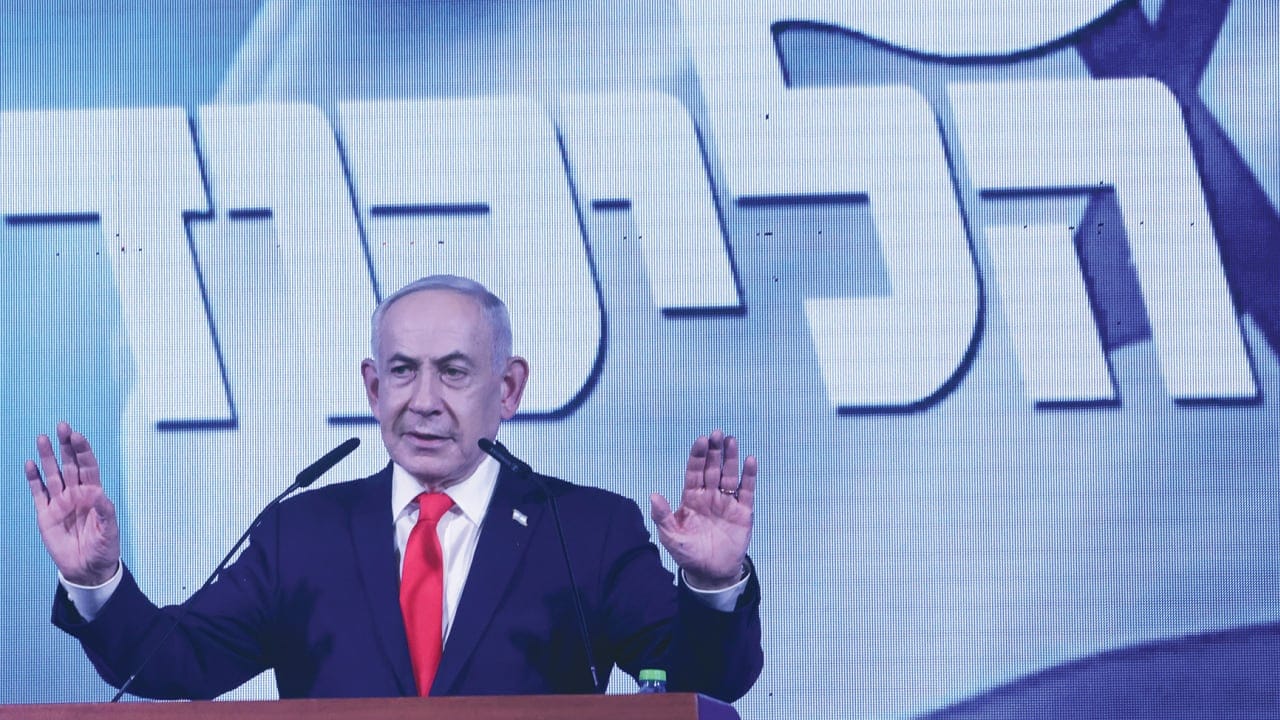
Oops, he did it again.
For seemingly the umpteenth time, Prime Minister Benjamin Netanyahu defied the polls, the odds, and conventional wisdom, emerging from Tuesday’s election with the upper hand.
In the final weeks of the campaign, Yashar party head Gadi Eisenkot repeated one refrain: he would not allow Netanyahu to win by not losing.
In the end, that is precisely what happened.
True, Netanyahu does not have a clear path to a 61-seat coalition. But he is firmly in the driver’s seat.
With a majority among the country’s Jewish parties, he will likely call for some kind of unity government, trying to bring in Eisenkot’s party, or part of it, along with the parties of Naftali Bennett and Avigdor Liberman.
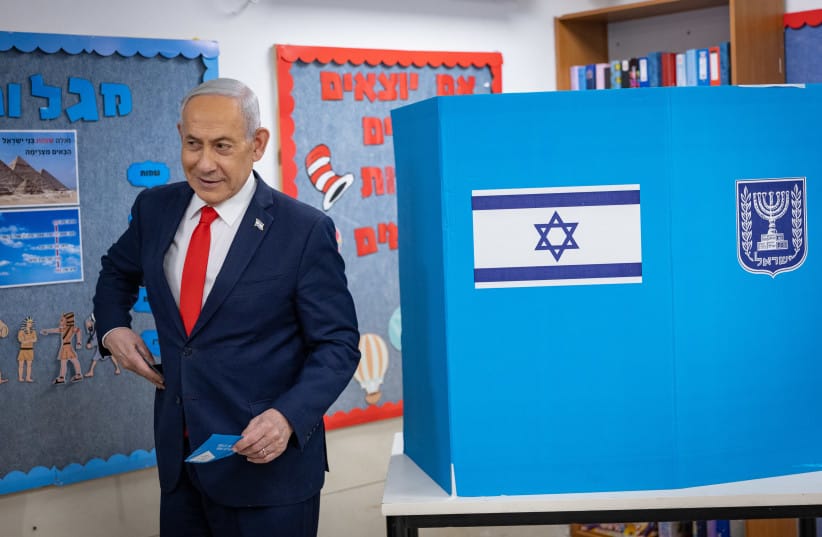
Eisenkot's path to 61 is harder than Netanyahu's
Eisenkot’s path to 61 is much harder because it would require support from the Arab parties, whether inside or outside the coalition. Some of their leaders have declined to call Hamas a terrorist organization, and some of the parties reject the definition of Israel as a Jewish state.
If Netanyahu’s efforts fail, he can wait for another round of elections. If the coalition-building process runs its full course, that could mean nearly another half year in office. Throughout that period, he would remain caretaker prime minister, making life-and-death decisions for the country.
Another election, while hardly good for Israel, would not necessarily be bad for him. The stars were pretty well aligned for Eisenkot and the change bloc this time: no small parties siphoned off many of its votes, and tens of thousands of people reportedly flew in to vote for it. It is hard to imagine those conditions repeating themselves next time around.
The parties will enter coalition negotiations with one eye already on the next campaign.
That could constrain Eisenkot’s bloc as it weighs whether to try to form a minority government with outside support from the Arab parties. Such an arrangement might offer a way to replace Netanyahu now, but it would also hand the prime minister a potent campaign weapon if the government proved short-lived and the country quickly returned to the polls.
That Netanyahu’s Likud emerged as the largest party despite October 7, having shed “only” six seats since the 32 of the previous election, depending on the final count, is nothing less than astounding.
Perhaps even more astounding was Netanyahu’s ability to remain in power after October 7.
Anyone in the country at the time remembers the palpable anger at the government. The country was seething. Few outside Netanyahu’s family and inner circle thought he could survive politically.
Yet he did. And under his leadership, Israel turned the tide of the war, going from being bruised and battered on October 7 to delivering devastating blows to its enemies over the next three years.
In the five previous elections fought against Netanyahu, the opposition harped on his legal cases. They called him “the accused,” “corrupt,” and headed for jail. This time, those cases barely figured in the campaign.
It didn’t help the opposition that former attorney-general Avichai Mandelblit spent the final two weeks of the campaign on the witness stand in Netanyahu’s trial, giving Netanyahu’s supporters fresh ammunition to question how the investigations were conducted and whether they should have been launched in the first place.
So instead of focusing again on Netanyahu’s legal woes, the change bloc focused on October 7: what Netanyahu allegedly knew beforehand, what warnings he missed, and why he was asleep at the wheel – literally asleep when Hamas attacked at 6:29 a.m.
The campaign made the election about October 7. And it did not work.
Why? Because after October 7 came October 8, and the three years that followed. For many of Netanyahu’s voters, the reckoning also included the way Israel, against considerable odds, turned the tide against Hamas, Hezbollah, and Iran, emerging as the strongest player in the Middle East.
If Netanyahu bears responsibility for what happened on October 7, then he also bears responsibility for what came afterward. Enough voters gave him credit for that to leave him with the upper hand.
About three hours after the polls closed Tuesday night, Eisenkot took the stage in Tel Aviv and declared: “The Israeli public voted against the continuation of Netanyahu’s term as prime minister.”
On the seat count, he had a point. Netanyahu’s coalition won 53, meaning 67 went to parties opposing him.
But a majority against Netanyahu is not necessarily a majority for an Eisenkot government. Those 67 seats include 19 held by Arab parties, leaving the change bloc itself with just 48.
The parties may agree that Netanyahu should go. That does not mean they can agree to sit together in a government to replace him. How can a Zionist party find common ground with a party that rejects a central premise of Zionism: Israel’s existence as a Jewish state?
That the change bloc failed to secure a majority of its own – despite October 7, despite Netanyahu’s refusal to establish a state commission of inquiry into the massacre, despite anger over the haredi conscription issue, despite the judicial reform, despite hundreds of protests over the last four years, and despite the sympathetic treatment it received from an often adoring media – should set its alarm bells ringing.
Something is not working.
Perhaps it is the message. Perhaps it is the messengers – the leadership. Perhaps it is both. But something is not connecting with enough of the public.
The failure to unseat Netanyahu now, after all that has happened, should force the change bloc to rethink its message, its leadership, and how it hopes to win. Because if it could not defeat him under these favorable circumstances, it needs to ask itself: under what circumstances will it ever be able to do so?
Yet the opposition’s failure to unseat Netanyahu does not mean the political consequences of October 7 have run their course.
Look more closely, and you see the beginnings of processes that could significantly alter the political landscape.
How Israel's 2026 vote resembles post-Yom Kippur war election
Here, a historical precedent is worth considering: the 1973 Yom Kippur War. Then, as on October 7, Israel was caught by surprise by an enemy attacking on one of its holiest days. The attack exposed colossal failures at the political, intelligence, and military levels.
And then, too, a badly wounded nation emerged seething. The first election after the Yom Kippur War took place less than three months later. The Labor-led Alignment, whose dominant party and its predecessors had governed Israel since its founding 25 years earlier, lost ground but retained power. Golda Meir’s list fell from 56 to 51 seats.
The upheaval came in 1977. Menachem Begin’s Likud rode a wave of anger and frustration to a historic victory, ending Labor’s long hold on power; the Alignment dropped from 51 to 32 seats, ushering in a fundamental political realignment. The war was not the only factor – corruption scandals also played a major role – but its political consequences took time to fully emerge.
The timing differs: Tuesday’s election came three years after October 7, rather than three months. Nor does the comparison mean another 1977 is waiting around the corner. It does mean, however, that the first election after a national catastrophe does not necessarily deliver the final political verdict.
Tuesday’s vote may be sowing the seeds of changes whose significance will become clear only later.
First, Netanyahu’s bloc recorded its weakest showing in the nine elections since he returned to power in 2009. October 7 exacted an electoral price, even if it did not produce the change of government the opposition had hoped for.
Second, this election will send nearly 50 people to the Knesset who have never served there before, one of the largest freshman classes in the country’s history. At least 12 – roughly a quarter – have a direct personal connection to October 7 through bereavement, a relative’s captivity, or their own participation in the fighting that day.
Some may rise through the ranks before the next election. Others may eventually lead. They represent the beginnings of a political generation shaped directly by the trauma of October 7.
Finally, a new phenomenon appeared on the scene: the haredi list headed by Moti Leitner, which raised the banner of greater haredi integration into Israeli society – if not through military service, then through workforce participation and teaching core subjects in schools.
Before the double-envelope ballots were counted, it had won fewer than 10,000 votes – less than 2% of the combined total for Shas and United Torah Judaism. Another haredi challenger, the Tzeva Shachor party, drew a few hundred more votes than Leitner’s party, while taking an even harder line against conscription than the established parties.
In other words, the integrationist vote was a drop in the bucket. But at least now there is a bucket.
The significance lies in its willingness to establish an explicitly haredi alternative that advocates greater integration. Even a small number of voters crossing that barrier deserves attention.
Whether the party grows or disappears remains to be seen. But the pressures it sought to address – over military service, employment, education, and the haredi community’s relationship with the state – will remain.
These elections may not have closed the chapter many Israelis wanted closed. They may, however, have begun political processes whose full significance will be felt only down the line.
But if the longer-term significance of this election will take time to emerge, one immediate casualty is already apparent: the credibility of some of the country’s leading pollsters.
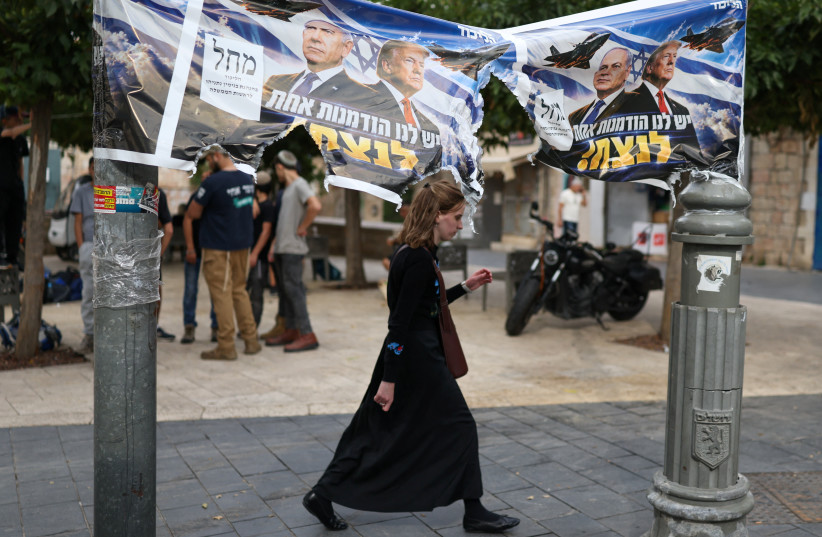
Black Tuesday: Why Israeli election results demand an explanation
As for preelection polling, October 27 was Black Tuesday.
Polls are snapshots, not prophecies. They measure public opinion at a particular moment, and voters can change their minds. Fair enough. They identify trends. But this time, several of the most closely watched polls did more than miss the precise seat distribution. They got the order of the blocs wrong. They badly missed the trend.
The average of the final polls from Channels 11, 12, and 13 gave the opposition more than 55 seats and Netanyahu’s bloc 50. Maariv put the opposition at 58 and Netanyahu’s bloc at 48. Those polls predicted a fundamentally different political landscape than what emerged on election night.
Two polls stood apart: Channel 14 and i24. Both correctly put Netanyahu’s bloc ahead of the opposition, though neither captured the full picture.
Critics easily dismissed Channel 14’s numbers: the station is unabashedly pro-Netanyahu, and its pollster, Shlomo Filber, is a former Netanyahu confidant. Yet it correctly identified which bloc would finish ahead, even as it predicted a 62-seat majority that did not materialize. i24 put Netanyahu’s bloc at 55 and the opposition at 47, but underestimated the Arab parties by five seats and put Ofer Winter’s party above the threshold.
The lesson is not that an outlier must be right. It is that agreement among pollsters does not necessarily make them right, either.
And the damage goes beyond the pollsters’ professional reputations. Such misses feed an existing suspicion that media polls do more than measure public opinion: they shape it.
Results do not prove deliberate manipulation, but they do demand an explanation. Did the pollsters misjudge turnout? Miss particular groups of voters? Make similar assumptions that produced similar mistakes?
“Polls are only snapshots” will not suffice as a response to discrepancies of this size. The country’s pollsters need to look inward and publicly explain what went wrong. Otherwise, they risk further erosion of the one thing their work depends on: trust.