

Israel is not the only country in the region where people have been taken hostage and tortured by an armed group.
In Sudan, Darfur residents captured by the Rapid Support Forces (RSF) militia or its allies are threatened with death, while their relatives are extorted to pay ransom. If the captives are lucky enough to be freed, they have no home to go back to, as their town and region have been ravaged and occupied by the militias. Their surviving relatives – if they can locate them – are of little help, as they are themselves starving, traumatized, and desperate.
The freed hostages of Sudan’s ongoing civil war, as well as countless women who have been sexually assaulted by the RSF and its allies, now have less chance of recovering from their traumas because the Trump administration has cut funding for crucial mental health and psycho-social support programs.
A war ignored
As the war marked its 1,000th day on January 9, the needs of those struggling to survive against the world’s worst humanitarian crisis were increasing dramatically.
A war that started as a power struggle in Khartoum, the Sudanese capital, between strongmen Sudan Armed Forces (SAF) chief Abdel Fattah al-Burhan and RSF commander Muhammad Dagalo (aka Hemedti) has spread across most of the country and is being fueled by multiple foreign actors.
In the process, about 21.2 million people – 45% of the population – are facing high levels of acute food insecurity, while some 14 million people have been displaced. Observers say that things are poised to get even worse.
The Janjaweed militia that carried out genocide in Darfur during the early 2000s, with its horsemen burning down villages, has morphed into the RSF – with expanded forces, drones, and, according to persistent reports, the backing of the United Arab Emirates.
While it is no less ruthless this time around, the world, including Jewish communities, seems largely indifferent in contrast to the first genocide. When, in October, the RSF captured the city of El-Fasher after a nearly two-year siege, the assailants spilled so much blood that red blotches could be seen in satellite imagery. Burhan’s SAF also stands accused of war crimes.
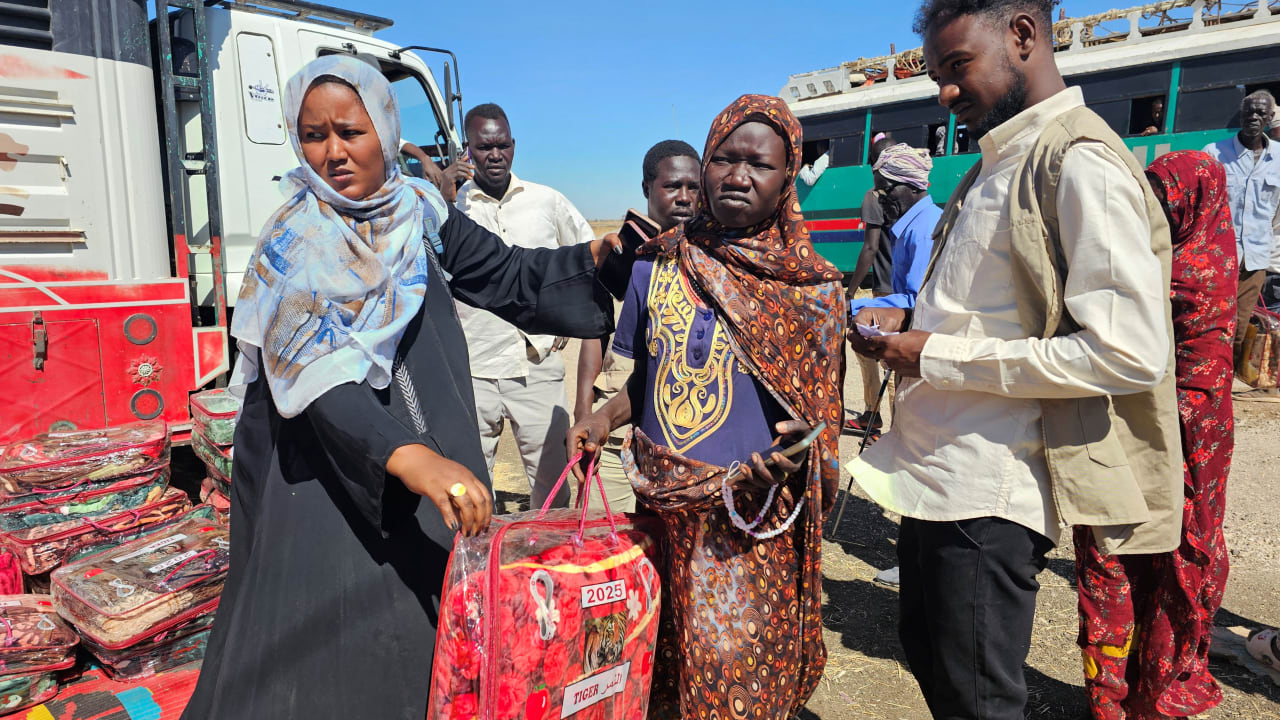
Survivors were killed, raped, or abducted as they fled en masse from the El-Fasher region to Tawila, an area that is safer but lacks sufficient food, water, and amenities to absorb them.
Aid unravels
“We are facing a real challenge of famine and starvation,” Adam Rojal, spokesman for Sudan’s IDPs and Refugee Camps aid group, told The Jerusalem Report in a phone interview from Tawila.
“There is war and famine. Only two in five families are able to have two meals a day. The situation is catastrophic,” he said, explaining that this stems from a lack of funding from the international community and the war’s destruction of Sudanese agriculture.
Rojal does not see any improvement on the horizon, predicting instead that “the starvation will get more severe and spread to new areas.”
The resources necessary to save lives and alleviate suffering have also plummeted in neighboring Chad, a major destination for Sudanese refugees that has witnessed a large influx since the fall of El-Fasher.

The shortfall of funding on both sides of the border is due not only to the closure of the United States Agency for International Development but also because European countries, such as the UK, Switzerland, and Germany, scaled down their contributions, according to a July ABC News (USA) report, which added that many local Sudanese aid providers had been crippled. It quoted Tom Perrielo, who was responsible for Sudan under the Biden administration, as saying the USAID cuts by President Donald Trump had “come with a body count,” meaning they cost Sudanese lives.
In response to a query about aid reduction, US senior envoy for Arab and African affairs Massad Boulos stressed that the US remains the leading donor of humanitarian aid to Sudan. But the figures he provided pointed to a sharp reduction from nearly $844 million in 2024 to $579 million in 2025.
“The US is also leading humanitarian diplomacy efforts to achieve unhindered humanitarian access and aid delivery throughout Sudan, working closely with UN OCHA [Office of the Coordinator of Humanitarian Affairs] and other agencies, as well as directly engaging the warring parties.” Boulos wrote in an email to the Report.
He told Emirati media last week that the US seeks a swift end to the war and is organizing a donors’ conference for “the coming weeks.”
Much is at stake in terms of whether donors will reverse the damage they have already done with their cuts and blindness. HIAS, the global Jewish humanitarian organization that has assisted Sudanese refugees in Chad since 2004, lost 75% of its funding after USAID was cut, shrinking its presence from 14 refugee camps to three.
“Even in those camps where we are still active, we are not able to do enough,” HIAS director of operations in Chad, Adrien Kanyangusho, told the Report in a Zoom interview.
He said that HIAS’s Chad staff has been reduced from 150 persons to 27 as a direct result of the USAID cutoff and that other relief groups have also had to cut back severely.
“Massive budget cuts are making things very difficult. The number of refugees is increasing, people keep coming, and agencies don’t have enough means to cater to the refugees arriving,” he said.
He took issue with the idea that donors are doing their fair share in Chad by allocating funds for what they term “life-saving” support.
“You can give someone food, health care, and shelter, but the human being needs more,” he said. “For people who have been abused and traumatized, food is not enough. They still have the trauma, even if you give them food.
“Every refugee needs some sort of protection,” he said, adding that “their whole family structure has collapsed.” Women still face gender-based violence inside the refugee camps, not only on the torturous trek there, he stated.
Camps of survival
The situation at the growing displaced persons camps inside Sudan is even worse, in part because the inhabitants are still at some risk of being caught in the fighting.
People who lived in the displacement camps in the Darfur area during and since the first genocide are among the masses who fled from the RSF and its allies after they captured the area of El-Fasher in October 2025.
“Tawila is now the biggest hosting area for refugees in Sudan,” Rojal said. “Those who arrived recently are in need of all the necessities that a human being requires to survive, and these needs are increasing by the day.”
More than 70% of the children who arrived from the El-Fasher area after it fell to the RSF are suffering from malnutrition, Rojal said. “The vast majority of the elderly who arrived suffer from malnutrition, and many are also wounded by gunshots.”
There were over 1,600 registered cases of sexual abuse, including against men, but Rojal stressed that the actual number is much higher because many people are typically reluctant to come forward.
“Those who arrived recently in Tawila endured all kinds of violence – gender-based, sexual harassment, being taken hostage, threatened to be killed, being shot, and being beaten,” Rojal said.
“They would tell us this was done by Arab militias, not the RSF. Some of these militias might support the RSF and some not,” he added.

Like Kanyangusho, Rojal stressed that psychological support is urgent. He met a mother, who, along with her three children and their grandmother, had gone on foot from the El-Fasher area to Tawila.
“They had to walk 100 kilometers when they were not eating well and were sick. Only the mother made it,” he said, adding, “She needs psychological support… Her husband is missing, and she doesn’t know if he is a hostage or was killed.”
Global failure
Things are also dire in terms of the treatment of physical injuries and ailments, Rojal said. Sudanese doctors in Tawila City Hospital, with the backing of Doctors Without Borders, are providing enormous services, but it is not enough because of the huge number of patients.
Rojal implied that the international community’s inadequate response to Sudan is due to racism.
“The international community has described this as the largest humanitarian crisis in the world, but the actions it takes are not in accordance with that definition,” he said. “We need the international community to show humanity to the Sudanese people and implement international norms and treat the Sudanese equally.”
Short of a real push to both boost aid and end the war – perhaps by Trump using his influence with the leaders of the countries backing the two sides – the Sudan crisis can only become more devastating, warns Monim Haroon, HIAS’s Israel advocacy director, who as a child barely survived a Janjaweed massacre of the men in his village. He has been in Israel since 2012.
“We have seen large-scale loss of life because of a lack of funding, and things won’t get better. It’s hard to see an end to the fighting,” he said.
Haroon worries that the war could spread to Chad and South Sudan and become a regional conflagration.
“We will see more people entering the cycle, more death, more violence, more starvation, and more disease. Without enough diplomatic pressure and funding, it can only get worse,” he said.■