

When Zionism emerged as a political movement for the Jewish people in the late 19th century, one of its core ideas – articulated by Theodor Herzl – was that an independent Jewish state in the Jewish people’s historic homeland would largely end antisemitism.
The reasoning was that Jews were living “abnormal” lives in exile, forced into a narrow range of professions that bred resentment and hatred. Once Jews lived in their own land under their own government, those promoting Zionism believed that normalcy would take hold and antisemitism would fade.
That was, of course, a pipe dream.
Original promise
Still, in the years after Israel’s creation – together with social and political constraints on open antisemitism after the Holocaust – antisemitism generally existed at a lower level than it had in our earlier history.
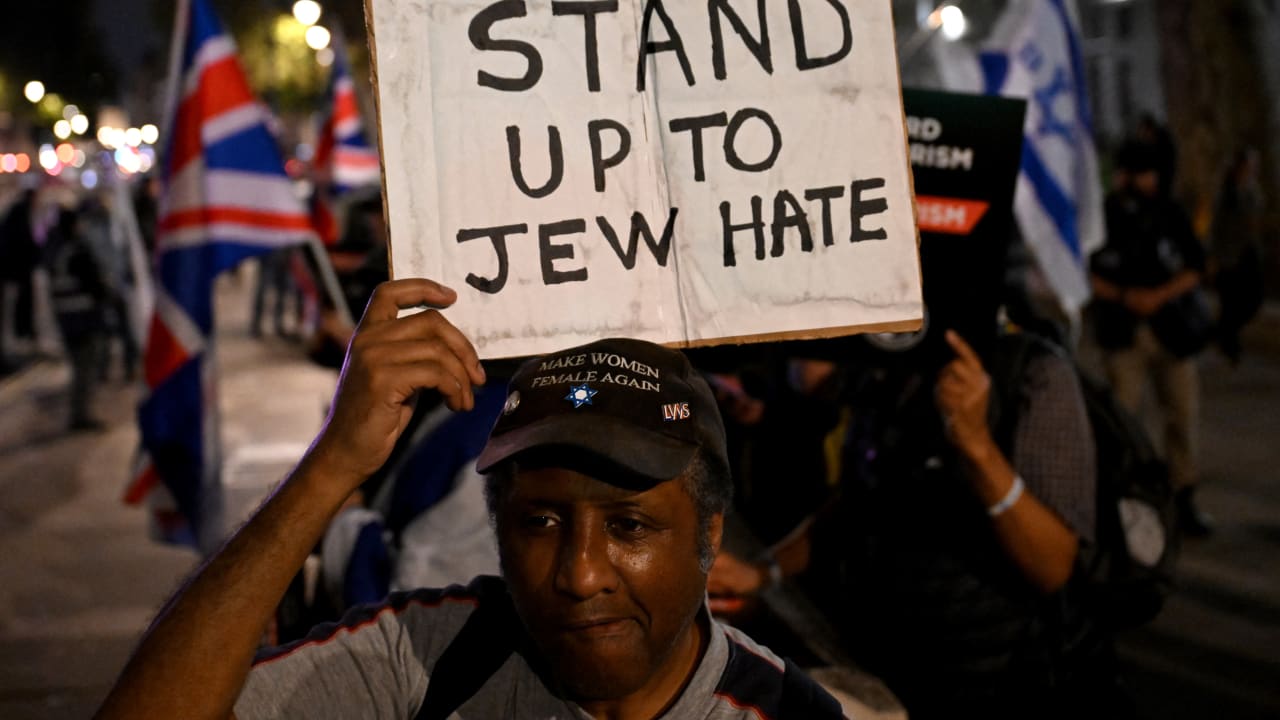
All of that now feels like ancient history. Jew-hatred is surging again – not only to its highest levels in decades but, in some places, with the most violent manifestations since the Holocaust.
What remains relevant, however, is Zionism’s original promise that Israel would serve to limit antisemitism.
As antisemitism flourishes globally, the question becomes: What is Israel doing to improve the condition of Jews around the world, and what should it be doing differently?
Let’s be clear at the outset. Israel’s behavior is not responsible for the rise in antisemitism, no matter how much antisemites try to portray it that way.
And in considering what Israel might do differently, we must keep in mind the tremendous security challenges it faces – especially after October 7 – and how those challenges often have to take precedence.
One striking feature of today’s antisemitism is how much of it is channeled through hostility toward Israel. This is partly because in many circles, hatred of Israel is treated as a “legitimate” form of expression, unlike classic antisemitism.
That dynamic complicates Israel’s role, and it also makes what Israel says and does even more consequential.
Telling its story
It is useful to divide the question into two areas: Where Israel should take positive steps, and where it should refrain from doing certain things.
First, the most basic need, if Israel wants to improve the environment for Jews around the world, is to drastically improve the way it tells its story. This won’t eliminate antisemitism; committed haters aren’t interested in facts. But larger publics have been drawn to defamatory claims that Israel and its supporters are perpetrators of genocide and apartheid.

Israel needs to address these damaging fabrications head-on, and it needs to do so more effectively.
Second, while US Jewry has invested a great deal in bringing young Jews to Israel, Israel should also do more in the reverse direction: sending Israelis to the United States and other Diaspora communities to better appreciate the climate in which Jews are living, and to better understand the societies where antisemitism is flourishing.
Third, it is not enough simply to fight the Boycott Divestment and Sanctions movements against Israel piecemeal in Western societies. Israel needs a coherent strategy because this issue has become central to the spread of anti-Israel – and often antisemitic – ideas.
Fourth, even while Israeli security imperatives must take precedence, Israeli leaders should consider initiatives toward Palestinians that make clear to Western audiences that Israel distinguishes between terrorists and nonviolent Palestinians.
Israel should not abandon such efforts; these can help change the narrative.
Not helpful
There are also things Israel should consider not doing – because they don’t help Diaspora communities trying to combat antisemitism.
Israeli leaders should avoid the temptation to use antisemitism as a political tool. Doing so corrodes the integrity of the work required to fight it.
They, as well as Diaspora Jews, should also avoid comparing every manifestation of antisemitism to the Holocaust. Overuse of that analogy distorts the meaning of genocide and often accomplishes little.
And however tempting it may be to favor one side of the political spectrum in foreign countries, wisdom suggests maintaining relationships across the spectrum, even if one side seems more aligned with Israel’s immediate interests.
Israel is neither the cause of the surge in global antisemitism nor its solution. But what Israel does and says matters, especially even as it must first protect its security. Prudent steps can still make a meaningful difference.■
Kenneth Jacobson is deputy national director of the Anti-Defamation League.