
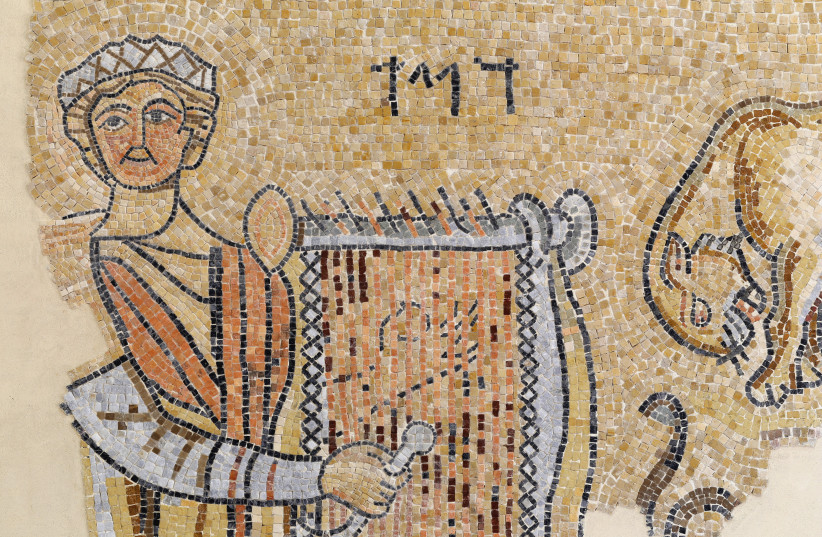
King David united the tribes of Israel, established Jerusalem as the nation’s capital, and composed many of the Psalms that Jews continue to recite thousands of years later.
Yet for all his accomplishments, he made what appears to have been a serious mistake as a father, one that this week’s haftarah of parashat Chayei Sarah does not hesitate to expose.
The haftarah, taken from I Kings 1:1-31, recounts the final years of David’s reign, when his son Adonijah attempts to usurp the crown and declare himself king.
But tucked away in the account is a remarkable verse that offers an explanation for Adonijah’s behavior.
The Tanakh tells us, “And his father had never displeased him by saying, ‘Why have you done so?’” (I Kings 1:6).
In other words, David had never challenged his son’s conduct or held him accountable for his actions.
Rashi (Rabbi Shlomo Yitzhaki, 1040-1105), commenting on this verse, draws a harsh conclusion: “Whoever withholds rebuke from his son brings him to death.”
Adonijah had grown accustomed to getting his way. Handsome, privileged, and surrounded by admirers, he apparently came to believe that whatever he desired was rightfully his.
When he decided that he wanted to become king, he simply announced, “I will reign!” (I Kings 1:5).
There was no consultation with his father, no request for permission, and no apparent concern for the consequences.
This was not the first time that David had experienced such a failure within his family.
Rashi draws a connection between their physical attractiveness and their arrogance
The verse describing Adonijah notes that he was born after Absalom, David’s rebellious son who had previously attempted to overthrow his father.
Like Adonijah, Absalom was exceptionally handsome, and Rashi draws a connection between their physical attractiveness and their arrogance. Both came to believe that they could act as they pleased, with disastrous consequences.
The contrast with this week’s parasha is especially instructive.
Parashat Hayei Sarah describes Abraham in his old age, concerned about the future of his son Isaac.
Having buried Sarah, Abraham turns his attention to finding a suitable wife for Isaac. He instructs his servant to travel to his ancestral homeland rather than choose a woman from among the Canaanites.
Abraham does not leave matters to chance. He takes responsibility for helping shape his son’s future, setting clear principles about the kind of woman Isaac should marry and where she should come from.
David, by contrast, appears to have confused affection with permissiveness.
Every parent wants his children to be happy. We want to protect them from disappointment, spare them unnecessary suffering, and provide opportunities that we ourselves may never have enjoyed.
But happiness and character are not always the same thing.
A child who never hears the word “no” may eventually struggle to accept it from anyone else. And one who is never corrected may come to regard every disagreement as an injustice.
'He who loves his son disciplines him early'
The Book of Proverbs makes this point explicitly: “He who spares his rod hates his son, but he who loves him disciplines him early” (Proverbs 13:24).
The verse is not a license for harshness or cruelty. Rather, it teaches that genuine parental love sometimes requires setting boundaries, even when doing so is uncomfortable.
David’s tragedy was not that he loved Adonijah too little. It was that his love apparently lacked the firmness his son needed.
Even the finest upbringing cannot guarantee that children will make the right choices. Parents can instill values and set an example, but ultimately, each child must decide how to live.
David had once shown the courage to stand before Goliath, armed with little more than a sling and his faith in God.
Yet years later, he apparently could not bring himself to challenge his own son.
Sometimes, the greatest test of courage is not confronting an enemy but correcting someone we love.