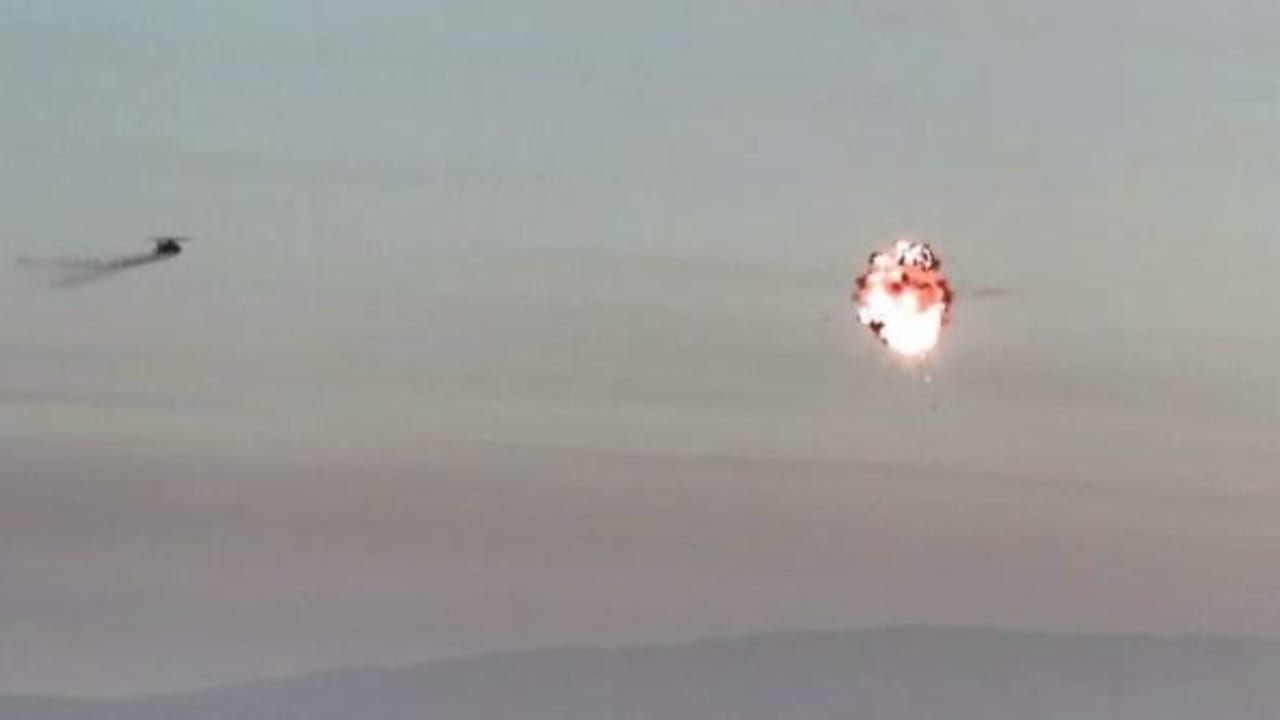
The Iran-backed Houthis appear to be seeking to pick up where Iran left off by renewing ballistic missile attacks on Israel. Sirens sounded across the Negev on Saturday morning. The IDF said it had detected and attempted to intercept the missile.
This is the first attack in four days since the ceasefire with Iran began on June 24. The Houthis back Hamas and have vowed to continue attacking Israel until there is a ceasefire in Gaza.
The military said at around 7 a.m. that “the IDF has identified the launch of a missile from Yemen toward Israeli territory, aerial defense systems are operating to intercept the threat. The public is requested to follow the Home Front Command’s defensive guidelines.”
Twenty minutes later, the IDF said that “following the sirens that sounded a short while ago in several areas in Israel, one missile was launched from Yemen. An interceptor was launched toward the missile, and the missile was most likely successfully intercepted. Sirens were sounded in accordance with protocol.”

The Houthi media outlet Al-Masirah mentioned the attack in several posts on June 28. However, the Yemen-based terrorist group did not immediately put out a statement about the attack. The Houthis took a back seat during the Iran-Israel conflict. They did not fire missiles for a week and a half and were likely consolidating themselves and letting the Iranians do the work. Now, with Iran out of the picture due to a US-backed ceasefire, they may rejoin the fight.
Why would the Yemen-based terror group return to fighting?
Why would the Houthis seek to return to fighting? They have suffered relatively limited losses over the past year and a half since they began attacks on Israel in the wake of the Hamas attack of October 7, 2023.
The Houthis have attacked ships, and have even boarded and taken over one commercial ship they claimed was linked to Israel. They have launched drone and cruise missile attacks and have also launched numerous ballistic missile attacks. The ballistic missile attacks increased in the last months of 2024 and stopped due to the January-March ceasefire in Gaza. Then they began again in March and April.
The Yemen-based terrorist group has aimed to keep up the tempo of attacks despite six Israeli retaliatory raids on Yemen that used long-range air force strikes to hit them. This enabled the IDF to fine tune strikes later used on Iran because the Houthis are more than 1,000 miles away, a similar distance to Iran.
However, the attacks on the Houthis didn’t appear to cause very much damage and have apparently not set back their missile program. This enables them to continue attacking Israel.