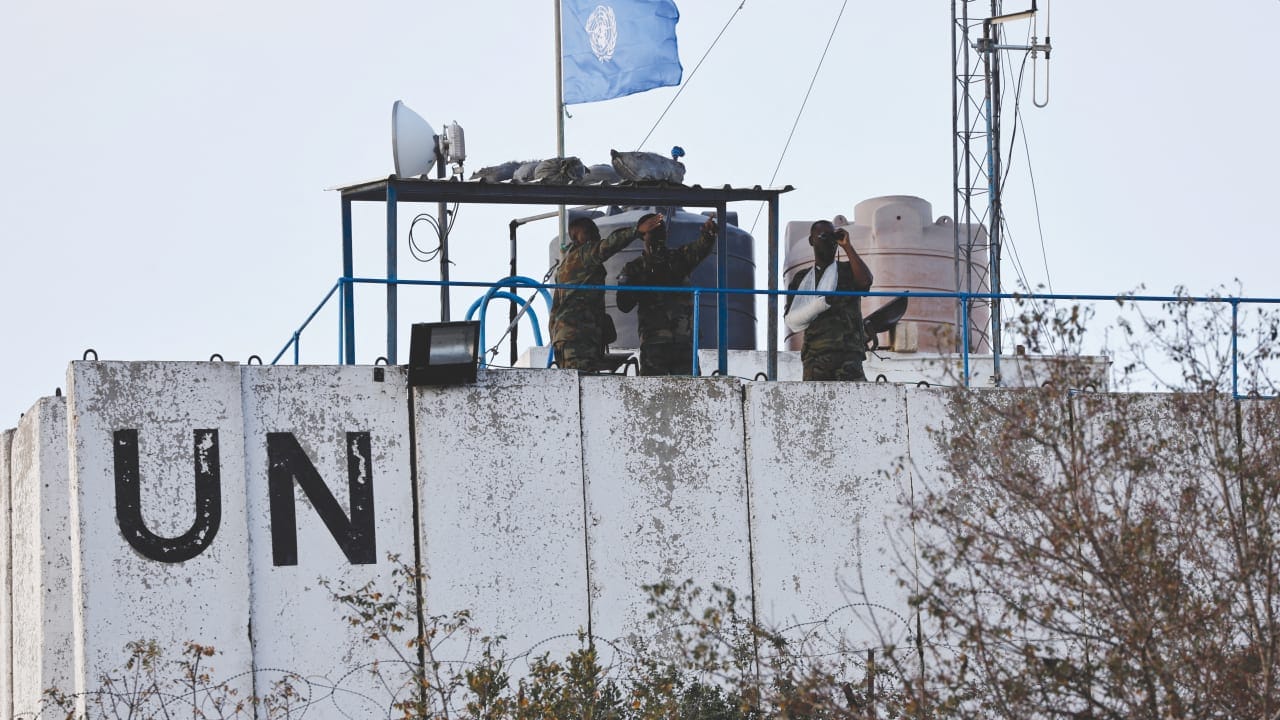
Ahead of the UN Security Council discussion on extending the mandate of the United Nations Interim Force in Lebanon (UNIFIL) taking place later this month, Israel and the United States have informed Council members that they oppose an automatic renewal of the mandate and are demanding a reassessment of the force’s necessity.
A diplomat familiar with the talks told The Jerusalem Post that this comes “in light of its prolonged failure to prevent Hezbollah’s infiltration into southern Lebanon, and to enforce the Lebanese government’s sovereignty in the area.”
Israel and the US are working with other Security Council members to persuade them not to support the mandate’s extension, or, at the very least, to demand substantial changes to it.
The goal is to ensure that the automatic renewal policy is replaced with a substantive debate over UNIFIL’s performance and a potential new path forward.
The Israeli and American position is based on the fact that UNIFIL, which was established nearly five decades ago as a temporary force, has failed to achieve its core objectives.

Instead of acting as a buffer and preventing Hezbollah’s militarization south of the Litani River, the force has become a passive actor, refraining from exercising its authority and submitting partial reports to the Security Council that do not reflect the reality on the ground.
Since being tasked with preventing Hezbollah’s rearmament during the Second Lebanon War in 2006, UNIFIL has done nothing to confront the organization over its weapons.
Israeli and US alternatives
Given this, Israel and the US have presented two alternatives: A full termination of UNIFIL’s mandate and gradual withdrawal from the area, or a limited extension of a year, with clearly defined and focused missions including the orderly dismantling of UNIFIL positions, coordinated withdrawal with the Lebanese Armed Forces (LAF), and the transfer of full security responsibility to the Lebanese government.
At the political level and within the IDF, officials see a rare strategic opportunity. Hezbollah’s current weakening, combined with mounting internal pressure in Lebanon, could create conditions for the Lebanese government to reassert sovereignty in the south.
Israel believes that at this stage there is no longer a need for an international intermediary force on the ground, and that UN resources would be better invested in supporting the LAF.
“The Lebanese government’s decision last week to begin disarming Hezbollah only proves that this may be a once-in-a-generation moment to act against the organization,” an Israeli official told the Post.
In recent days, the Israeli-American proposals have been joined by a French initiative: extending UNIFIL’s mandate for a year, followed by the force’s dismantlement and withdrawal from the area.
Diplomats at the UN say there is a real possibility this could ultimately be the option chosen by the Security Council.