The Palestinian National Council’s planned November elections are little more than political games and an attempt to project an image of legitimacy to the US and the West, Prof. Kobi Michael told The Jerusalem Post on Wednesday.
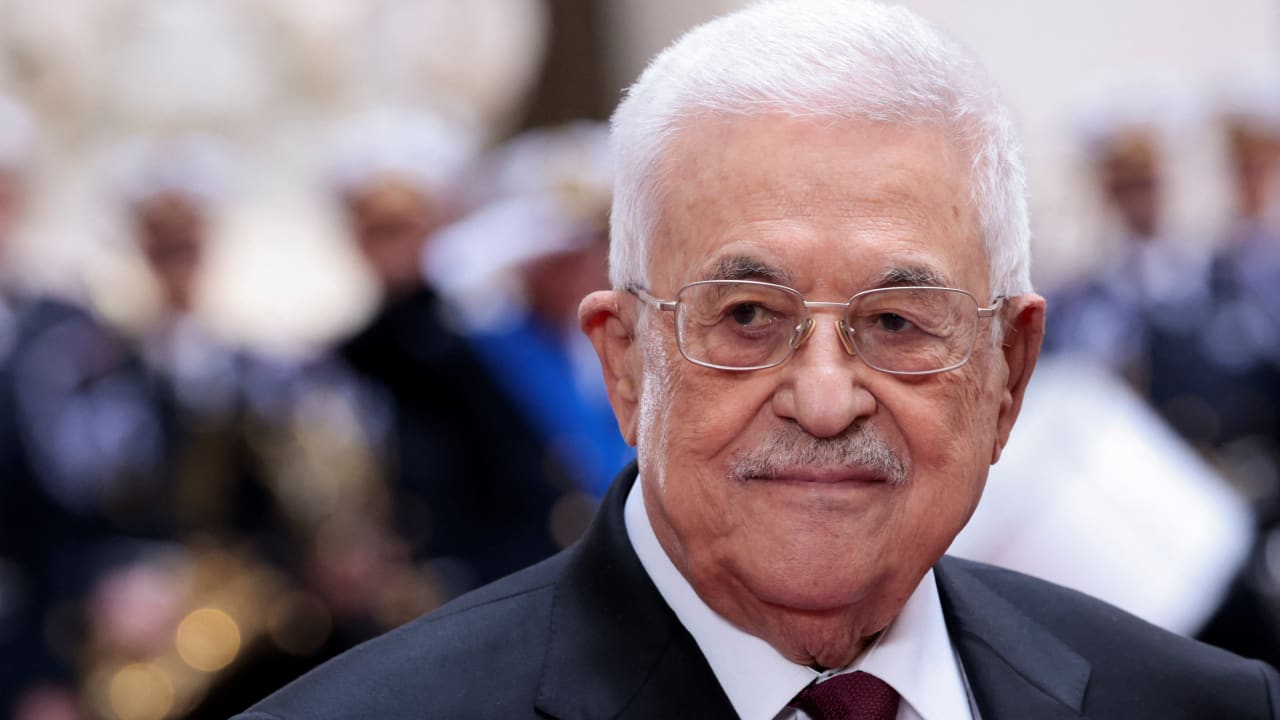
Palestinian Authority President Mahmoud Abbas announced on Monday that the PNC will hold elections on November 1.
However, Michael, a senior researcher at the Institute for National Security Studies (INSS), said that he believed the PA would find a reason to cancel, as it has done on numerous occasions in the past.
Calling for the elections, Michael said, was part of showing the US and the West that members of the PA are “going in the path of reforms, that they are going to democratize themselves, and that they are going to have free elections, and so and so forth.”
Repackaging pay-for-slay
A similar strategy was employed by the PA – administered by the Palestinian National Economic Empowerment Institution – whereby it repackaged the pay-for-slay Martyr’s Fund, which paid Palestinian terrorists and their families on a needs-based welfare framework.
The PA has an opportunity to build legitimacy, presenting itself as an alternative to Hamas, as part of US President Donald Trump’s plan for the future administration of the Gaza Strip, especially given the terrorist group’s absence from the Palestinian Liberation Organization, Michael said.

Abbas “wants to demonstrate that he is still relevant. But the PLO, [while] officially still the sole representative of the entire Palestinian people, is much less important than the Palestinian Authority that actually controls the daily life of the Palestinians in the West Bank,” he explained.
“So this is also a sort of way to escape, to run away, from all the problems that the Palestinian Authority faces. These are internal political games of the Palestinian leadership,” the professor continued.
Noting Abbas’s advanced age – 90 – Michael theorized that “if he is alive in November or close to November, and if he is sure enough that Fatah can gain the election, then he will enable the election. But if he has some good indications that he’s going to lose the election, then he will find very good excuses why they have to postpone it.”
Abbas opened the elections to the Palestinian diaspora, which Michael said would likely be of little interest. Meanwhile, Fatah’s popularity is not high among those living in the Palestinian territory, he said. The Palestinian Center for Policy and Survey Research reported that Fatah’s voter base in the West Bank nearly halved, from 23% to 14%, based on a survey conducted in October 2025.
“The Palestinian Authority and the leaders of Fatah and the PLO have no legitimacy among their own constituency, at least in the Palestinian territories,” Michael said. “And the Palestinian system now is very fragile, mainly when we are talking about the system in the West Bank.”
Even more so, Hussein al-Sheikh, Abbas’s likely successor, is even less legitimate, he added.
Upcoming election
The upcoming election, which will be the first in which PNC council members are elected rather than appointed if it goes ahead, is about little more than political survival, Michael said.
“These people are very experienced, and they are very cynical and very brutal, and they have to assure their political survival, because their political survival is their physical and economic survival,” he said. “Therefore, I believe that if they assess that they are under some sort of risk, they will find the right excuse to postpone the election.”
When asked for his predictions if the election goes ahead, Michael said it depended very much on whether Hamas is running.
If Hamas runs, Hamas will win, he predicted, but if not, then Fatah will maintain its power.
Abbas issued a decision setting the date for the 8th General Conference of Fatah in Ramallah for May 14, 2026, and the cabinet had earlier announced the date for local elections in the West Bank for April 25, 2026. Abbas issued a decree banning Hamas from participating in the municipal elections.