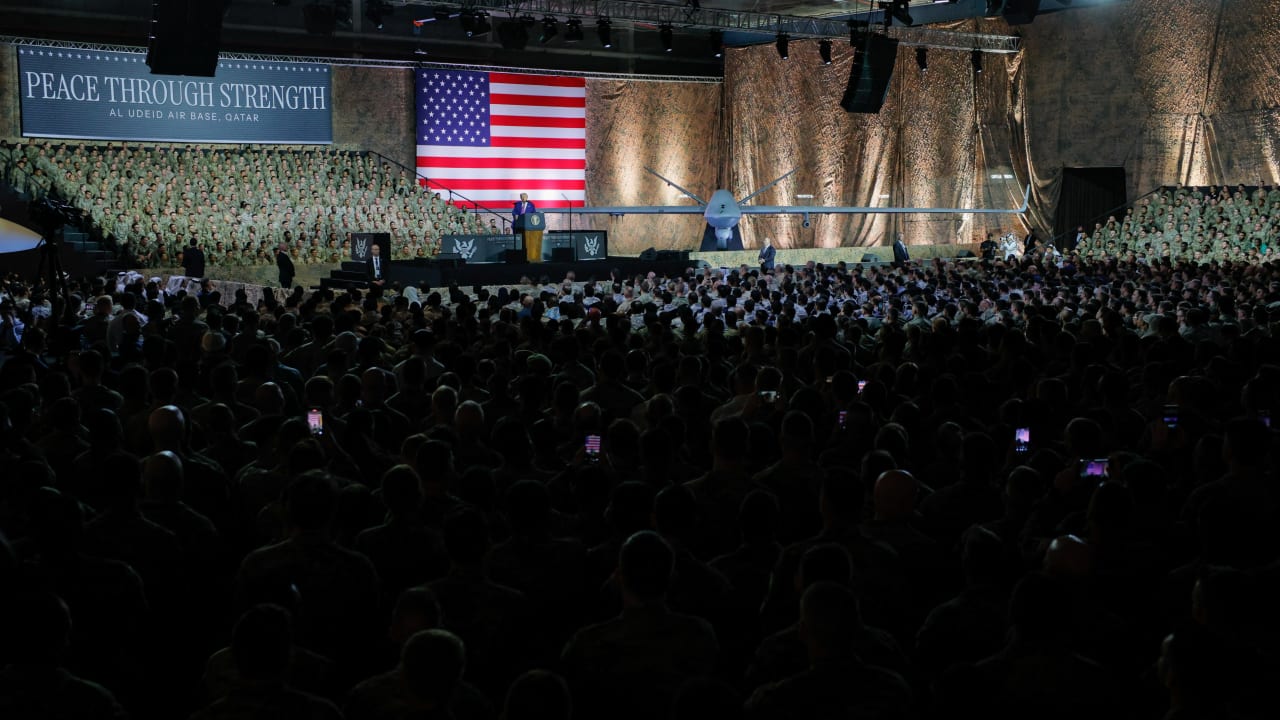
The United States has been moving troops stationed at bases in the Middle East for undisclosed missions amid concerns of a possible war with Iran, with a Friday report by The New York Times indicating that hundreds of troops have been moved from the Al Udeid base in Qatar, according to cited Pentagon officials.
The report also notes that there has been similar movement at the cluster of US bases in Bahrain, which house the Navy’s 5th Fleet, as well as Iraq, Syria, Kuwait, Saudi Arabia, Jordan, and the United Arab Emirates.
According to the Times, American officials may be concerned that the 30,000 to 40,000 US troops currently stationed in the Middle East could be the main target of Islamic Republic in case of an all-out war.
The Pentagon officials consulted by the Times said that the conflict would be different from the attack on Al Udeid back in June 2025, where Iranian officials notified the US in advance about the strike. The Iranian mission to the UN warned that, in case of an American attack, "all bases, facilities, and assets of the hostile force in the region would constitute legitimate targets."
That is why analysts say that the US is moving air defense systems into the Middle East to be able to defend its troops and interests effectively against an Iranian attack.

US' finite supply of interceptors
Katherine Thompson of the Cato Institute told the report that the current assets moved to the Middle East show an intention for a conflict much longer than the last 12-day war, with the Pentagon appearing to be “anticipating an Iranian response that could be a significant risk to American bases in the region.”
“The ability of the United States to sustain a prolonged defense of its forces and basing in the region, while also supporting Israel’s defense, is a major concern,” she said.
That is also the reason behind the US decision to keep its two air carriers in a relatively distant position to the Islamic Republic, in order to protect them from becoming a target.
Commited for diplomatic solution, Iran rejects discussing ballistic missiles
The report concludes that the Trump administration remains committed to finding a diplomatic solution to the situation in Iran.
It also says that several officials see the Iranian offers as insufficient to dissuade US President Donald Trump from attacking the Islamic Republic.
A Reuters report on Friday said that Iranian Foreign Minister Abbas Araghchi refused to open an envelope from the US side containing missile‑related proposals during the recent talks in Oman.
Reuters also reported that strikes against Iran could include targeting individuals and even pursuing regime change in Tehran, if ordered by Trump, two US officials said.
The latest revelations suggest more granular, ambitious planning ahead of a decision by Trump, who has in recent days publicly floated the idea of regime change in the Islamic Republic.