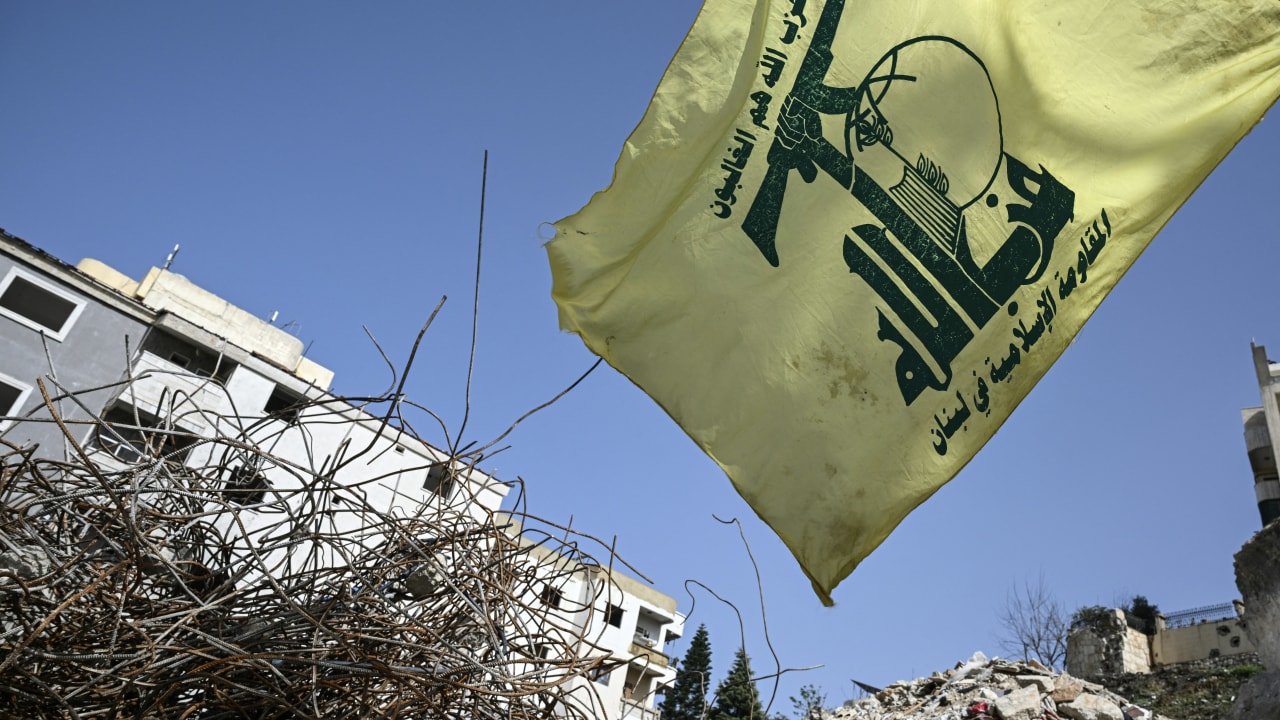
For many decades, from 1976 to 2005, the Syrian government of the Assad regime occupied Lebanon. During those days, Hezbollah was able to grow its tentacles throughout Lebanon.
Hezbollah had backing from Iran via the Assad regime. Now Syria has a new government that is opposed to Iran and Hezbollah. This has meant there are tensions between Damascus and Hezbollah.
A recent report at Al-Akhbar media in Lebanon, which is considered pro-Hezbollah, says that there are concerns about Syria’s accusations against Hezbollah regarding what is known as the “Mezzeh cell.” This apparently refers to terrorists who have operated near Damascus over the last year.
Hezbollah in the past ran cells in southern Syria near the Golan. When the Assad regime fell, the Hezbollah operatives fled or went into hiding. However, there are still terrorists operating in Syria and in southern Lebanon. These include Hezbollah and also other groups.
Israel has had to carry out strikes on Hezbollah and other terror groups that operate near Mount Dov and the Hermon in recent weeks.

It appears Hezbollah is now concerned about “the emergence of military preparations along the Syrian-Lebanese border, which, according to Al-Akhbar, have been increasing for more than 20 days, particularly on the eastern border.”
Apparently, this has escalated over the last 20 days amid US-Iran tensions. Israel has also warned Hezbollah against intervening in any new Iran conflict, threatening Lebanon with retaliation.
“This situation effectively places Lebanon under compounded pressure, combining the direct Israeli threat of war with security and military tensions that may have been initiated by the Syrian side, with tacit approval from the United States,” Al-Akhbar says.
Syria builds up forces near Homs amid foreign fighter influx
According to the report, the Syrian military build-up is “unusual.” It also involves the establishment of new positions near Homs, where forces have been rotated following the arrival of foreign fighters in waves to villages in the western Homs countryside, coming from Idlib.”
Hezbollah is concerned that “there has been a noticeable escalation in campaigns to demonize the resistance [Iranian-backed groups] and Hezbollah, through a mobilization discourse that focuses heavily on the residents of border villages.”
Now the report turns to the Mezzeh cell. Syria has acted against these terrorists who operate near Damascus. “This was a clear attempt by certain security factions within the administration of Syrian President Ahmed al-Sharaa to keep Hezbollah's name present in the Syrian arena, at least on the security level."
"While the statement alleged the party's involvement in these events, it revealed deep contradictions among the security factions, while simultaneously highlighting a strong tendency to reinforce the hostile and inflammatory atmosphere towards Hezbollah and Iran, and to fabricate accusations that could be used as pretexts for future security and military operations against Lebanon.”
Clearly, Hezbollah is worried. It is worried that Damascus will find weapons in the hands of terrorists that are linked to Hezbollah. This could include drones and missile parts.
The report says, “the individuals accused of working for Hezbollah are, in fact, members of terrorist organizations in Syria. One of them is Khaled Abdullah al-Issa al-Helou from the town of Sa'lu in the eastern Deir ez-Zor countryside. He had reached a settlement with the former regime, having previously belonged to one of the armed groups in the area."
The report continued, "Following this settlement, the former regime appointed him mayor of the village. The second is Muhammad Aboud al-Hammadi al-Ali, who was affiliated with ISIS for two years before reaching a settlement with the local defense forces. He was arrested two days ago in the town of Hatla in Deir ez-Zor.” Al-Akhbar claims this refutes assertions that these men are linked to Hezbollah.
It appears Hezbollah is worried Syria’s new work with the US-led coalition against ISIS could enable it to also declare a “war on terror” against Hezbollah. One place Hezbollah sees a problem is in Qusayr, which is north of Lebanon in Syria.
This was a transit point for Hezbollah backing the Assad regime back in 2012. Now Hezbollah alleges that Uzbek fighters who back the Syrian government are based in Qusayr “in the Homs countryside, particularly in areas adjacent to the Lebanese border, after they completed a training course at the Nabk camp.”
Another issue raised in the article is the new Syrian diplomats appointed to Beirut. “Following his appointment as head of the Syrian diplomatic mission in Beirut with the rank of Minister Plenipotentiary, Iyad al-Hazzaa officially assumed his duties yesterday and paid a courtesy visit to the Lebanese Ministry of Foreign Affairs to formally inform them of the commencement of his mission.”
The report claims that “al-Hazzaa is not a diplomat and did not hold any official position in the Syrian Ministry of Foreign Affairs.” Meanwhile, Le Monde says that there is a search for a fresh start in ties between Syria and Lebanon.
Lebanon has a new government, and this means that both Damascus and Beirut have new administrations. Both are opposed to Hezbollah.
“Lebanon and Syria are working to build a new relationship based on trust, shared interests, and mutual respect for sovereignty,” Lebanese Deputy Prime Minister Tarek Mitri told Anadolu, stressing that cooperation extends beyond the issue of Syrian detainees,” Turkey’s Anadolu reported recently.