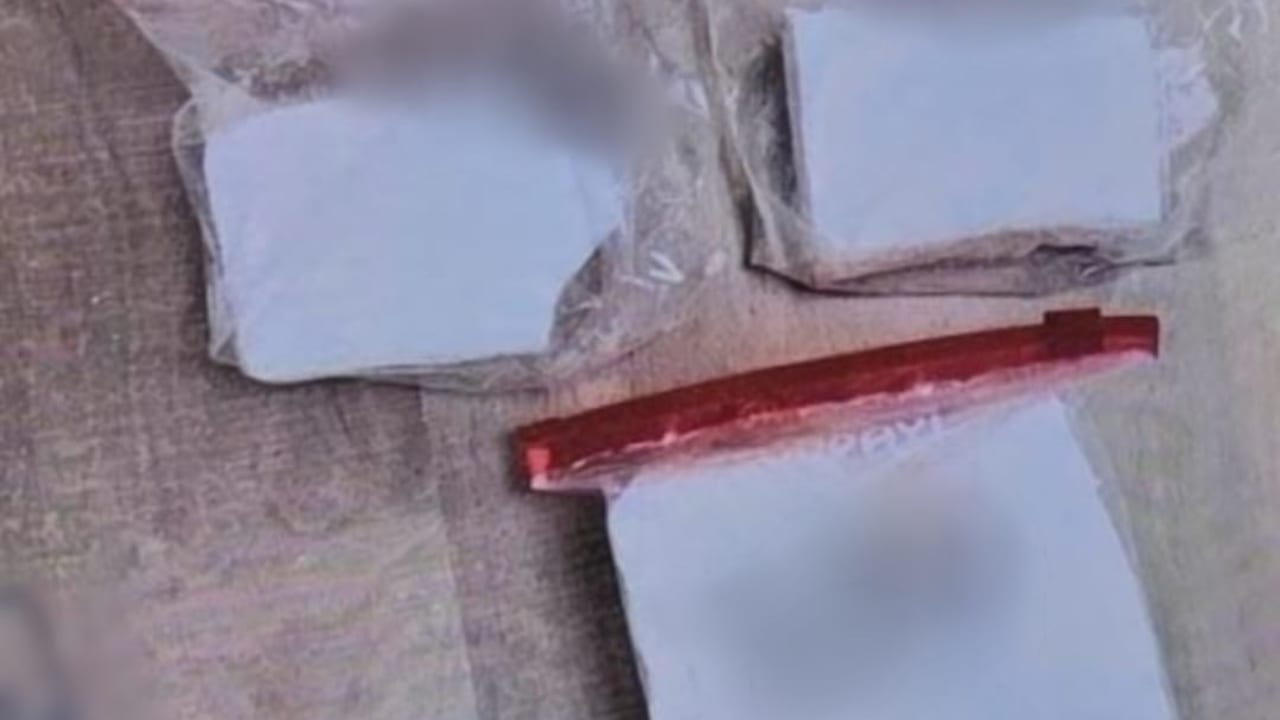
For over 20 years, Iran has been involved in narco-trafficking rings in the Americas via Hezbollah’s partnerships with drug cartels.
This has been well documented by the Drug Enforcement Agency and the Treasury Department, which have been investigating Hezbollah as not only a Lebanese terrorist organization but also a transnational criminal-terror network.
While it is true that Iran provides most of Hezbollah’s financing, crime – including drug trafficking, gun running, blood diamonds, illicit timber, and even human trafficking – form a key component of the terror group’s fundraising.
According to statements from US officials, illicit activities generate 30% of Hezbollah’s annual operating budget of roughly $1 billion, with Iran providing the rest ($700 million).
The majority of the criminal income, according to the Foundation for Defense of Democracies, is from narco-trafficking.
In October 2025, Matthew Levitt, director of the Reinhard Program on Counterterrorism and Intelligence at The Washington Institute for Near East Policy, testified in front of the US Senate Caucus on International Narcotics Control that Hezbollah has a long history of narcotics trafficking – in particular, laundering the proceeds – in Latin America.
An example was the Ayman Joumaa network – which the DEA exposed in 2011 and the Treasury linked to Hezbollah in 2012 – was laundering up to $200 m. a month for Mexican and Colombian cartels.
US: Hezbollah profits from cocaine, oil, illicit trafficking
Levitt added that part of the terror group’s reason for narco-trafficking is to aid in the financial stress caused by war with Israel, sanctions, domestic energy and environmental crises, and a reduction in Iranian financing.
It has thus been driven toward criminal-financial networks to meet its increased financial needs.
In 2015, the DEA dubbed the entity involved in these narco-trafficking activities as the “Business Affairs Component” (BAC) of Hezbollah’s External Security Organization (ESO) – its terrorist wing, also known as the Islamic Jihad Organization (IJO) – which it said was founded by the late Hezbollah terrorist mastermind Imad Mughniyah himself.
The DEA then reported that the BAC is run by two key Mughniyah deputies: Abdallah Safieddine and Adham Tabaja. Safieddine served as the group’s representative to Tehran and is a cousin of the late Hassan Nasrallah.
Tabaja was designated by the US Treasury in June 2015 and is a Hezbollah member who “maintains direct ties” to its senior organizational elements.
Then-DEA Acting Deputy Administrator Jack Riley explained that the reason Hezbollah was so deeply involved in the drug trafficking and money laundering schemes utilized by the BAC was to “provide a revenue and weapons stream for an international terrorist organization responsible for devastating terror attacks around the world.”
In 2016, the DEA stated that members of Hezbollah’s BAC had established business relationships with South American drug cartels such as La Oficina de Envigado, responsible for supplying large quantities of cocaine to the European and United States drug markets.
Then, in 2022, the National Terrorist Financing Risk Assessment issued by the Treasury wrote that Hezbollah-linked funds are more likely than those of many other terror groups to come through US banks.
In October 2024, the Financial Crimes Enforcement Network (FinCEN) reported that Hezbollah has benefited from laundering the proceeds of drug trafficking through elaborate schemes involving the Black Market Peso Exchange, the Hawala system, and intercontinental bulk cash smuggling networks that span Europe, Latin America, and the Middle East.
FinCEN also said Hezbollah generates a large portion of its revenue through the smuggling and sale of Iranian oil and liquefied petroleum gas (LPG) to buyers in Asia and the Middle East, in collaboration with the Islamic Revolutionary Guard Corps-Qods Force (IRGC-QF) and Houthi networks.
Given that Hezbollah is such a central component of Iran’s “axis of resistance,” its connection to extensive narco-trafficking networks raises concerns about the influence of both Hezbollah and Iran on the US and beyond.
In the context of today’s conflict between Iran and Israel, the documented linkages between Iranian state networks, Hezbollah’s global financial apparatus, and sophisticated narcotics trafficking and money-laundering operations highlight how deeply interconnected criminal financing and geopolitical strategy have become.
US law enforcement investigations and international sanctions efforts indicate that these illicit networks not only sustain proxy military activity but also adapt and expand amid sanctions and wartime pressures, arguably raising concerns about their impact on Western security, financial systems, and regional stability.