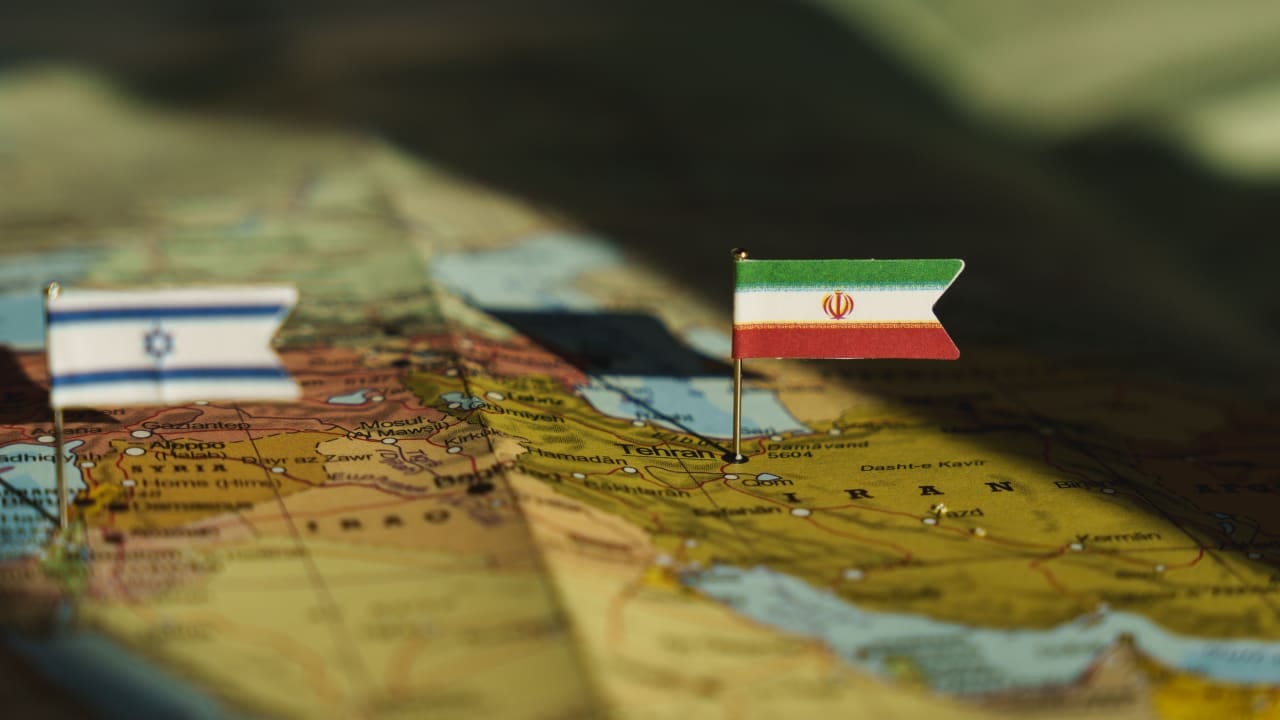
To many, it seems like an end-of-days scenario: Qatar and Israel on the same team.
Who would have thought? In September, Israel attacked in Qatar, targeting terrorist leaders the Gulf state was housing. But here we are. After five days of war with Iran, the Iranians have succeeded in putting Israel and Qatar on the same team – to say nothing of the United Arab Emirates, Kuwait, Oman, Bahrain, and even Saudi Arabia – all countries targeted over the past five days by Iranian missiles and drones.
By some estimates, Iran has fired more missiles and drones at Gulf states combined than at Israel.
What Iran may have done is something Israel has long struggled to achieve diplomatically: place Israel and several Sunni Arab states on the same side of a regional conflict. By striking the Gulf states directly, Tehran has widened the war in a way that forces governments across the region to reconsider where their interests truly lie.
Within the first 48 hours, Tehran launched missiles and drones not only toward Israel but toward every member of the Gulf Cooperation Council: the UAE, Saudi Arabia, Qatar, Kuwait, Oman, and Bahrain. What might initially have appeared to be a confrontation between Iran and the US and Israel quickly transformed into something wider – a regional conflict touching key Sunni Arab states.

And it was not only countries that have agreements with Israel that were targeted – the UAE and Bahrain – but also countries that have tried to maintain good relations with Iran, such as Qatar and Oman. Even Turkey announced on Wednesday that an Iranian missile was downed as it headed toward its airspace. By going after these countries, Iran is signaling that it wants everyone in the region to formally pick a side.
Tellingly, the strikes in the Gulf states were aimed largely at civilian targets rather than solely at US bases and facilities located in those countries. The strikes went far beyond American installations and hit airports, hotels, and oil infrastructure.
Why? The conventional wisdom is that Tehran hopes to sow chaos in the region and pressure those countries now under attack to lean on Washington to call off the campaign before the situation spirals even further out of control.
In some respects, this echoes what Saddam Hussein tried to do in 1991 – during a war that, incidentally, ended on Purim. Even though it served no operational military purpose, Saddam fired Scud missiles at Israel during that conflict.
His aim was political: He hoped to draw Israel into the war so that Arab countries, part of the coalition painstakingly assembled by then-US president George H.W. Bush, would abandon the war effort rather than be seen fighting alongside the Jewish state.
Bush convinced then-prime minister Yitzhak Shamir to stay out of the war even after Israel was hit – something that went against every fiber of Shamir’s being.
Iran pushes Gulf states into the war
Today, Iran appears to be attempting something similar, though with the logic turned on its head. Instead of trying to pull Israel into the war, Tehran is dragging the Gulf states into it.
By striking them directly, Iran is placing those governments on the horns of a dilemma: Do they give in to Iran’s attacks and push for a ceasefire to avoid further damage, or do they move closer to Israel and the US and join the offensive against Iran?
As of Wednesday evening, the Gulf states – beyond defensive action – have stopped short of joining the military campaign.
Qatar reported that it had shot down Iranian fighter planes in its airspace, and other states have activated their air defenses. But for now, the Gulf governments have largely limited their response to issuing warnings and releasing strong statements condemning the Iranian attacks. They have not formally joined the operations.
But that may change. And if it does, it would represent a tipping point in the region.
Forget all the discussion about Arab states normalizing ties with Jerusalem for a moment. There is no clearer form of normalization with Israel than fighting alongside it – and the US – against a common enemy.
This turn of events also reinforces something Prime Minister Benjamin Netanyahu has argued for decades: that Israel and the moderate Sunni states have far more in common than not.
The current struggle with Iran may drive home to those governments – and perhaps to their publics – that the primary threat to regional stability is not Israel or the Palestinian issue, as is often proclaimed in official rhetoric, but Iran and its regional ambitions.
Instead of dividing the Gulf states, Iran may be pushing them closer to Israel.
Netanyahu hinted at this possibility in an interview with Fox News on Monday when asked whether he sees a path toward peace with Saudi Arabia.
“I think Saudi Arabia will have a great deal to gain” with the fall of the current regime in Iran, Netanyahu said. “And I think that all the countries around Iran feel threatened by Iran. I believe they would like to see this regime fall, even if they do not say so publicly.”
Once Iran was removed, he said, “peace between Israel and Saudi Arabia would be very possible – and probably very close.”
By framing the war in these terms, Netanyahu is arguing that the ultimate payoff of this confrontation could be regional peace, and that this conflict itself may prove transformational. His assertion that the war could “usher in an era of peace that we haven’t even dreamed of” elevates the campaign from just another Middle Eastern war into a potential historic turning point.
Critics may argue that this vision is overly optimistic. Yet the very fact that Qatar – of all countries – and Israel now find themselves effectively on the same side of the conflict suggests that something significant may indeed be shifting.
Netanyahu’s idea of a regional security alliance – outlined in his 2024 speech to a joint session of Congress – an “Abraham Alliance” linking Israel with Arab states against Iran, was long seen as aspirational, even fanciful. Iran’s decision to strike Sunni Arab neighbors directly may now make that architecture more conceivable.
Faced with the same missiles, drones, and threats, Gulf states may increasingly find themselves confronting the same reality Israel has warned about for decades. If that recognition takes hold – not only among leaders but among their publics – Iran’s decision to widen this war may come to be seen as one of the most consequential strategic miscalculations in the region since Jordan’s King Hussein decided to enter the Six Day War against Israel in 1967.