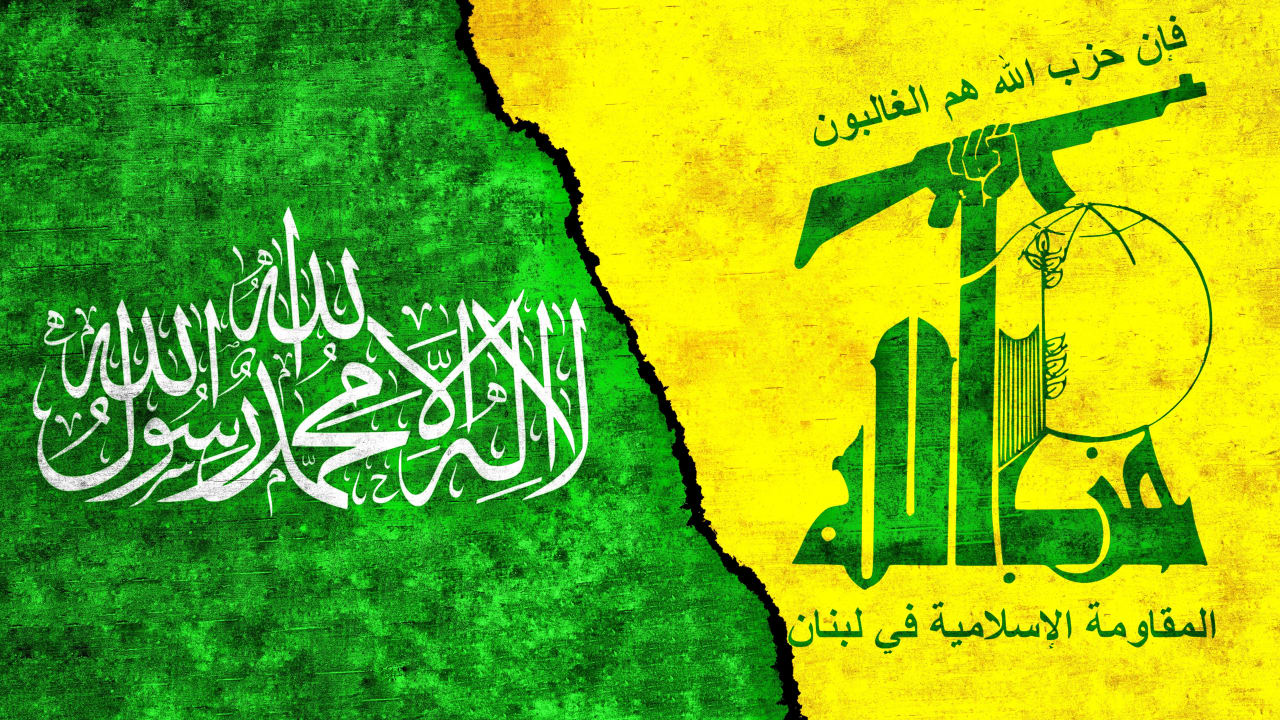
More than two years of conflict marked by heavy Israeli airstrikes, ceasefires, ceasefire violations, and subsequent reprisals have taken a significant toll on the leadership of Iranian proxy terror organizations Hamas and Hezbollah.
In the wake of the devastation suffered by the groups, the following are some of the most significant figures remaining in the two organizations.
Hamas leadership
Following the Israel-Hamas War, which began on October 7, 2023, Israel decimated Hamas’s leadership. High-profile killings have included arch terrorists Ismail Haniyeh, Yahya Sinwar, Mohammad Sinwar, and others.
In Gaza, the current highest-ranking member of Hamas is Izz al-Din al-Haddad, who is one of the remaining masterminds of the October 7 massacres in southern Israel.
Haddad is the current chief of Hamas’s so-called military wing, the Izzadin al-Qassam Brigades, which he assumed command of following the death of Mohammad Sinwar.

Aside from Haddad, however, the majority of the terror group’s senior leadership resides in Doha, Qatar. There, Hamas has a five-person ruling committee.
The head of the committee, Muhammad Ismail Darwish, leads Hamas’s Shura Council, the group’s main authoritative body.
Darwish assumed the position in mid-October of 2023, after the IDF killed his predecessor, Osama al-Mazini, less than two weeks after the start of the war.
Khalil al-Hayya, a member of the committee, has served as the group’s chief negotiator and as the leader of its delegations in indirect talks with Israel.
Another member of the council is Khaled Mashaal, widely regarded as one of the group’s most significant remaining leaders.
Mashaal, who led the group from 2004 to 2017, is often the Hamas leader interviewed by media outlets and representing the group at major events.
In February, Mashaal, at an Al Jazeera Forum, reiterated the group’s rejection of disarmament, a key stipulation in the US-brokered ceasefire between Israel and Hamas.
Zaher Jabarin, another member of the council, leads Hamas’s Financial Bureau as well as its West Bank operations.
He also heads Hamas’s Office of Martyrs, Wounded, and Prisoners and is a key member of the group’s negotiation team.
The final member of Hamas’s five-member leadership council is Nizar Awadallah, who has been in Qatar since before the start of the war.
Awadallah is a long-time member of the group and was close to its co-founder, Sheikh Ahmed Yassin.
Hezbollah leadership
At the head of Hezbollah is Secretary General Naim Qassem. Qassem was selected to lead the terror group after his predecessor, Hassan Nasrallah, was killed by an Israeli airstrike in Beirut in late September of 2024. Under his leadership, the group, after sustaining heavy losses in infrastructure, leadership, and fighters from a year of IDF military action, signed a ceasefire with Israel a month later.

Shortly after Israel’s initiation of Operation Roaring Lion against the Iranian regime last month, fighting again broke out between Israel and Hezbollah after Qassem directed the group’s entrance into the conflict on Tehran’s side.
Another major figure in the organization is Mohammad Haidar, a politician in the group’s political wing and a senior security official in Hezbollah’s Jihad Council.
The council is responsible for the terror group’s military and security operations. It reports to Hezbollah’s Shura Council, the organization’s top decision-making body, which oversees its overall military strategy and political direction.
Talal Hosni Hamiyah, also a member of the Jihad Council, heads Hezbollah’s Unit 910, the unit responsible for clandestine operations outside of Lebanon. The unit is responsible for notorious global terror attacks, including the 1994 AMIA bombing, the 1992 Buenos Aires Israeli embassy bombing, and the 2012 Burgas bus bombing.
The unit also works closely with Iranian intelligence and the Islamic Revolutionary Guards’ Quds Force.
The US is currently offering a reward of up to $7 million for information leading to Hamiyah's capture.
Another senior figure in Hezbollah’s military apparatus is Khalil Yusif Harb, a close adviser to Naim Qassem and, before him, former Hezbollah leader Hassan Nasrallah.
The US State Department, which has a bounty of up to $5 million for information on Harb, notes that he has served as Hezbollah’s chief military liaison official to both Iranian and Palestinian terrorist groups.
In addition to these individuals, Hezbollah’s political wing is comprised of numerous senior officials, such as Mohammad Raad, who heads the group’s parliament bloc, Ali Damoush, who heads Hezbollah’s Executive Council, Ibrahim Amin al-Sayyed, who heads the group’s Political Council, and Mohammad Yazbek, a Shura Council member who heads Hezbollah’s Judicial Council.
Responding to an inquiry from The Jerusalem Post, the IDF affirmed that it was ready to strike at the decision-makers in terrorist organizations that operate to threaten the State of Israel.