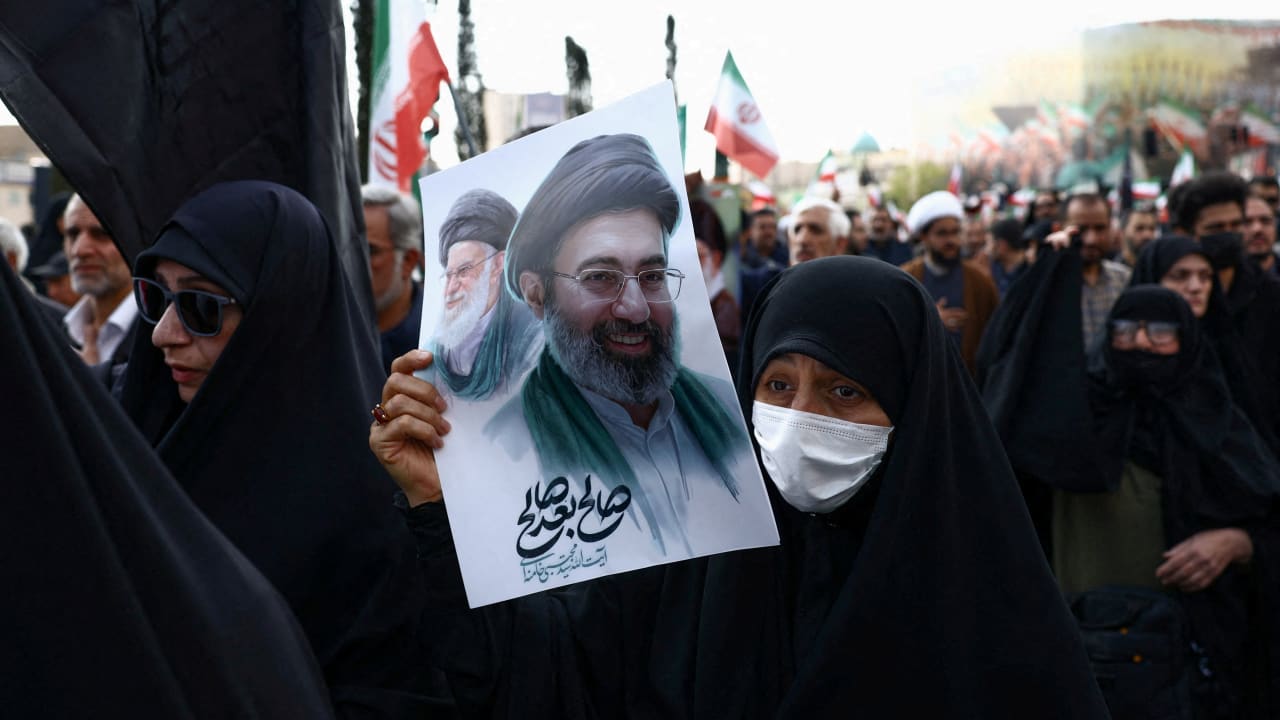
There are concerns in Israel that the war with Iran could end with an Islamic regime far more radical and nuclear-weapons seeking than that which preceded it, IDF sources said on Thursday.
This, despite all of the substantial progress made so far in the war.
The comment was not a prediction of a likely outcome, but merely a straightforward assessment of the range of potential outcomes at this sensitive stage of the battle.
On the one hand, IDF sources said that much of Iran’s military power in virtually every area has been set back by years.
But on the other hand, the army said, no one knows whether the Israeli strikes – 10,000 and counting – and the American strikes – at least 8,000 – will be sufficient to coax enough Iranian protesters out into the streets to topple the regime.

IDF investing 'extraordinary efforts' to help Iranian protesters
The IDF did say that it has invested extraordinary efforts in helping set the conditions by which anti-regime Iranian protesters could potentially topple Tehran’s leadership.
After the Israel Air Force’s initial attacks focused on top Iranian leaders, air defenses, and ballistic missiles, the attacks quickly shifted to destroying the Islamic Revolutionary Guard Corps, Basij, Interior Ministry, and Intelligence Ministry command centers and forces. These bodies are the backbone of the regime’s apparatus for suppressing opposition.

Over the last week, there have even been an increasing number of videos released showing the air force bomb specific, smaller-level checkpoints, which could have been used to keep protesters off a given street.
Yet, after all of these achievements, neither the IDF nor the US has announced any operations to destroy or dilute Iran’s 60% enriched uranium under the rubble at Isfahan or the Pickaxe Mountain (Natanz) facility, which even mega bunker busters cannot penetrate, many fear.
Combined, many are concerned that these two nuclear issues could result in a small-scale, rushed-out nuclear bomb, which, however small, could have devastating effects.
The IDF has declined to provide confidence that these two nuclear threats will be dealt with before the end of the war.
Israeli efforts to weaken regime may have taken on greater urgency
Mojtaba Khamenei, the son and successor to Ayatollah Ali Khamenei as Iran’s supreme leader, is viewed as potentially more extreme and radical in his hatred of the West and Israel and readiness to try to use any weapon, including nuclear, to gain leverage or take revenge.
Considering the two above components of Iran’s nuclear program, which are still viable, and Mojtaba as the new leader, there is a nightmare scenario where Iran could have been weakened by years in most areas, including in many areas of its nuclear program, while still managing to wield and use an ace-in-the-hole small-scale nuclear weapon.
In that sense, the IDF’s and the US’s efforts to continue to weaken the regime with the hope that it will be toppled may have taken on a greater urgency.