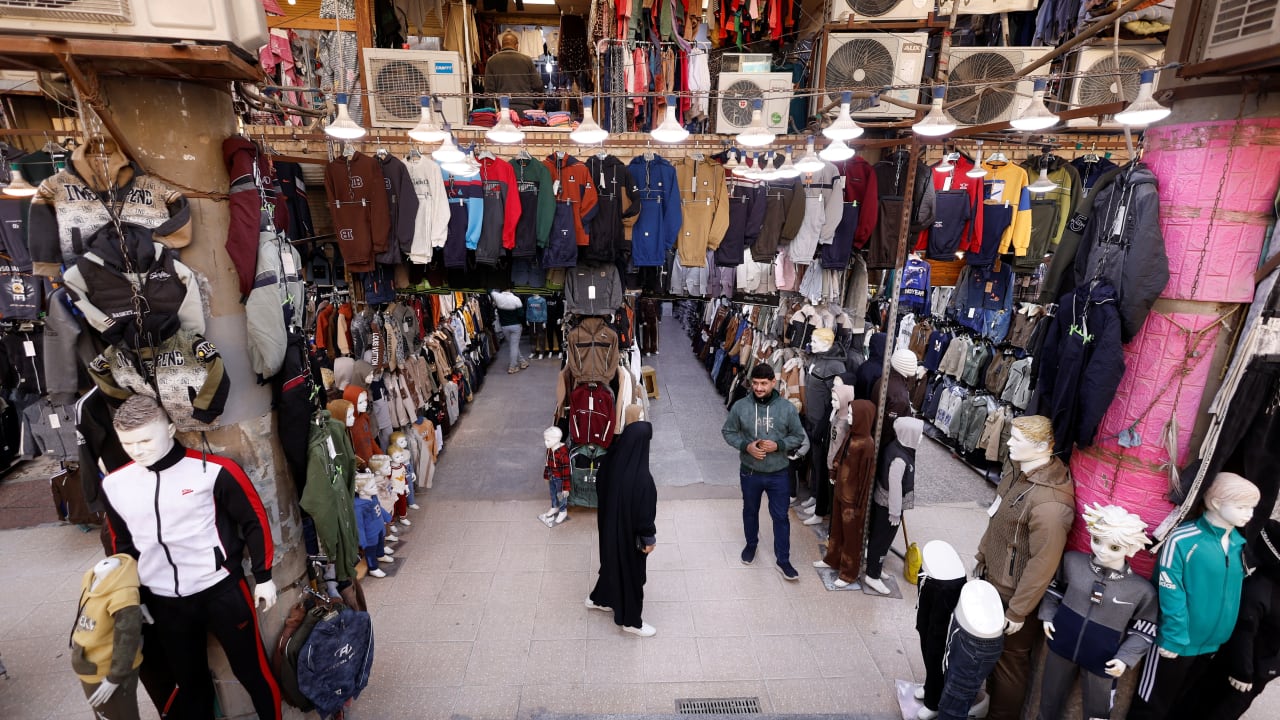
In Najaf’s market, Ahmed Salam once ran two shops selling prayer beads and accessories to Iranian pilgrims in the Iraqi holy Shi’ite Muslim city, a prime destination for millions of visitors.
Today, Salam stands behind the counter of his remaining store, after selling the other to pay off his debts, as visitors have dwindled, deterred from travel by the prolonged economic woes in Iran that have helped stoke deadly nationwide protests.
“We are the market that is the most dependent on Iranian visitors,” Salam said.“I used to have two shops, but I sold one. Now I am at risk of leaving my work, because I cannot cope with the debts, as these imposed sanctions (on Iran) have affected us.”
Iranian pilgrim numbers have collapsed
Salam's account was echoed by other merchants and hoteliers who Reuters spoke to in Najaf, who are now also struggling financially.
The city in Iraq is home to one of Shi’ite Islam’s holiest shrines and has long relied on Iranian pilgrims, who have traditionally made up the largest proportion of visitors, ahead of pilgrims from the Gulf, Pakistan, Lebanon and other countries. But their numbers have collapsed.

In 2023, 3,000 to 3,500 Iranians arrived daily. Now, some days see as few as 100 to 250, according to Najaf’s hotel and restaurant association and local officials.
"In 2020, there were 350 hotels in Najaf, but now there are 250 hotels. That means 100 hotels are no longer part of the tourism sector, and as a result, their workers and employees have been laid off, adding significantly to unemployment," said Saib Radhi Abu Ghanem, head of the association.
He said the currency volatility at home made trips unpredictable for Iranians. "One day the trip would cost them $200, but the next day it could rise to $220, which puts financial pressure on them," he said.
Soaring prices, plunging currency
Iran’s rial has plunged to record lows, losing nearly half its value against the dollar in 2025, deepening the economic hardship from years of Western sanctions aimed at cutting off funding to Tehran's nuclear program. Iran denies seeking nuclear weapons.
The protests began on December 28 in response to soaring prices, before turning squarely against clerical rule.
Economic disparities between ordinary Iranians and the clerical and security elite, along with economic mismanagement and state corruption - reported even by state media - have fanned the discontent at a time when inflation is pushing the price of many goods beyond the means of most people. Official inflation hit 42.5% in December.
Iran’s rulers, while acknowledging economic difficulties, have blamed their longtime foes, the US and Israel, for fomenting the unrest.
Washington joined a 12-day war between Iran and Israel in June, striking Iranian nuclear sites. US President Donald Trump has also threatened to intervene in support of the protesters in Iran.
The US-based HRANA rights group said it had so far verified the deaths of 2,403 protesters and 147 government-affiliated individuals. An Iranian official told Reuters on Tuesday that about 2,000 people had been killed.
Other estimates of the death toll in Iran have been considerably higher, but the true figure is unknown.
Sources, such as Iran International, estimated that over 12,000 people have been killed during the protests in Iran, largely over the course of Thursday and Friday nights, describing the events as “the largest killing in Iran’s contemporary history.”
Authorities have detained at least 10,721 people since the start of the demonstrations, and 97 cases of forced confessions by detainees have been published by official or government-affiliated media, HRANA noted.