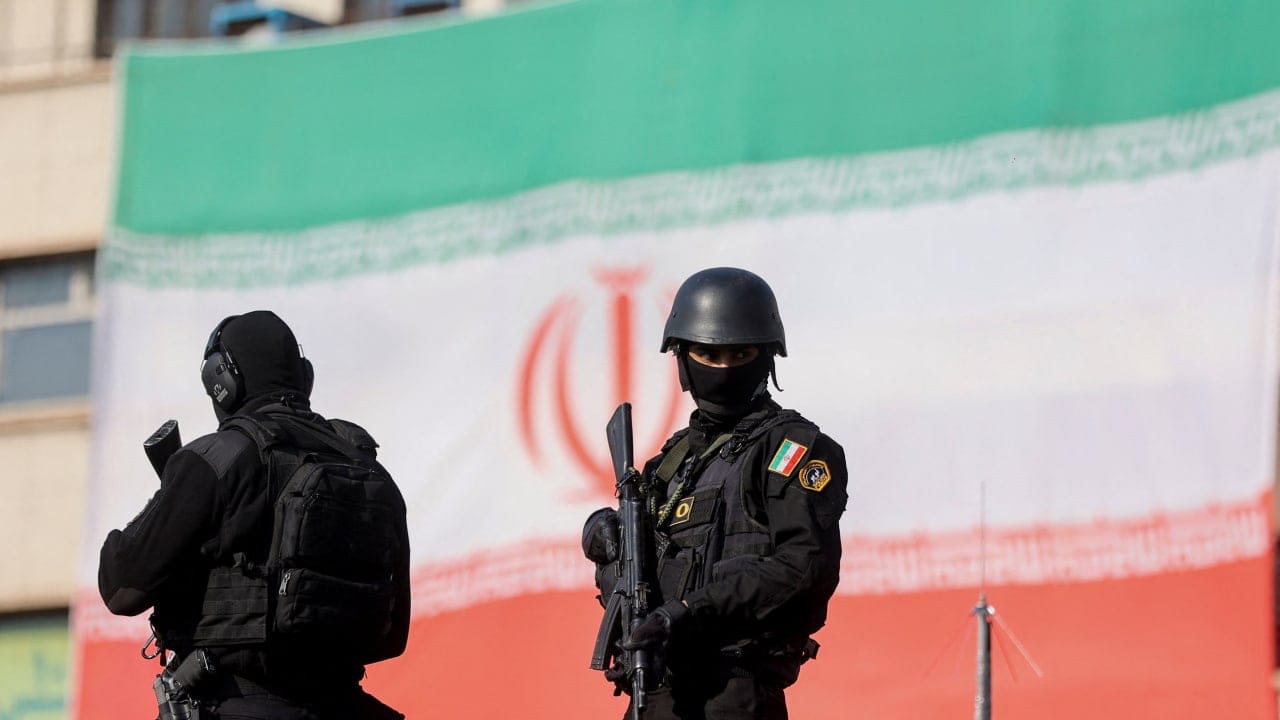
Some protesters committed actions “identified as mohareb,” a crime punishable by death in Iran, according to Asghar Jahangir, the Islamic Republic’s judiciary spokesperson. The “severest punishment” would be reserved for those found guilty, he said.
Mohareb, meaning to wage war against God, involves the use of weapons to create fear and breach public security under the regime’s law. Suspects accused of this crime usually appear before closed-door sessions of so-called Iran’s Revolutionary Courts rather than in standard courts, where surveillance is easier.
Capital punishment for mohareb, which is based on Islamic law, was paused for many years after the regime cemented its control in the early 1980s, following the 1979 Islamic Revolution.
The first execution on mohareb charges in recent years was carried out against Mohsen Shekari, following the 2022 “Women, Life, Freedom” protests. Shekari was killed three months after he was arrested for wounding a member of the Basij paramilitary force. A human-rights group said he was not given a fair trial.

The recent protests were “chaos,” Jahangir said, adding that “collaborating, propagandizing, or changing the atmosphere in favor of the enemy” were crimes.
Iran was facing a terrorism threat from external sources, he said, and protesters “affiliated with Mossad agents and terrorists” had already been identified.
“The law has clear provisions for such cases, and it is well defined what the punishment is for those who cooperate with our sworn enemies,” he added.
Jahangir appeared to contradict comments made by Iranian Foreign Minister Abbas Araghchi, who told Fox News there would not be “any hanging today or tomorrow or whatever… I’m confident about that. There is no plan for hanging at all.”
IRGC denies it issued an execution order against Erfan Soltani
Tehran had denied that it issued an execution order against Erfan Soltani, a protester who human-rights groups say was set to be killed on Wednesday.
Iran’s judiciary said Soltani had been charged with “assembly and collusion against the country’s internal security,” as well as “propaganda activities,” state-run Islamic Republic of Iran Broadcasting reported.
The regime denied reports that he was set to be executed without trial.
Soltani’s execution had been postponed thanks to public outcry and statements by US President Donald Trump, his family told international media outlets and human-rights groups.
Soran Feyzizadeh, 40, was tortured to death while in the regime’s custody, the Hengaw human-rights group reported. Other human-rights groups said they were investigating reports of other victims who had been killed by the regime during detention.