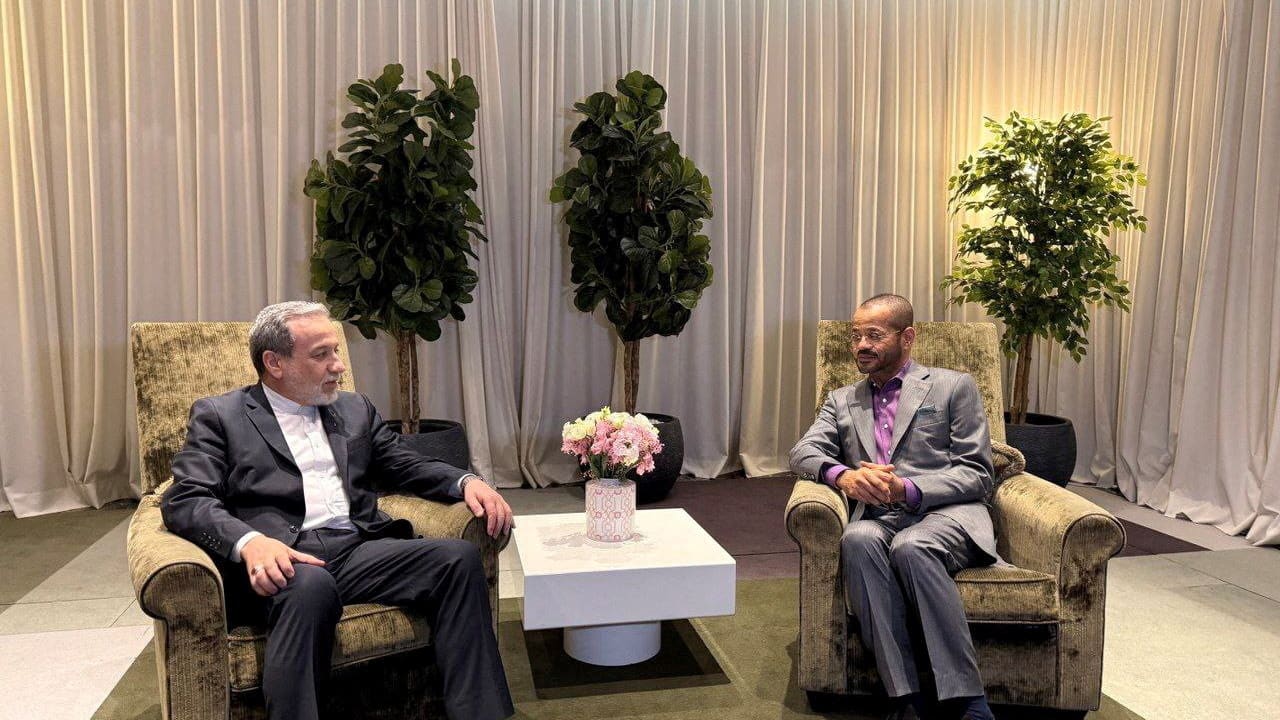
Iranian Foreign Minister Abbas Araghchi arrived in Geneva “for a third round of indirect negotiations with US representatives over the Iranian nuclear program,” Islamic Republic News Agency (IRNA), Iran’s official news agency, reported Thursday.
“Araghchi and his accompanying delegation arrived in the Swiss city on Wednesday evening ahead of talks with American envoys Steve Witkoff and Jared Kushner, scheduled for the following day,” the report said.
These are important talks and come amid tensions between the US and Iran. Various reports over the past month have portrayed the US as prepared to carry out wide-ranging airstrikes and a long campaign against the Iranian regime.
US President Donald Trump, in his State of the Union address on Tuesday, seemed to lay the groundwork for why the US would carry out strikes. On the other hand, some observers have expressed concern about the challenges the US might face in a conflict.

Araghchi holds pre-US nuclear talks with Oman mediator
Iran is hoping it can reach an agreement with the US. Araghchi met with his Omani counterpart, Sayyid Badr bin Hamad Al Busaidi, prior to this third round of talks with the US.
“Araghchi and Al Busaidi met and held talks in Geneva on Wednesday evening, hours after the Iranian foreign minister and his accompanying delegation arrived in the Swiss city,” IRNA reported.
They discussed what will happen in the future and also the need for coordination, the report said.
“The negotiations, which are being held indirectly through the Omani foreign minister, mark the third round of such talks, following previous rounds held on February 6 and 17 in Muscat and Geneva, respectively,” it said. “The first two rounds of the talks were also held indirectly through Al Busaidi.”
Oman is therefore very important. Iran insists on this “indirect” form of talks, and this appears to be slowing the talks as well.
Iran wants “a fair, balanced, and equitable deal is achievable,” Araghchi told India Today, IRNA reported. “Iran has said that any agreement should include the removal of sanctions against the nation.”
Meanwhile, during a meeting with academics and political, social, and cultural activists in Mazandaran Province, Iranian President Masoud Pezeshkian said unity and national cohesion “are essential to counter what he described as enemies’ efforts to weaken and divide Iran,” IRNA reported, adding that that “he warned that discord and internal disputes would serve the enemies’ goals, while national unity would make Iran invincible.”
“If we stand together and pursue a common goal, no power will be able to defeat Iran,” Pezeshkian said.
He has been portrayed as largely sidelined in Iran and as having little control over what comes next.
The real power behind the throne is apparently Supreme National Security Council Secretary Ali Larijani. He recently held a meeting about “preserving stability and calm in the Caucasus through cooperation among regional countries, without the involvement of extra-regional powers,” IRNA reported.
He met with the Armenian Defense Minister, Suren Papikyan, in Tehran.
Iran hopes it can escape the possible US strikes. It says its missiles are not a threat, even as Israel has warned increasingly about the Iranian ballistic-missile threat.