The clearest way to understand a regime is to follow the money.
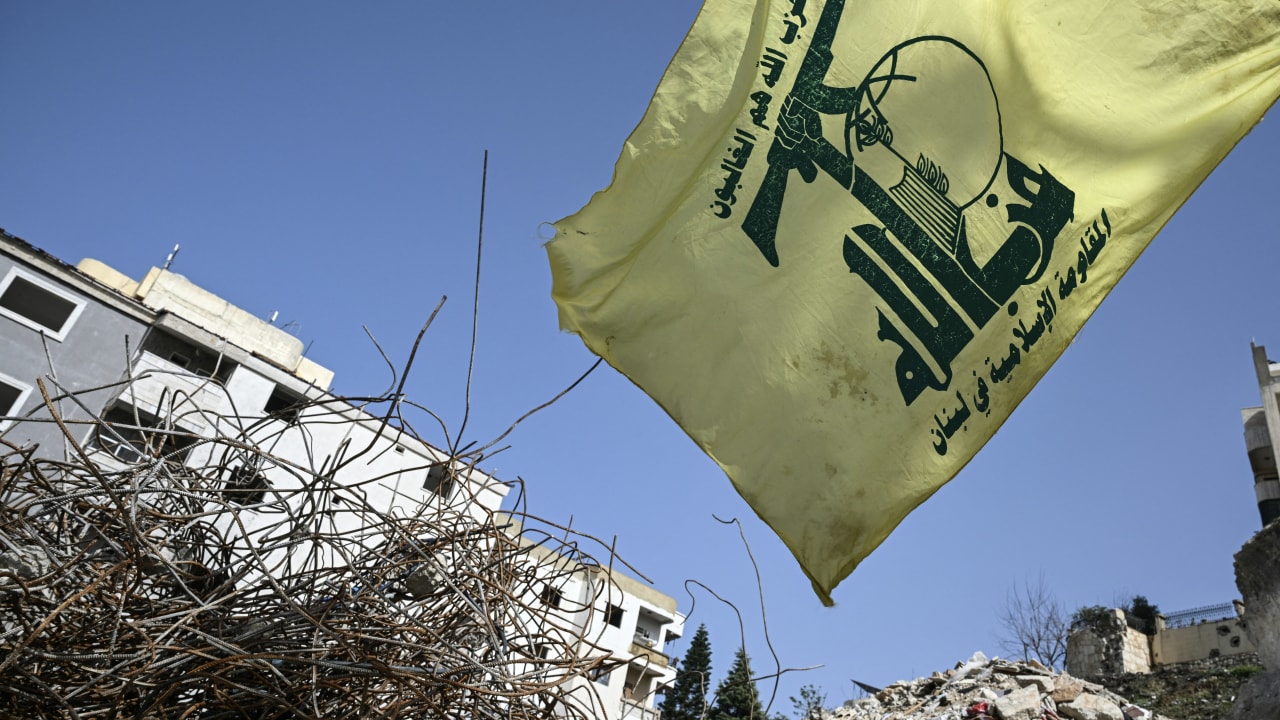
Last year, Iran transferred more than $700 million to Hezbollah. That figure buys rockets, drones, training, salaries, and a logistics chain that keeps flowing even as Lebanon burns.Now consider what that same sum could purchase inside Iran – where families navigate food insecurity, punishing inflation, and chronic shortages of medicine. That’s a governing philosophy, written in a budget line.

This week’s Israeli operation against Iran was framed, in official language, as a necessary response to an existential threat. Strip away the framing and the picture is starker.
Tehran has spent years building two interlocking machines. The first is a regional proxy network, armed groups positioned around Israel and across the Middle East, giving Tehran deniability and multiplied pressure. The second is a direct ballistic missile force capable of striking Israel from Iranian soil. Both cost money. Iran chose to build them anyway.
The missile math
Iran’s ballistic missile stockpile sits at roughly 2,000 warheads, with production ongoing. That number reflects a deliberate doctrine: volume over precision.
A handful of missiles create fear. Thousands create a campaign. They let Iran sustain pressure over days or weeks rather than a single dramatic salvo, forcing Israel to spread its defenses, ration interceptors, and triage what gets protected. It’s a form of attrition waged before any formal war begins, bleeding Israeli readiness through the permanent threat of launch.
This missile buildup runs alongside Iran’s advancing nuclear program, and the combination matters in a specific way. Tehran doesn’t need a declared weapon to reshape regional behavior. It needs the perception that capabilities are accumulating and that time is running in its favor. Missiles plus nuclear ambiguity equals durable strategic leverage, and that leverage grows as long as the program does.
The proxy architecture
Hezbollah gets the headlines because of its proximity to Israel and the scale of its arsenal. But Tehran’s proxy investment stretches much further.
Iraq-based militias provide distance and a clean alibi. They can strike and harass while Iran maintains official innocence. The Houthis have turned Yemen into a platform for disrupting regional shipping lanes and airspace, extending the conflict well beyond Israel’s borders.
Hezbollah brings concentrated firepower close to Israeli homes. Together, these forces don’t just threaten Israel from one direction. They force it to defend everywhere at once, stretching resources and attention across multiple fronts.
The $700 million figure puts Tehran’s commitment in hard terms. Proxy warfare isn’t a side project of Iranian foreign policy. It’s the main event, expensively maintained and central to everything Tehran does regionally.
The cost at home
Iran’s social contract with its own citizens has narrowed to something pretty blunt: Accept austerity now so the regime can project power later.
What that looks like in practice is a country where protest movements keep returning, where household spending on food and medicine has shrunk, and where the state exports capital and weapons while importing sanctions.
Tehran holds the arrangement together through security force loyalty, censorship, and ideological discipline at the top. Regimes have survived on that formula for generations. But the internal pressure is real, and it compounds over time.
The people subsidizing Iran’s regional ambitions are the same people the regime claims to represent. When $700 million leaves Tehran for Beirut, something doesn’t get built, funded, or treated inside Iran.
That ledger is never officially published. Ordinary Iranians read it every day in prices and empty shelves.
Israel’s home front as a strategic target
Iran’s preferred instrument of pressure is disruption. Missiles and proxies are built to break routine, push civilians into shelters, keep schools closed, slow economic activity, and wear down the social patience that democratic societies need to sustain difficult policies over time.
Israel’s public posture during this operation reflects that understanding. Instructions to stay near protected areas, treat every alert as real, and follow Home Front Command guidance aren’t bureaucratic boilerplate. They’re an acknowledgment that civilian resilience is itself a strategic asset under attack.
Israel has also mobilized significant reserve forces, a signal that the state is preparing for a sustained, multi-dimensional period rather than a quick exchange. The close coordination with the United States, described as ongoing and detailed, adds a deterrence layer aimed at Tehran’s calculations and at Hezbollah’s.
The ledger
More than $700 million to Hezbollah in a single year. Roughly 2,000 ballistic missiles in inventory with production continuing. Proxy networks from Lebanon through Iraq to Yemen. A nuclear program advancing in defiance of international pressure. This is a government that has lined up its budget with its ideology, consistently and at scale.
What’s different about this moment is that the math has become hard to look away from. Tehran’s investments have matured into operational capabilities. The proxy architecture, the missile stockpile, the nuclear progress, these aren’t distant risks anymore. They’re present features of the regional landscape, and they’re what prompted a military response.
Iranians are living with the economic consequences of their government’s choices. Israelis are living with the security consequences. Two populations, separated by geography and circumstance, paying the bill for the same set of decisions, made by leaders that neither, in any meaningful sense, chose.