In recent days and weeks, sources have indicated to The Jerusalem Post that the final decision to go to war with Iran and the process leading to that decision culminated much later than some of the leaked narratives that have been flooding the headlines of late.
If the new conventional narrative – that some top US officials, and especially certain top Israeli political figures, have been trying to frame lately – portrays a brilliant, consistent, clear, and long-standing plan to go to war, the Post understands that much of this is revisionist history, aimed at simplifying what was actually an extraordinarily uncertain period marked by a complex series of ups and downs.
By Thursday, after the Iranian offer in the third round of negotiations with the US had fallen short of President Donald Trump’s minimum redlines, the US president signed off on plans for a joint US-Israeli attack.
Some of the decisions regarding the exact timing of the attack – Friday night versus Saturday morning – also appear to have been impacted by late-developing intelligence, which located where Iran’s Supreme Leader Ayatollah Ali Khamenei would be meeting with other top Iranian security officials.
But generally speaking, the key turning point came on Thursday afternoon/evening, with multiple hints, including the delay and eventual cancellation of US Secretary of State Marco Rubio’s previously announced trip to Israel and other contrary points of misdirection, such as continued meetings with Omani officials about a potential fourth round of negotiations later this week.

New narratives pretending that Prime Minister Benjamin Netanyahu and Trump had already set the plan of a joint attack as a certainty weeks ago or longer betray the complex picture of what went on before that point.
The current standoff with Iran started with Iranian protesters taking to the streets over price inflation and other such economic issues unrelated to Israel on December 28.
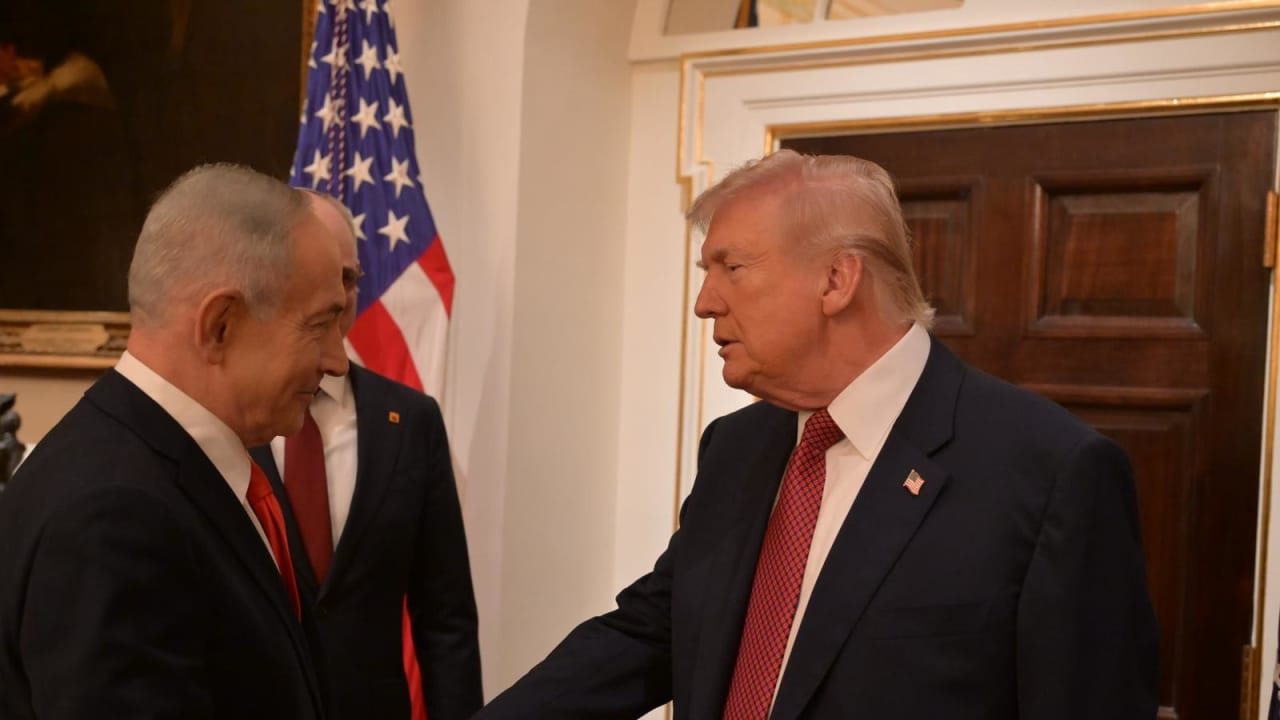
Trump, Netanyahu meetings on Iran
Trump’s first response in a December 29 meeting with Netanyahu was that this was not his issue and that it was too bad that many Iranian protesters would probably be killed by the regime, which had shown it was very strong at putting down revolts.
It was only around a week later, after Trump saw how quickly and easily he had toppled Venezuelan dictator Nicolás Maduro, that he started making public noise about getting involved on behalf of the Iranian protesters and issuing multiple warnings to the regime not to kill its own people.
However, the Post has learned that Trump, Netanyahu, and the defense and intelligence establishments of both countries were caught by surprise when a huge spike of around one million Iranians came out to protest the regime.
They were equally caught off guard by the speed and ferocity of the regime’s counterattack on the protesters, in which it killed between 5,000 and 35,000 Iranians, blatantly violating Trump’s redline.
Still, with the internet down in Iran, the full data and images of the regime’s slaughter of its people took several days to emerge, and it was only on January 14 that Trump considered attacking for the first time.
However, shortly after sending his tweet that “Help is on the way,” which set off a media storm of near certainty of an attack, the US president backed off and shifted to talking more about Iran’s nuclear program.
Likewise, there were many media stories about the US waiting for the first of two aircraft carriers to arrive in the region. It turned out that Trump had not realized that he had few forces in the region with which to deliver a knockout blow.
Also, Trump had not realized that Israel and his Sunni Arab allies were under-defended from what turned out to be a lethal ballistic missile counterattack from the Islamic Republic.
Accordingly, Netanyahu, the Sunni countries, and Trump’s American military advisers all talked him down from attacking.
They (including Israel’s defense establishment) had once again been caught by surprise that he was ready to attack so soon and did not think that either he or they were ready.
At this point, Trump shifted to truly hoping for a deal with Iran, even if it was only or mostly regarding the nuclear program. From mid-January until Thursday of last week, there were many additional ups and downs.
At certain points, Trump seemed ready to cut a deal only on the nuclear program, and to potentially allow for low-level nuclear enrichment as long as there was a long nuclear freeze, which would let him claim a better deal than the Obama administration in 2015.
During this period, IDF Chief of Staff Lt.-Gen. Eyal Zamir, Mossad Director David Barnea, and IDF Intelligence Chief Maj.-Gen. Shlomi Binder all visited Washington in order to try to convince Trump to take the ballistic missiles issue seriously and to make more detailed plans for a possible joint strike that might topple the regime.
Yet, each of these officials felt the need to go one after the other, not confident that they had sold Trump and his team.
When Netanyahu moved up his planned late February visit to the US to February 11, it was a desperate move to convince Trump not to cut a mediocre deal just on the nuclear issue, with deep concern in Israel both among political and defense officials that the US president might be moving in that direction.
By late February, once two aircraft carriers were in place and the Iranian officials continued to present negotiating positions that were not that different from their early-2025 stances, Trump started moving closer and closer to a decision to attack.
Even then, had the Iranians offered a true end to the nuclear program on Thursday, the attack might still not have taken place.
At that point, all of the joint military planning and intelligence was lined up for the moment that Trump might give the order, but one of the reasons that the Iranians were taken by surprise was that even top Israelis and Americans were not sure what he would do until late Thursday-early Friday.
Late Thursday until Saturday morning did not leave much time for sending out mixed messages and confusing signals so that Iran’s regime would not realize that what had truly been a pendulum of uncertainty had finally turned into a determined effort to oust it.