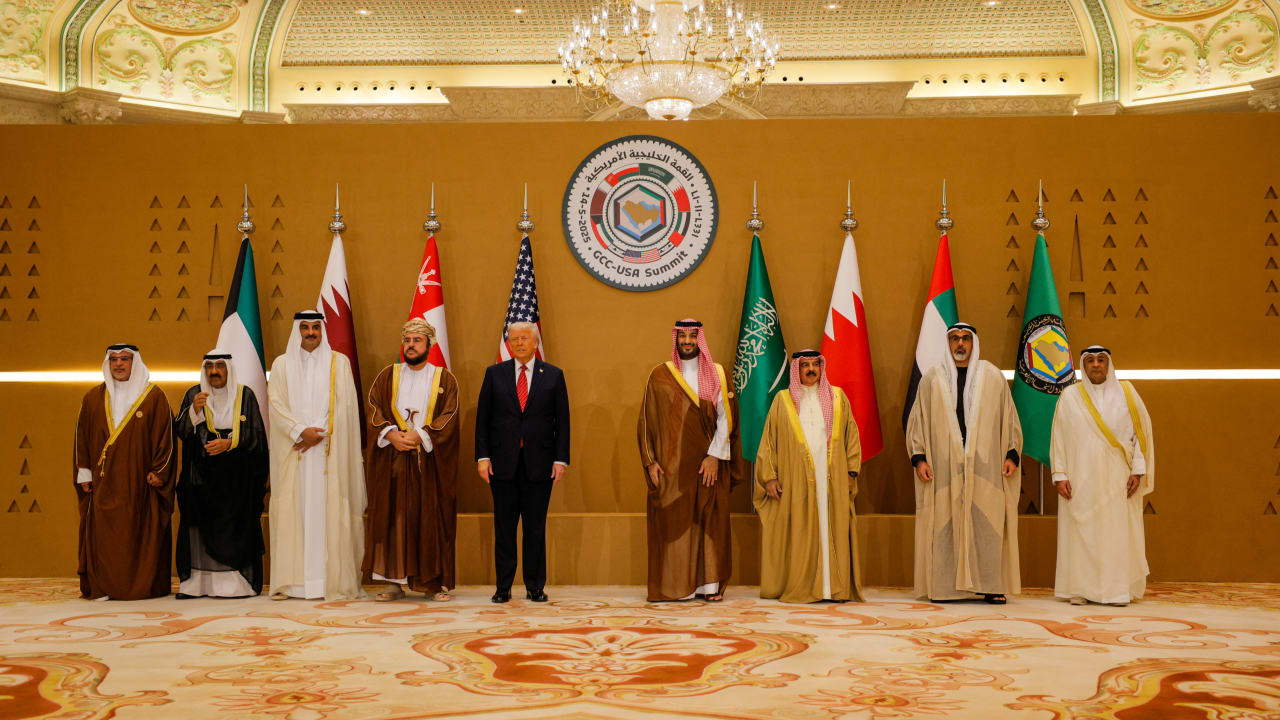
Iran has focused a majority of its attacks in the region on Gulf countries since the February 28 war began. The US and Israel launched airstrikes on Iran, and Tehran responded by carrying out ballistic missile attacks on Israel, as well as drone and missile attacks on the Gulf countries. This has included attacks on Kuwait, Qatar, Bahrain, the UAE, Saudi Arabia, and Oman. The UAE has received the brunt of attacks, but the others have also suffered. Attacks have targeted energy infrastructure, US bases, and other sites.
Now, the Gulf wants a seat at the table if there are going to be talks and a ceasefire. “The Gulf Cooperation Council (GCC) stressed on Thursday the importance of Gulf states participating in any talks between Iran and the United States to end the war in the Middle East,” Al-Ain media in the UAE noted on March 26.
Arab News noted, “The secretary-general of the Gulf Cooperation Council (GCC) on Thursday accused Iran of driving regional escalation and called for an immediate halt to attacks targeting energy infrastructure across the Gulf, while urging that Gulf states be included in any diplomatic efforts to resolve the crisis.”
Jasem Mohamed Al-Budaiwi, the secretary-general, said Iran was responsible for the latest escalation and warned that its actions posed a direct threat to regional stability, Arab News added.
The report went on to say that he said, “Iranian attacks had targeted oil refineries in Saudi Arabia, Qatar, the UAE, and Kuwait,” describing the strikes as “systematic” and aimed at critical energy facilities. In addition, he noted, “We emphasize the necessity of involving the GCC countries in any talks or agreements to resolve this crisis in a way that contributes to strengthening their security and stability.”

Now, the Gulf countries want to ensure they have a role in the post-conflict region. They may want a say on many issues, from Iran’s drone threat to its closure of the Strait of Hormuz. “The international community must send a unified message to Iran to stop its attacks,” the GCC head said.
The GCC doesn’t want the region's map to change. However, it also doesn’t want to see Iran feel empowered to charge fees for ships using the Straits of Hormuz. So far, it is unclear how extensively the Gulf countries are being consulted.
The Gulf countries also have different views. Saudi Arabia is the most powerful and is close to the Trump administration. Oman had helped mediate the Iran talks, but it feels like it was taken advantage of. Oman may believe that the US always planned this war and that the talks were a cover to let the US build up forces. As such, Oman may have a different view than the UAE. The UAE, for its part, is more outspoken about confronting Iran’s various threats.
On the other hand, Kuwait and Qatar may be more willing to reconcile with Iran. Kuwait borders Iran and thus has a lot to lose. Qatar has always sought to have good relations with all sides. As such, it may want to mediate what comes next. Historically, Qatar has had close ties with Washington.
Gulf countries speaking up against Iran attacks
The Gulf countries have weighed responding to Iran’s thousands of attacks. They have become increasingly vocal and talked about their right to self-defense. For instance, Al-Ain noted, “The Council affirmed that the GCC states retain their legal right to respond, in accordance with Article (51) of the Charter of the United Nations, which guarantees the right of self-defense for states individually and collectively in the event of aggression, and to take all measures that preserve their sovereignty, security and stability.”
In another development on March 26, many of the countries issued a joint statement.
“The Kingdom of Saudi Arabia, the State of Qatar, the State of Kuwait, the United Arab Emirates, the Kingdom of Bahrain, and the Hashemite Kingdom of Jordan renew their condemnation in the strongest terms of the blatant Iranian attacks, which constitute a flagrant violation of their sovereignty, territorial integrity, international law, international humanitarian law, and the Charter of the United Nations, whether carried out directly or through their proxies and armed factions they support in the region,” they said.
They stressed “in particular, the attacks carried out by armed factions loyal to Iran from the Republic of Iraq against a number of countries in the region, as well as their facilities and infrastructure. These acts constitute a breach of international laws and conventions and a blatant violation of United Nations Security Council Resolution 2817 (2026), which explicitly demands that Iran immediately and unconditionally cease any attacks or threats against neighboring states, including through the use of proxies.”