
American forces that were part of the US-led Coalition against ISIS (Islamic State) ended their role in Iraq on Tuesday, meeting a deadline that had been in the works for a year.
The Iraqi government has appeared to celebrate this departure, declaring it a day of “sovereignty,” with some in Baghdad claiming this is a kind of new “independence” for Iraq. Many have portrayed the United States as leaving after 23 years in Iraq, from the 2003 invasion by a US-led coalition including British, Australian, and Polish troops. The fact is that the US returned to Iraq in 2014 after having already left once in 2011. It was Baghdad that asked the US to return.
Since “no good deed goes unpunished,” as the saying goes, Iraq is celebrating the US leaving, after having asked it for help.
US Central Command reported on September 30 that it had “completed the orderly departure of US forces and equipment from Erbil Air Base,” thus “marking the end of the Operation Inherent Resolve mission in Iraq.”
CENTCOM noted that “the move from Iraq is part of a planned transition to a US-Iraq bilateral defense relationship. Combined Joint Task Force-Operation Inherent Resolve (CJTF-OIR) remains operational and is now headquartered in Jordan as US forces continue the counter-ISIS mission in Syria alongside coalition partners and the Syrian government.”
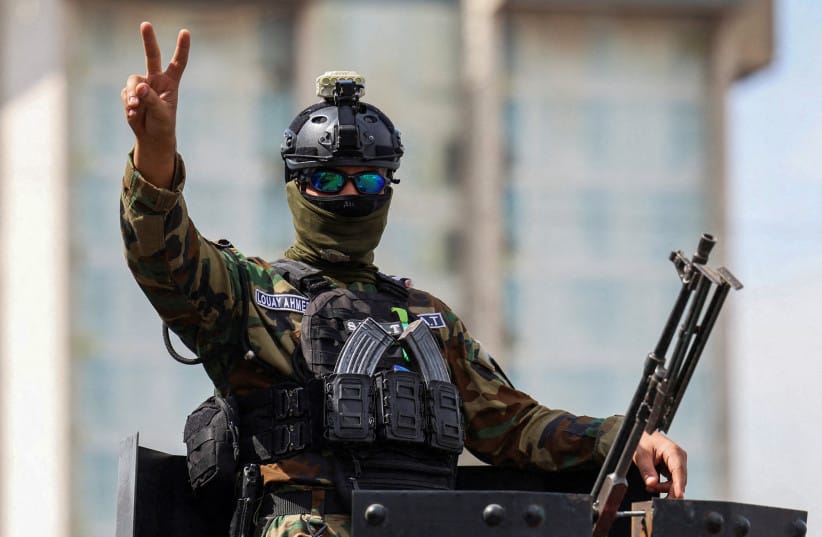
Iranian-backed militias in Iraq attack US bases in region since 2019
America had helped advise and assist the Iraqis, as well as the Kurdish Peshmerga, in the fight against ISIS. ISIS was largely defeated in Iraq in 2017 and in Syria in 2019. The US finally moved out of Syria in April this year. Questions were raised about why the US was still in Iraq.
US President Donald Trump wanted American forces to leave Syria back in 2018. He had argued that the US could move troops from Syria to Iraq, using it as a base to watch Iran and address threats in the region.
However, the US remained in Syria, despite renewed attempts to leave in 2019. Iranian-backed militias began attacks on US forces in Iraq in 2019. The US responded by killing Islamic Revolutionary Guard Corps (IRGC) Quds Force head Qasem Soleimani and Iraqi militia leader Abu Mahda al-Muhandis.
Iraq continued to empower the militias and make them an official force. This threatened the United States, and US forces mostly moved to Erbil in Kurdistan Region since 2020.
United States is withdrawing completely
Now the US is leaving completely. “Job well done to the tens of thousands of American service members, diplomats, and civilian personnel who answered the call in Iraq,” CENTCOM commander Adm. Brad Cooper said on Wednesday. “Because of your grit, sacrifice, and professionalism, ISIS no longer poses a systemic threat to Iraq’s national security,” he said, “and Iraqi security forces, including the Peshmerga and other Iraqi Kurdistan Region security forces, now possess the capacity, leadership, and operational independence to unilaterally manage threats to their homeland.”
CENTCOM noted that Erbil Air Base had been the most recent and last hub of the operation, hosting most of the 1,500 American-led Coalition Against ISIS forces supporting counter-ISIS operations.
“As we step back and hand full primary responsibility for Iraq’s security to the government of Iraq and the brave people of Iraq, US and coalition forces stationed across the region will remain ready to respond to any ISIS threats that arise,” Cooper said.
“Maintaining our vigilance and readiness is essential to protecting the US homeland and strengthening regional security.”
As the US leaves, Iraqi media says that four Iranian-backed factions continue to want to keep their weapons. Baghdad wants to rein in the militias. Iraq’s Prime Minister Ali al-Zaidi spoke at a Sovereignty Day ceremony in Baghdad. Zaidi said the end of the coalition mission “does not mean the end of our fight against terrorism,” adding that security cooperation with coalition countries would continue, focusing on intelligence sharing, training, expertise, and technology, Shafaq News wrote.