From unity to division: How Israel’s LGBTQ+ community faces war’s challenges - opinion
The LGBTQ+ community in Israel has become more divided along political party lines than ever before.
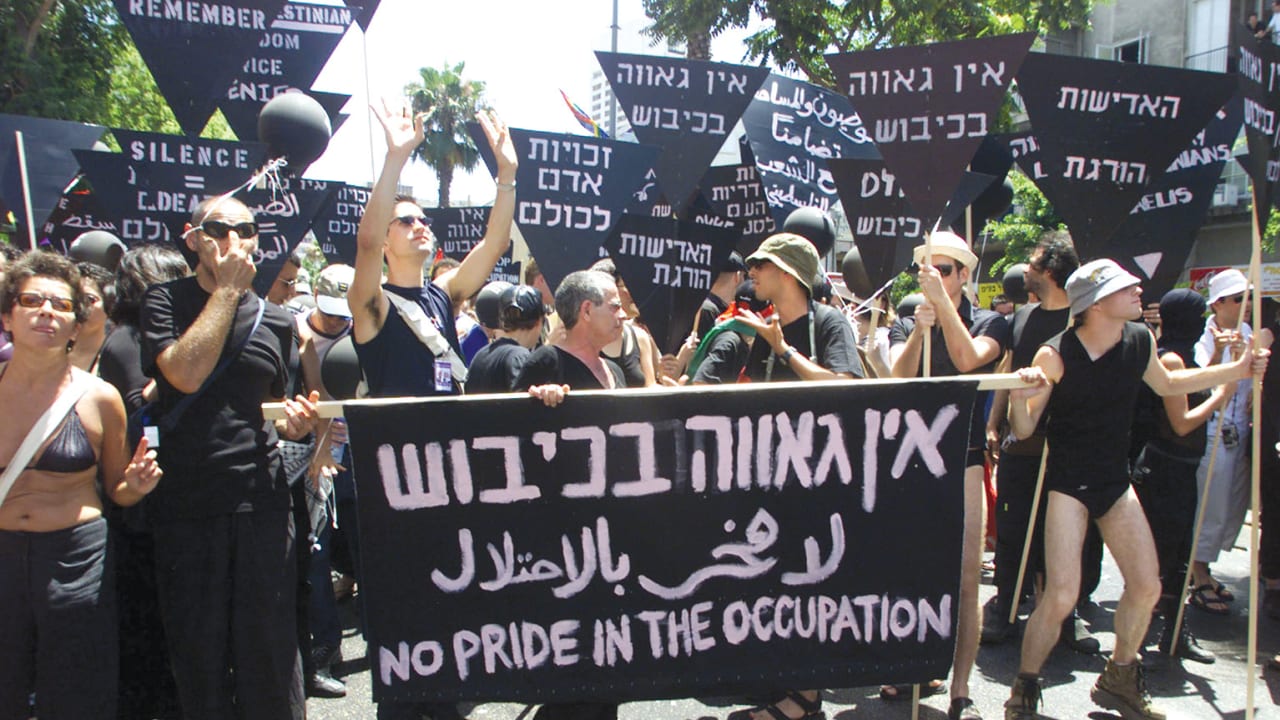
Follow us on Google Men and women dressed in black march in the Tel Aviv Pride Parade, carrying signs that read: ‘No pride in the occupation.’(photo credit: REUTERS)ByIMRY ZAGURY
The Israeli LGBTQ+ community has gone through profound changes since October 7, with deep internal divisions reshaping its identity and its place in society. In 2023, the community played a pivotal role in the protests against the government’s judicial reforms, which threatened the legal rights of minorities, including LGBTQ+ individuals. These protests united the LGBTQ+ community in defense of democracy, equality, and human rights. However, once the current war began, the focus of the community shifted dramatically.
Just like in other groups in Israeli society, many LGBTQ+ individuals were called to serve in the Israel Defense Forces (IDF), either in active combat service in the Gaza Strip or stationed on Israel’s northern border. Of those not in active reserve duty, many volunteered in one of the many civic initiatives that were formed to help those in need in light of the terror attack. Others faced the grief of losing loved ones or the uncertainty surrounding the hostages’ lives. During these challenging times, stories of LGBTQ+ people taking on key roles in combat and emergency services led to a surge in social acceptance. The death of Lt. (Res.) Sagi Golan and the discrimination against his partner, Omer Ohana, faced by the IDF after his loss sparked widespread criticism of the inequality of members of the LGBTQ+ community in Israel. Eventually, this criticism led to the amendment of the law for bereaved families, led by Ohana, MK Yorai Lahav Hertzanu, and The Aguda. The amendment to the law guarantees the rights of bereaved same-sex couples, similar to their heterosexual counterparts, and passed a month after the war began.
Despite the sense of national pride and unity, many LGBTQ+ individuals felt betrayed by the response of large groups in the global LGBTQ+ community, particularly by queer and LGBTQ+ movements siding with Hamas or its actions. For many Israeli LGBTQ+ people who have faced discrimination over their sexual or gender identity, this was likely the time they felt deeply wronged and misunderstood over their national identity.
On the other hand, some members of the LGBTQ+ community felt that they had been used as a tool of “pinkwashing” to deflect attention from alleged state wrongdoings. These critics argued that the suffering of LGBTQ+ Israelis should be viewed in solidarity with the innocent lives lost in Gaza and that parts of the community ignore their privilege, and the broader implications of the state’s actions. The LGBTQ+ community in Israel has become more divided along political party lines than ever before, and today it is even harder to assume someone’s political views simply because they are part of the community.
The wartime divisions in the LGBTQ+ community
As the VP of public affairs of The Aguda, which is now entering its 50th year, I have witnessed these divisions firsthand. One thing is clear: Whether united or not, our identities and struggles as LGBTQ+ individuals didn’t pause because of the war. Quite the opposite. The forces that seek to harm us have only exploited the state of emergency to hone in and plan their next steps in harming the community.
An Israeli man waves Israeli and rainbow flags during a gay pride parade in Jerusalem, 2005. (credit: REUTERS/Gil Cohen Magen GCM/KS)
In times of conflict, the vulnerabilities of LGBTQ+ individuals are heightened, especially for those facing social or familial rejection, leaving them isolated during crises. A clear example is the challenges of LGBTQ+ people from the Israeli-Arab society, which have only intensified since the war, as they face even more racism and suspicion while also struggling with being queer in an ultra-conservative society. While the challenges increase, many community initiatives and advocacy organizations are disrupted, making it harder for them to help LGBTQ+ people access necessary resources.
Another difficulty is significant cuts in budgets that fund services provided to the LGBTQ+ community by various government ministries and the diversion of donated funds to causes directly related to the war, leaving fewer funds for mental health services and support. Many in the community, particularly those without family support or stable housing, are now struggling with trauma and financial insecurity.
Global politics adds another layer of tension. US President Donald Trump, known for his strong pro-Israel stance, used his inauguration to launch a formal attack on LGBTQ+ rights, targeting transgender individuals particularly. This has sparked heated debates within the Israeli LGBTQ+ community. Under the surface, there is an assumption that one must choose between supporting one’s country or supporting trans and nonbinary members of the community. This reflects a growing division, where Israeli LGBTQ+ individuals find their personal safety as Israelis challenged by their personal identity, and sometimes causing an urge to sideline from the community groups that are not in broad consensus.
There is a growing concern that transphobic ideologies from the United States may gain traction in Israel. Although the social acceptance and legal status of transgender people in Israel are far from satisfactory, conservative extremist forces have increasingly targeted trans rights, riding on the populist transphobic arguments heard overseas, creating additional challenges for the local community. Over the past year, Israel has been caught in a whirlwind of social and media frenzy, constantly shifting between the overwhelming news cycle and personal struggles. In this climate, if we are not vigilant, we risk losing sight of the undercurrents that seek to delegitimize LGBTQ+ rights and push us back decades under the guise of the emotional, security, and political roller coaster we are experiencing.
In these difficult times, the Israeli LGBTQ+ community stands at a critical crossroads. The war has exposed deep divisions and external challenges, but it has also highlighted the community’s resilience. As the war is entering its (hopefully) final stage, allowing Israeli society to begin its healing and rehabilitation process, the struggles we face on the road ahead make us more dedicated than ever to the unity of the LGBTQ+ community. Our strength will be tested by our commitment to supporting the most vulnerable members of our community and advocating for their rights, even in the most difficult times we have undergone as a country.■
The writer is the VP of public affairs at The Aguda – Israel’s Association for LGBTQ+ Equality. His previous role was head of policy and government relations for the LGBTQ+ Organizations Coalition in Israel. In that role, he led the amendment of the Bereaved Families Law to recognize same-sex partners and advanced LGBTQ+ inclusive policies across various government ministries. In his current position, he oversees all public affairs activities for The Aguda, which includes social media, public relations, and government relations.