Last Wednesday, the Knesset voted by a fairly wide majority – 71 to 13 – in favor of a non-binding resolution to annex the West Bank. The opposition made the courageous choice to abstain on this issue, which, while symbolic at this stage, is nonetheless essential for the future of both Israel and the Palestinians.
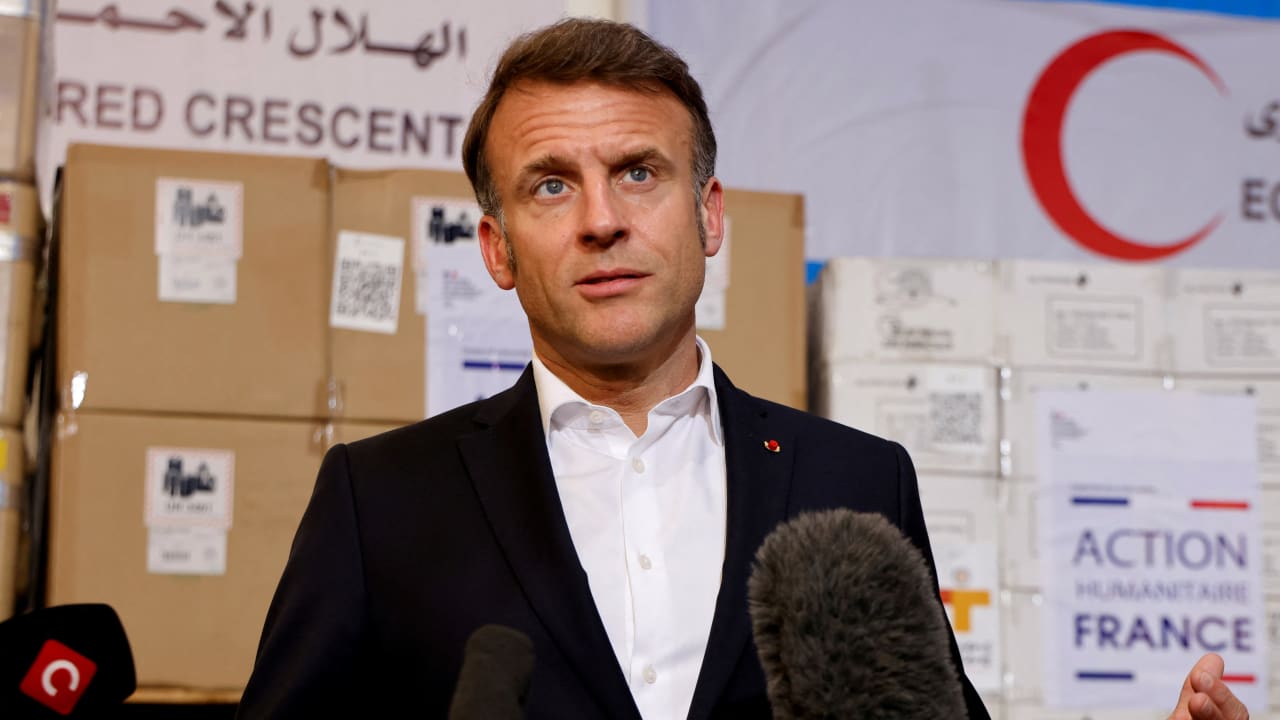
In a sequence that encapsulates the current regional stakes and explains President Emmanuel Macron’s decision, France – in the immediate aftermath of the Knesset vote – announced official recognition of the “State of Palestine.” This provoked a diplomatic shock wave and drew sharp criticism from both Israel and the United States.
Some of these criticisms are understandable, particularly regarding the timing of the decision – while the war is not over, hostages are still held by Hamas, and this recognition could be perceived as a “reward” for October 7. However, they fail to consider the recent actions and statements from the Israeli government.
French recognition was inevitable consequence of Israeli actions
Since April, when Macron indicated his intention to recognize Palestine under certain conditions – such as the release of hostages or the disarmament of Hamas – the war has intensified without a clearly defined war objective. The Gazan population has been repeatedly displaced, with the Israeli government’s stated goal of concentrating them into less than 25% of the Gaza Strip, and humanitarian aid is poorly and insufficiently distributed through an ad hoc organization that has proven entirely ineffective.
Beyond these on-the-ground realities, some Israeli ministers have openly spoken of expelling Gazans from Gaza, turning it into Jewish land, or “completely destroying” it. A conference at the Knesset, organized by far-right Finance Minister Bezalel Smotrich, aimed to discuss occupying Gaza and expelling its population.
Simultaneously, violence against Palestinian civilians in the West Bank has increased with near-total impunity, as has the destruction of homes – culminating in this week’s Knesset vote that reveals the true intentions of the current Israeli government regarding Palestinians.
France’s recognition of Palestine had initially been planned jointly with Saudi Arabia for June but was suspended due to the war with Iran. That suspension was likely both operational and political, as the war with Iran – if successful, at least relatively – might have opened a diplomatic path encouraged by Trump, notably expanding the Abraham Accords and addressing the Palestinian issue. Instead, it encouraged the Israeli government to double down on a strictly military approach and reject any diplomatic opening.
This recognition is, in fact, one of the consequences of the Israeli government’s stubborn refusal to consider what comes after the Gaza war – a point that then-US president Joe Biden, a true friend of Israel, had stressed as early as the beginning of 2024. Biden knew all too well that this lack of planning played into the hands of both Israeli and Palestinian extremists, leaving endless war as the only horizon envisioned by the Israeli government and its leader – obsessed with his own political survival amidst a corruption trial, and the dismantling of Israel’s democracy and checks and balances to protect himself.
What Netanyahu and his government miss
For Benjamin Netanyahu and his government, October 7 is not only the calamity it was for Israelis and the security failure he failed to prevent, but also the backdrop that justifies endless war, avoids any post-war political solution in a traumatized country, and significantly weakens Israeli democratic institutions – the original grand plan of this ruling coalition.
For them, in a narrative frozen on October 7, any action by Israel is still legitimate as a response, and any measure seen as “anti-Israel,” such as France’s recognition of Palestine, is branded a “reward for Hamas.”
However, Hamas has never supported the creation of a Palestinian state as part of a two-state solution. Instead, it seeks the eradication of Israel. Portraying Hamas as a supporter of France’s proposal, and France as an ally of Hamas, is at best dishonest, and at worst a blatant lie.
Macron is now paying the price for his inconsistency, evasiveness, and grandstanding, and he is arguably not the most credible figure on this issue. He could have announced this recognition not via a simple press release, but through a major Israeli media outlet, speaking directly to the Israeli people to show that this recognition was in no way directed against Israel – and to counter the often-fallacious arguments used by the Israeli government.
The Israeli prime minister’s reaction should open the eyes of those who criticize France’s unilateral recognition while still professing support for the establishment of a Palestinian state. Netanyahu does not merely object to the timing – he rejects the very idea of a Palestinian state, claiming: “The Palestinians do not want a state alongside Israel, but a state in place of Israel.” Last week’s Knesset vote has exposed the real intentions of his government.
In many ways, France’s recognition of Palestine just days after this vote – even though none of the conditions it had set three months earlier have been objectively met – is as much a sign of weakness, an expression of frustration, and an indictment of an Israeli government trapped in a reckless course of action. Horrific images coming out of Gaza have made inaction unbearable.
The Israeli government is now being accused of causing famine in Gaza. While these accusations are incomplete and often overlook Hamas’s responsibility, are they entirely unfounded? How can the Israeli government and its defenders express outrage over such accusations after having (rightly) sidelined UNRWA without putting an alternative mechanism in place – then relying on an inexperienced private company to deliver food in a war-ravaged zone? And above all, how could these accusations not emerge when prominent members of the governing coalition have repeatedly threatened to starve the Gazan population?
There comes a time when the recklessness, extremism, or incompetence of leaders exacts a heavy price – as shown by the examples of Venezuela, Argentina, or the former USSR.
The true defenders of the State of Israel do it no service by denying the obvious and defending, at all costs, government policies that have objectively become indefensible. Defending Israel, its democracy, and its place among nations does not mean defending its current leaders, but rather standing in solidarity with the 80% of Israelis who – though they may not empathize with the Gazan population due to ongoing trauma from October 7 – are demanding an end to the war and the preservation of their democracy. These two goals are fundamentally linked.
Born and raised in France, the writer is the correspondent of French Jewish radio, Radio J, in the US, where he has been living for 15 years. He also holds US citizenship. His opinions are his own.