
Dubai’s launch of the Human-Machine Collaboration Icons marks a pivotal moment in the age of generative AI, introducing a global framework for transparency, responsibility, and trust in content creation. By clearly indicating the extent and nature of AI involvement, this initiative empowers readers, restores credibility, and sets a new ethical standard for the digital era. It reflects Dubai’s bold attempt to shape not just technological progress, but the moral infrastructure that must accompany it.
One day, in the not-so-distant future, we’ll flip through pages of a journal, watch a recorded lecture, or read a children’s book aloud, and everything will appear normal. Words, sentences, characters. But behind the creation, something else will lurk: a machine.
A tireless, invisible partner, instructed to analyze data, suggest phrasing, revise, translate, and sometimes create entirely on its own. The defining question of the coming decade isn’t whether the machine writes. It already does. The real question is, how will we know?
Content is no longer exclusively the product of a human mind
The announcement by Dubai Crown Prince Sheikh Hamdan bin Mohammed about the launch of a global classification system for human-machine collaboration may one day be remembered as a defining moment. A recognition that content, any content, is no longer exclusively the product of a human mind. It is the product of a system, sometimes hybrid, sometimes entirely automated. Often, already today, it is a system in which the human serves as little more than a co-editor to machine intelligence.
The system developed by the Dubai Future Foundation is not just another piece of technology. It is a moral-informational framework, an early attempt to translate a philosophical question into an operational infrastructure. It includes five primary icons representing the degree of machine involvement in content creation (from “fully human” to “fully machine”), and nine sub-icons that indicate the specific function: writing, translation, design, visualization, data gathering, and so forth. This is not just an app, it’s a code of responsibility.
One could say this marks another stage in humanity’s long demotion. If the Copernican Revolution dethroned humans from the center of the universe, and Darwinian theory removed us from the center of biology, the algorithmic revolution is removing us from the center of knowledge. We are no longer the source of knowledge, but its curator, editor, or navigator. Dubai’s initiative is a bold attempt to draw a shared boundary between “thinking” and “computing.”
Why is such classification important?
First, it restores the reader’s ability to discern. Whether you’re a researcher, a journalist, or an everyday citizen, you deserve to know whether what you’re reading was the product of a human mind, a joint synthesis with AI, or an autonomous machine output. In other words: transparency becomes a new democratic right. The icon is the content’s passport.
Second, this system may help restore what is now eroding: trust. In a world where the boundaries of authorship are dissolving, the simple admission, “this was created with machine assistance,” can build credibility. Rather than fear or conceal AI’s role, it acknowledges the new partner openly, proudly, and precisely. It cultivates a culture of accountability over one of forgery.
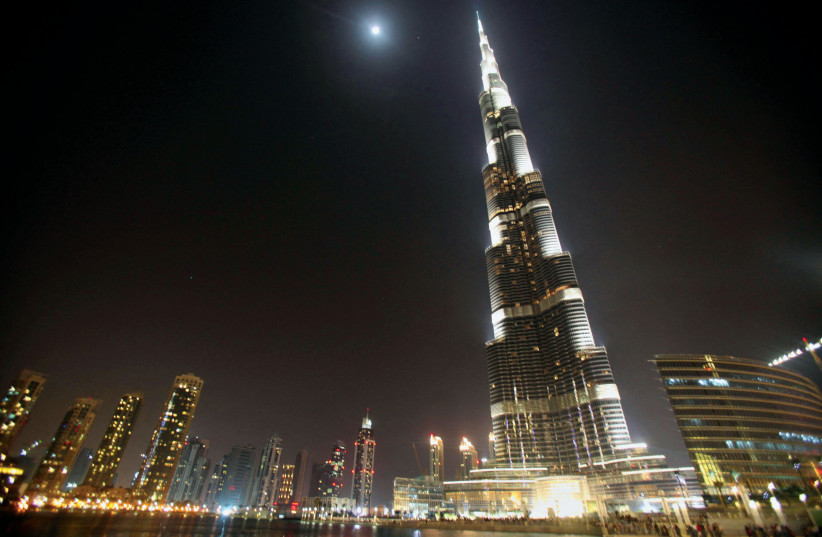
Third, Dubai’s move is not merely technological – it is geopolitical. It positions Dubai, and by extension the UAE, at the forefront of AI-era ethics. This is a moment when a city-state, often associated with flashy development and futuristic architecture, proposes a philosophical tool to the world. Instead of building only towers, it is shaping moral frameworks. Instead of importing infrastructure, it exports standards. This is nothing less than a call for a new global digital order of trust.
Some may dismiss it as a gimmick. They’ll say the world won’t adopt a universal labeling system; that the drive for efficiency and monetization will always trump principles. But history tells us otherwise. Every technological revolution gave rise to new boundaries: the printing codes, copyright laws, journalistic ethics. Perhaps Dubai, precisely because of its scale, centralization, and ambition, can be the perfect sandbox for a global experiment.
Ultimately, it’s a profound reminder: every creation, even when generated by a machine, carries human responsibility. The machine, no matter how brilliant, knows no remorse. It cannot contextualize. The burden of ethics remains with us humans. And as long as we use the machine, we must mark what we’ve made. We must name the process. We must draw the line.
Dubai has just drawn it. The question now is whether the rest of the world will lift the glove, or continue pretending the pen is still entirely in our hand.
The writer is a global trends analyst specializing in the intersection of economics, geopolitics, and technology.