Vayera, this week’s Torah portion, is one of the most dramatic and emotionally charged sections in the Torah. It is a story of faith under fire, of hospitality and destruction, of love and sacrifice. It contains moments of sublime compassion, Abraham and Sarah rushing to welcome strangers into their tent, and moments of near-unbearable testing, the Binding of Isaac on Mount Moriah.
Each year when we read Vayera, we are confronted with the same question: What does it mean to believe in God when the world feels broken? How do we hold on to faith when faith itself demands everything?
This year, those questions feel painfully close.
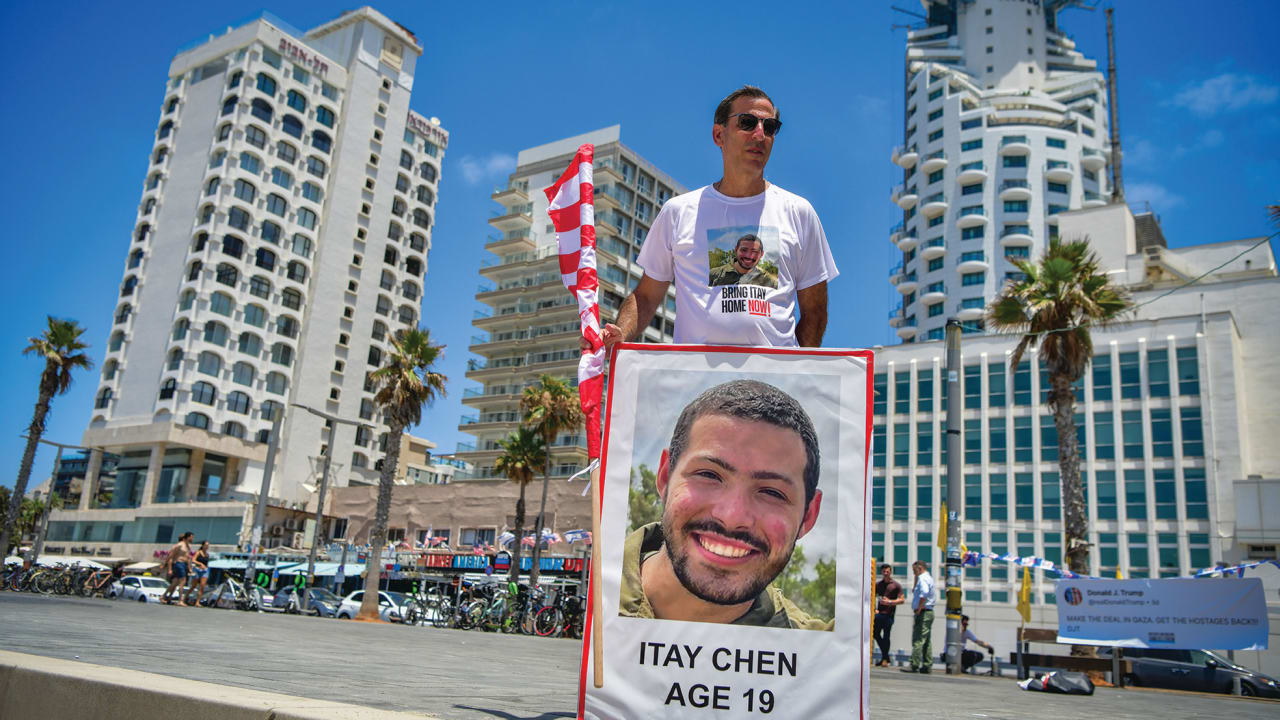
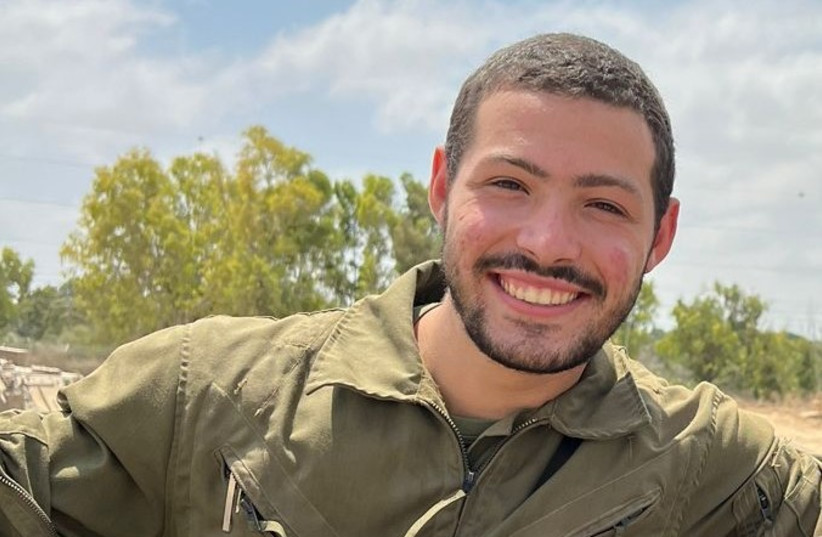
Just this week, after 760 days, the body of St.-Sgt. Itay Chen, Hy”d, was finally returned home. Itay was from our community, Young Israel of Poleg. I remember clearly the Shabbat before he enlisted in the army. We called him up to the Torah, the congregation surrounding him with warmth and pride. We sang to him, we blessed him, we wished him hatzlacha, success, safety, and strength.
His parents, Ruby and Hagit, smiled with that unique mixture of love and worry that every Israeli parent knows. He was a fine young man, bright, modest, strong; the kind of son any community would be proud to call their own.
None of us could have imagined the journey that lay ahead.
On October 7, 2023, as Hamas terrorists stormed across the border, Itay, serving in the IDF, ran toward the danger. He fought bravely to defend his country, his people, and the ideals that define us. He was killed that day in battle, but for more than two years, his body remained in Gaza. His parents lived through an agony that words can hardly contain: waiting, hoping, praying, refusing to let the world forget. They became symbols of strength and tenacity, refusing to allow Itay’s story, or the plight of the hostages, to fade from the nation’s heart.
And now, at last, they have him back. The return of a son, not in life, but in love.
Human condition lies between joy and loss
It is impossible not to think of Parashat Vayera at a moment like this. The Torah portion begins with Abraham running out to welcome guests, unaware that they are angels bearing a message that his long-awaited son, Isaac, will soon be born. It ends with Abraham facing the greatest test of his life – being asked to sacrifice that very son on Mount Moriah.
In between those two moments, the birth of joy and the threat of loss, lies the entire human condition. We live between laughter and tears, between promise and pain, between the joy of holding our children and the fear of losing them.
The Torah describes God’s command to Abraham with unusual tenderness and precision: “Take, please, your son, your only one, whom you love – Isaac.” Every phrase cuts deeper. It is as if God Himself acknowledges the unbearable cost of what He is asking. Faith, it turns out, is not blind obedience. It is love that hurts and still chooses to trust.
Abraham does not argue this time. He simply walks forward. It is the silence of faith, not the silence of indifference, but of one who knows that some truths can only be lived, not explained.
That silence echoes this week in our community. It is the silence that filled the synagogue when the news came that Itay’s remains had been returned. It is the silence of standing together, holding our breath, realizing that a prayer we have whispered for so long has been answered, but in the most heartbreaking way.
When Abraham lifts the knife, an angel calls out: Do not harm the boy. Abraham raises his eyes and sees a ram caught in the thicket. The Midrash teaches that this ram had been waiting there since the dawn of creation, a symbol that redemption is always prepared, even before the test begins. The solution exists even before the pain appears. We just cannot see it yet.
For more than two years, Ruby and Hagit lived inside that waiting. Their test, like Abraham’s, was not chosen; it was thrust upon them. Yet they met it with courage, dignity, and unyielding love. They became beacons of what it means to be shutafim, partners, in the story of Am Yisrael. They reminded us that even in unbearable darkness, we must keep our eyes lifted, believing that somewhere, redemption waits, caught in the thicket.
The Akeidah – Binding of Isaac – is not a story about death. It is a story about faith’s refusal to surrender to despair. God does not want Avraham to lose his son; He wants him to rediscover him. The angel’s words, do not lay a hand on the boy, are the divine promise that the covenant of life will never be broken. That same covenant sustained the Jewish people through exile and return, through war and rebirth, through every moment that seemed impossible.
It sustains us now.
When Itay was called to the Torah that final Shabbat before his enlistment, we all felt a surge of pride. We blessed him to go and to return safely. Now, two years later, we bless him again; this time, as he returns home to the embrace of his people.
Our hearts ache for the Chens, and for every family still waiting. Yet we also stand in awe – awe of their faith, of their resilience, of the sanctity of a young man who gave everything so that others might live.
In the end, Abraham names the mountain Hashem Yir’eh, “God will be seen.” Perhaps that is the truest faith of all: the belief that even when we cannot understand, when we cannot hear or see the meaning, one day we will. The same God who asks us to walk through fire also places before us the ram, the redemption, the return.
This Shabbat, as we read of Abraham’s test, we remember our own. We remember Itay – a son of our community, a soldier of Israel, a hero of faith and courage. We remember the blessing we gave him, the pride we felt, and the silence we hold now in his honor.
May his memory be bound up in the bond of life. May his family be comforted by the love of the nation that embraces them. And may we, as a people, continue to draw faith from their example, to love fiercely, to believe deeply, and to stand, like Abraham, ready to walk forward into the unknown, trusting that somehow, somewhere, redemption awaits.
Yehi zichro baruch, may the memory of Staff-Sgt. Itay Chen, Hy”d, be a blessing for us all.
The writer is a rabbi and physician. For more of his work, visit: rabbidrjonathanlieberman.substack.com and youtube.com/@rabbidrjonathanlieberman.