When my husband Anthony and I arrived this summer in San Diego, where I now serve Congregation Dor Hadash, we didn’t yet have a place to live.
Luckily, our friend, the great teacher Henny Kupferstein, lived just a mile and a half from the San Diego JCC, which is home to Dor Hadash. She was kind enough to let us stay with her for a few weeks, until we found a place of our own.
The three parties involved, my family, Dor Hadash, and Henny, all have migration in our past. Anthony grew up in Northern California, and I’m a New Yorker; as a rabbinic family, this isn’t our first move.
Dor Hadash, San Diego’s only Reconstructionist synagogue, has also called several places home. And Henny has a remarkable story: born a Belzer Hasid in Borough Park, today called “Dr. Henny,” a PhD living in San Diego as an autism rights and anti-sexual abuse activist. Wandering Jews, all.
Our respective wanderings led me, in those first days in San Diego, to begin making a regular trip up Genesee Avenue between Henny’s place and the JCC. Each day, I’d traverse a majestic valley called Rose Canyon, the home of University City High School (“Lucky kids,” I thought, when making the journey).

Rose Canyon's true history: Kumeyaay people and Jewish activism
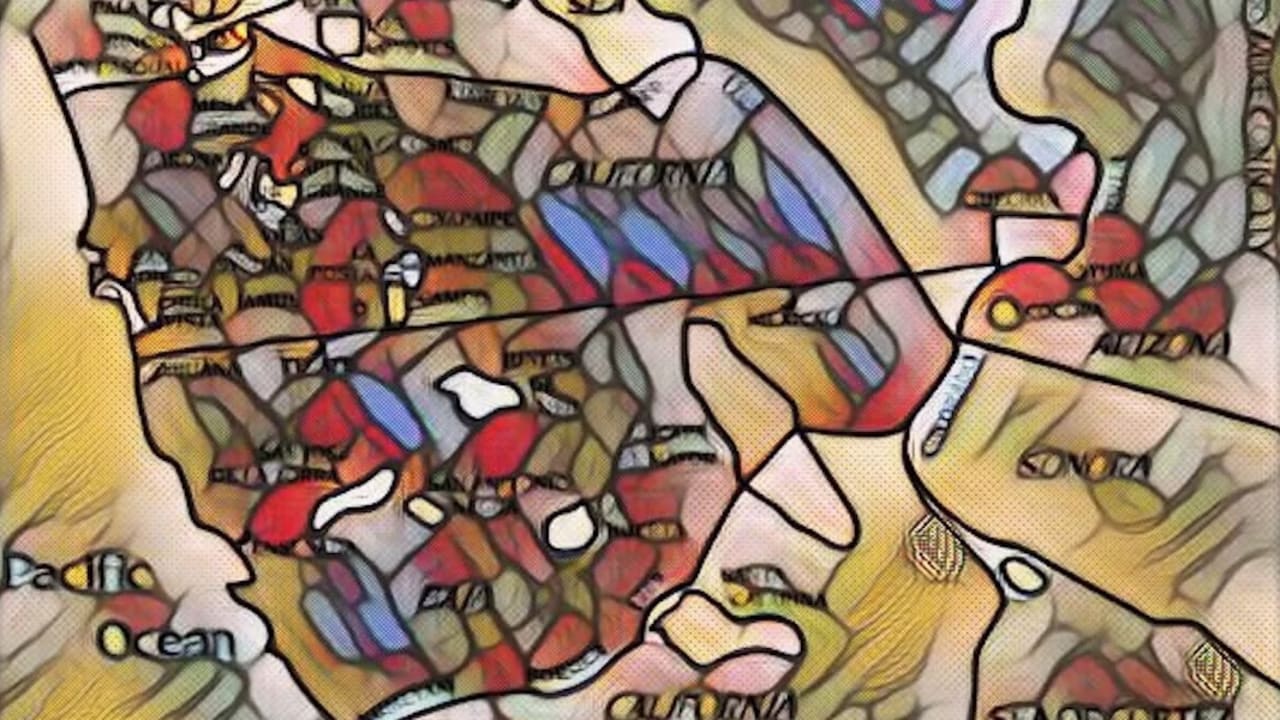
The valley wasn’t always called “Rose Canyon,” obviously, and long before high schoolers called it home, it was inhabited by a group of folks the Spanish colonizers called Diegueños.
The name Diegueño is derived from San Diego de Alcalá, the Spanish mission founded in 1769, which also gives the city its name. A few thousand Diegueños are still around, but they don’t call themselves that.
They are collectively known as the Kumeyaay. And their name for what is now Rose Canyon was Ystagua-‘Iilh Taawaa, a name that indicates it was a place where the Kumeyaay once processed harvested shellfish.
And so it’s not luck that put those high school kids in that valley. It was forced expulsion rather than dumb fortune that moved the Kumeyaay off their land. While the Kumeyaay did not face the same degree of brutality and mass death as did other indigenous peoples in California, the Grant administration pushed them onto reservations following the Civil War.
Those reservations were burdened with limited access to potable water, spartan spaces where they were tormented with disease and famine, as well as attacks from white European settlers.
In the 1930s, the El Capitan dam, a New Deal-era project that helped enable mass white migration to California, required the forced removal of still more Kumeyaay who had been living and farming along the San Diego River.
At other shuls I’ve served, this history would be considered regrettable but largely overlooked. But other shuls don’t have David Kamper on their board. I first met David when I was interviewing for the Dor Hadash pulpit; he was then the shul president.
We bonded over our shared family history in the Jewish Labor Movement (he has an “Arbeiterring” tattoo on his forearm) and our mutual hatred of the Yankees (he is a Dodgers fan, and I am a sad Mets booster). But David is also a professor of American Indian Studies at San Diego State University.
Inspired by conversations about planning Dor Hadash’s annual Martin Luther King, Jr. celebration, David realized in 2023 that our community knew little about the Kumeyaay land we gather on to pray.
Dor Hadash proudly celebrates the Jewish community’s unique connection to the Civil Rights Movement on MLK Day, and David thought it would make sense to extend learning to another minoritized group.
He felt a land acknowledgment would be the best place to start. As a result of his work this summer, David was ready to present a draft to the board. The statement the board approved is below. We introduced it at this year’s High Holiday services:
Dor Hadash gratefully acknowledges that we daven (pray) on Kumeyaay land. Currently, we congregate just south of a large village and shellfish processing area, the Kumeyaay called “Ystagua-’Iilh Taawaa.”
People of the Kumeyaay nations have been caretaking this land for millennia in spite of 300+ years of physical and cultural violence that tried to unjustly separate them from this land.
Acknowledging this history of settler colonialism also means vowing to improve the spiritual, social, and political ways in which we live our lives today. Through this acknowledgment, we hope to bring more healing to this land and engage in Tikkun Olam with the Kumeyaay people.
While I am proud to be part of a community that has crafted such a statement, I know that some parts of our broader Jewish community will recoil at these efforts. Isn’t such a statement, some might say, “performative virtue” signaling or an expression of “wokeness”?
The first criticism is absolutely a fair one if our efforts stop at sharing a few sentences on a website. To me, the statement is powerful not just for the acknowledgement itself, but also because it looks forward, making explicit the connection to the Jewish value of pursuing justice and committing our community to continue that work.
As for the charge of “wokeness,” just like it’s revealing to investigate the history of a land, it’s likewise worth looking at the history of a word. One of the earliest recorded instances of the phrase “stay woke” is in the Lead Belly song “Scottsboro Boys,” which laments the nine Black teenage boys falsely arrested and tried in Scottsboro, Alabama, in 1931, charged with the rape of two white women.
(My husband Anthony and another Dor Hadash congregant, University of California, San Diego comparative literature professor Amelia Glaser, partnered on a fascinating project documenting the Yiddish intelligentsia’s response to the trial.)
Lead Belly cautioned Black listeners at the end of his song to “be a little careful when they go along through [Scottsboro], best stay woke, keep their eyes open.”
In this context, the condemnation of “wokeness” is telling. To men like Lead Belly, being woke meant being vigilant about the dangers posed by his listeners’ status as residents who are not full citizens in the land they live in, objects rather than subjects in white America, a different flavor of the bitter poison offered to the Kumeyaay.
For Jews to dismiss this vigilance represents a peculiar amnesia regarding Jews’ status in lands and times we were denied full rights, and an opportunity missed to find common cause with folks who have been subject to such treatments in other contexts.
As Thanksgiving approaches, we are grateful for home. As Jews, we remember our own history of displacement, that not all of our wanderings have been by choice.
In solidarity with the Kumeyaay and all the Indigenous people of this continent, we remember that the first step to liberation is telling the truth about our land’s history and our lived reality. We pray that this truth leads to a future where no one is forced to flee home, and that all live in dignity, stability, and safety.