
Here we go again. Another mass murder of Jews taking place on a Jewish holiday. This time it was on the first night of Hanukkah in a country that used to be considered a haven for Jews: Australia.
This is not the first time antisemitic violence has struck during sacred Jewish moments. In 1973, the holiest day in the Jewish calendar – Yom Kippur – witnessed a full-scale attack on the State of Israel by the armies of Egypt and Syria. At that moment, Jews in Israel and around the world were in synagogue, praying and fasting.
The timing was both offensive in its desecration of the most significant moment in the Jewish calendar and opportunistic, exploiting a day when soldiers, like all Jews, would be preoccupied with religious observance and less prepared to defend the country.
As the war unfolded, Israel rallied and ultimately prevailed, but the nation was traumatized by the surprise attack, which left many dead and forced the resignation of the prime minister.
Fast forward to the Pittsburgh massacre in October 2018, which took place on Shabbat. The murderer, who published a manifesto justifying his rampage, killed 11 American Jews, the largest toll in American Jewish history. He attributed his actions to the antisemitic belief that Jews wielded power behind immigration policies that he claimed were destroying America.
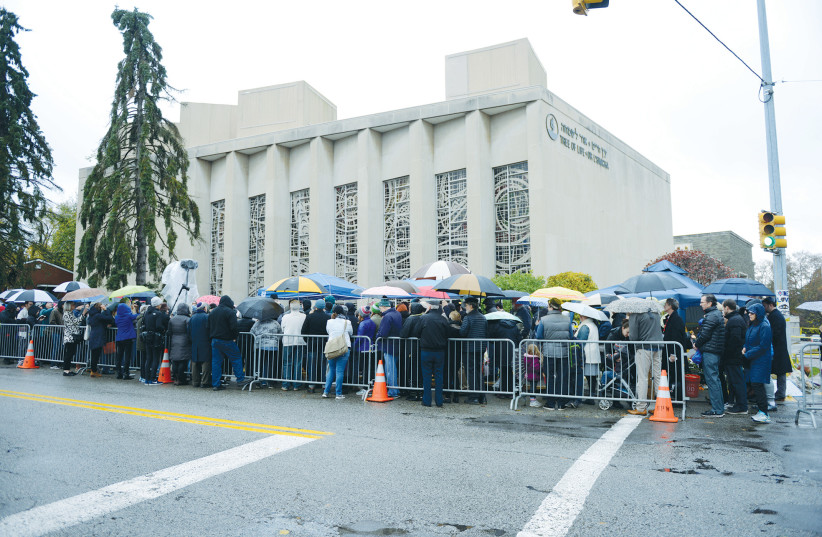
The Pittsburgh murderer attacked the synagogue on Shabbat, undoubtedly because it was the day the largest number of Jews would be gathered.
When hatred targets our holiest days
Once again, practical opportunity drove the timing. But for those consumed by hatred of Jews and prepared to slaughter indiscriminately, invading a holy sanctuary on a holy day offered a particularly sinister satisfaction.
Now we come to more recent times: the two horrific events of the last two years – the October 7 massacre and the terror attack at Bondi Beach. Both of these mournful days in modern Jewish history, when hatred of Jews manifested in the most horrific ways since the Holocaust, occurred on Jewish holidays – both times of celebration for Jews worldwide.
October 7 transpired on Simchat Torah, the holiday immediately following Sukkot, representing a seminal moment in Jewish history: the giving of the Torah to the nation fleeing slavery in Egypt at Mount Sinai. That was the day Hamas decided to strike, turning the joy of the holiday into a festival of bloodletting, rape, and hostage-taking.
More than 1,200 were murdered, over 250 were kidnapped, and scores were raped. Israel is still reeling from that day, and Palestinians have suffered immensely due to Hamas’s actions.
Most recently, another holiday. Jews gathered in large numbers at Bondi Beach to celebrate Hanukkah and express their commitment with pride to their Jewish identity, even in the face of a country long noted for its tolerance but which has devolved into an increasingly problematic place for Jews.
In both of these recent cases, the same strategic and ideological factors undoubtedly played a role in the decisions by the killers about when to attack. The holy days offered Hamas a unique opportunity to succeed, as they did for the Bondi terrorists, while also providing even greater satisfaction to Jew-haters: killing Jews when they are celebrating.
This pattern over the years is not about a conspiracy as much as a common mindset among those obsessed with hating Jews. It is not enough to kill as many Jews as possible; doing it when Jews are gathering to observe the beliefs that hold them together as a people offers extra pleasure to the perpetrators of evil.
This pattern over the years demands a renewed commitment from the Jewish people to their identity and values, including participation in community events, while requiring that governments truly stand up against these acts of terror that threaten not only Jews but ultimately society itself.
The writer is the deputy national director of the Anti-Defamation League.