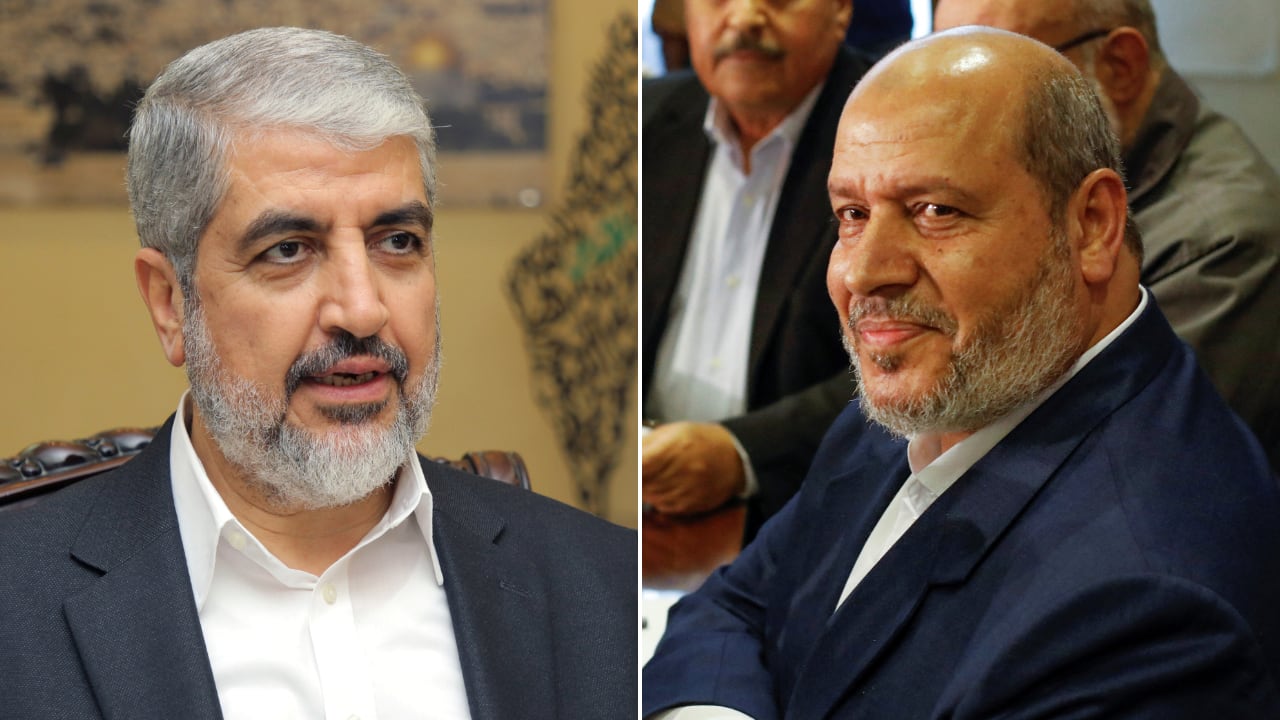
As attention turns to what comes after the war, Hamas has quietly completed a far-reaching internal reorganization–one that offers a rare window into the movement’s internal crisis and the forces reshaping its future.
In recent weeks, Hamas finalized early internal elections in Gaza, well ahead of their scheduled date in late 2026. The move included the reconstitution of the Shura Council, the Political Bureau, and the leadership of the Gaza region itself. While officially framed as a routine organizational process, the timing and substance of these steps tell a far more consequential story.
What is unfolding inside Hamas is not merely bureaucratic housekeeping. It is an attempt to manage a deep internal rupture–one that has widened dramatically since October 7–between two competing visions for the movement’s future: the Gaza-based leadership that has borne the cost of war, and the external leadership, centered in Doha and Istanbul, led by figures such as Khaled Mashaal.
At the core of this struggle lies a fundamental question: Should Hamas continue to define itself primarily as a military resistance organization, or begin a gradual transformation into a political actor capable of surviving the post-war regional order? The decision to hold early internal elections suggests an effort to resolve this question from within, before external actors impose an answer.
One of the clearest indications of this internal shift has been Hamas’s decision to release Israeli hostages who represented some of its most valuable strategic assets. For an organization that has long treated captives as central leverage in both negotiations and deterrence, this move is highly significant.

Isolation is a threat to Hamas
It signals that a faction within Hamas–one seeking political recalibration rather than perpetual confrontation–has gained temporary ascendancy. The release of such high-value hostages reflects a recognition that continued isolation and militarization may now pose a greater existential threat to the movement than compromise. Whether this shift proves durable or collapses under pressure from hardliners remains an open question.
This internal recalibration is also evident in Hamas’s unprecedented acknowledgment of the deaths of senior figures, including Mohammed Sinwar and its longtime military spokesperson.
Such admissions, once unthinkable, appear intended to close a chapter defined by armed confrontation and prepare the ground for a different political posture–one more compatible with the regional and international environment now taking shape.
External pressures are intensifying. Turkey, Qatar, Egypt, and the US are all shaping post-war scenarios for Gaza, while Washington’s emerging framework for “the day after” has added urgency to internal Hamas deliberations. The message reaching Gaza’s leadership is increasingly clear: adapt or be sidelined.
The internal social pressure is equally acute. Before the war, Hamas governed a civil apparatus of roughly 60,000 employees–teachers, clerks, municipal workers, and police. Nearly a third have been killed, and many of the rest now survive on irregular stipends of around 1,000 shekels a month.
Most are not ideologues but ordinary employees trapped in a collapsed system. Their survival depends not on resistance rhetoric but on stability, salaries, and a functioning civil administration.
This reality helps explain another striking development: Hamas has largely refrained from appointing replacements for senior civilian officials killed during the war, including key figures in the civil administration and internal security.
This restraint appears deliberate, signaling an unwillingness–or inability–to rebuild the governing apparatus as it once existed, and possibly an acceptance that Gaza’s future governance may lie beyond Hamas’s direct control.
What is unfolding, then, is not merely an internal reshuffle, but a battle over the movement’s identity and trajectory. One path leads toward political adaptation and a negotiated role in a reconfigured Gaza. The other leads toward isolation, radicalization, and strategic irrelevance.
Whether Hamas ultimately completes this transformation will depend not only on its internal power struggles, but also on whether the international community – particularly the US – moves decisively to define a credible post-war political framework. In the absence of such clarity, the forces of inertia and extremism will once again fill the vacuum.
The outcome of this struggle will shape not only Hamas’s future but the broader prospects for stability between Israelis and Palestinians in the years ahead.
The writer is a Fatah political leader from Jerusalem, calling for Palestinian reforms, democracy dialogue, and coexistence with Israel.