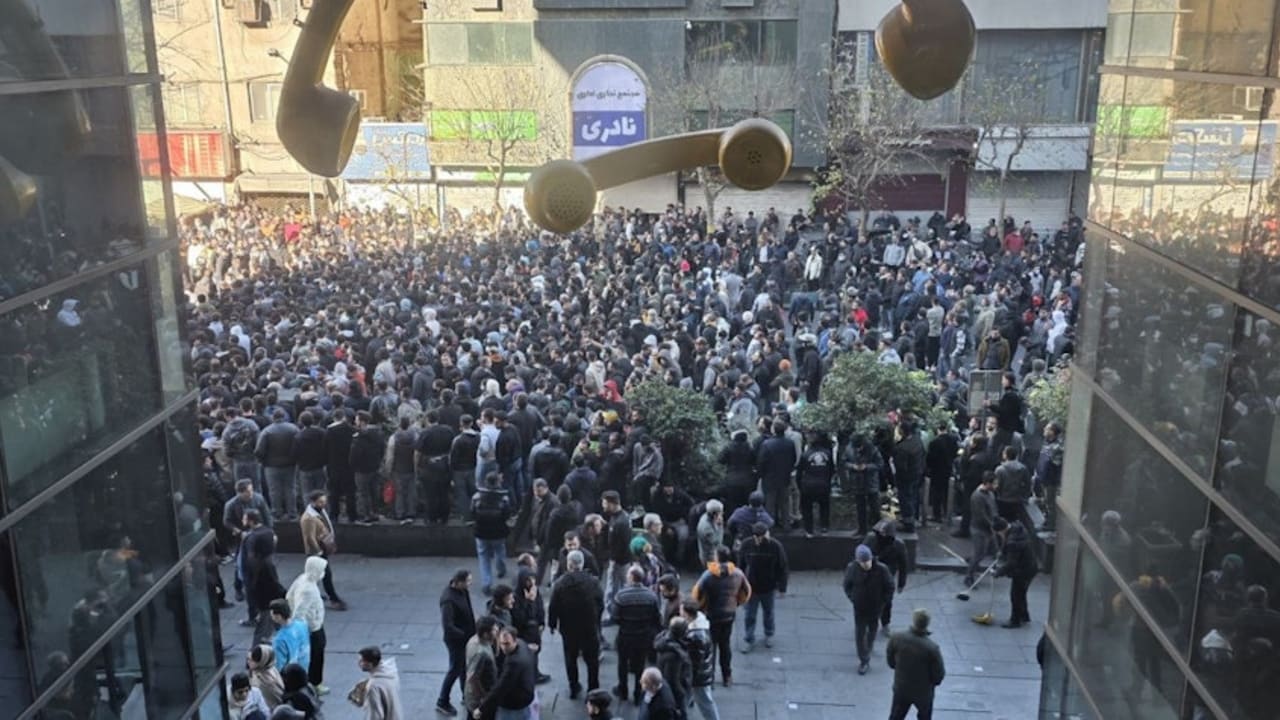
It’s hard for the Western mind to understand what is happening in today’s Iran. We see Iran through our own blurred, occluded, and totally out-of-focus eyes.
Protests are not new to Iran. Since 1979, when the Shah was deposed, and an Islamic state was imposed, Iran has put down numerous rebellions – and squelched them masterfully; None have succeeded in bringing about regime change. And while there is a chance of success this time, it will be an Iranian-style success, not a Western world one.
For a rebellion to succeed, for the current regime to be overturned, it will require much more than protests. No matter how many there are, how many protesters there are, and in how many places they will be, overturning the regime requires more.
The Islamic State of Iran’s primary role is to defend itself and then to govern. Religious and military leadership is the backbone of the State. In other words, there must be – I repeat, there must be – not merely the participation of, but significant defection from, the state apparatus and from the religious and IRCG military segments.
Even if protest participation reaches 5% to 10% of the population, which is about five to 10 million Iranians, protests will not sway Iran’s authoritative government to resign. Actually, while to Western eyes these present-day protests look encompassing and effective, they have no impact on the regime other than to be an annoyance.

They may, however, possibly influence national religious leaders and popular IRGC commanders to abandon the regime and swing to the side of the revolutionaries.
Defection of elite leaders is one of the most essential goals to accomplish in order to achieve change in Iran.
Executions as a tool for public intimidation
More protesters will not lead to the fall of the Islamic regime. Neither will more martyrs. The regime has designed an algorithm for successfully executing the right number of people, in public, as a tool of intimidation. They have figured out exactly how many to arrest and release in order to frighten the masses so they won’t join the rebellion. It is a mathematical calculation. And it is very effective.
The regime will not perpetrate a massive execution that would trigger the US involvement that President Donald Trump has warned of and has promised.
International outrage and isolation already exist against Iran, and neither sways nor influences the regime. So, too, with moral and legal delegitimization of the Islamic Republic. These already exist, and they have proven to have little to no influence on Iran, and certainly not on regime change.
While these protests in Iran are an excellent start, that is all they are: a start. To have true change and a real revolt, there must also be an economic crisis.
Now here’s the problem. While an economic crisis is primary, there are no unions in Iran. Because there are no unions, there can be no internal shutdown of the economy to force change. If all Iran’s industries were to strike – transportation, energy, food, police, fire, safety, army, education, health – that would put tremendous pressure on the leaders and be a death blow to the regime, forcing the ayatollah to flee.
But there is no one to organize strikes because there are no unions.
Another essential element for a successful revolt is that there must be a call to change the existing regime by the military, political, religious, financial, and business leadership. Without it, there can be no revolt. A change in regime is not about college students: It requires people of power to step up and challenge established leadership.
And it requires the military and police. It requires that Iranian police, IRGC, and Basij – Iran’s paramilitary militia group, often seen in civilian clothing – disobey direct commands and not crack down on protesters when publicly ordered to do so. It is essential that the internal security mechanism crumble.
When policing on the ground sides with the protesters, or at least refuses to crush and brutally assault them, the tide will turn. But not before.
Iranians do not want Iran to be like Syria or Iraq. They are resistant to creating a situation of anarchy and a power vacuum. While they want change and revolt, they do not want change at any cost. They have seen what has happened to their neighbors and learned from their lessons.
An added looming challenge to a successful rebellion in Iran is the failure of a clear successor to the ayatollah. It is an issue that weighs heavily on commanders who might otherwise move to support the rebellion.
They are asking themselves several questions. First, if the rebellion is successful, where will I stand? Next, if it fails, where will I be? Choose the wrong side, and they and their entire family will be executed, probably publicly, and their entire family name and reputation will be totally besmirched for generations.
The ayatollah’s regime has mastered the art of cracking down on protests. They intimidate and threaten. They also shut down the internet and satellite communications, making it extremely difficult, if not impossible, for the leaders of the protest movement to organize and send messages. Elon Musk’s Starlink helps, but Iran is still blocking, arresting, and confiscating.
Tehran will use live ammo to put down protests, especially in the outer areas populated by Kurds. They will kill, but not indiscriminately: just enough protesters to deter, but not enough to provoke the ire of President Trump. And they will arrest tens of thousands of their citizens.
We don’t know what will happen next in Iran. What we do know is that Iran is now countering the protests.
The writer is a columnist and a social and political commentator. Watch his new TV show Thinking Out Loud on JBS.