In January 2026, Rawhi Fattouh, chairman of the Palestinian National Council, a central body subordinate to the PLO, presented an honorary shield to the outgoing Chinese ambassador to the Palestinian Authority.
On the shield appeared a map of a single “Palestine” encompassing all of the State of Israel, alongside an embroidered “key of return” – the quintessential symbol of the demand for millions of Palestinian refugees to return to cities and towns within sovereign Israel. Above the map, a single word was written in English: Palestine.
This was not a marginal incident, but rather a clear and unambiguous message: not from Hamas, but from Israel’s supposed “partner,” the PLO. A few days later, Jibril Rajoub, a senior Fatah official and secretary of the movement’s Central Committee, also presented the Chinese ambassador with a similar shield. Again, a map of all of Israel and the key of return. The message was conveyed clearly and without words.
Those who continue to speak of “Palestinian pragmatism” must first explain this picture.
One symbol, one goal
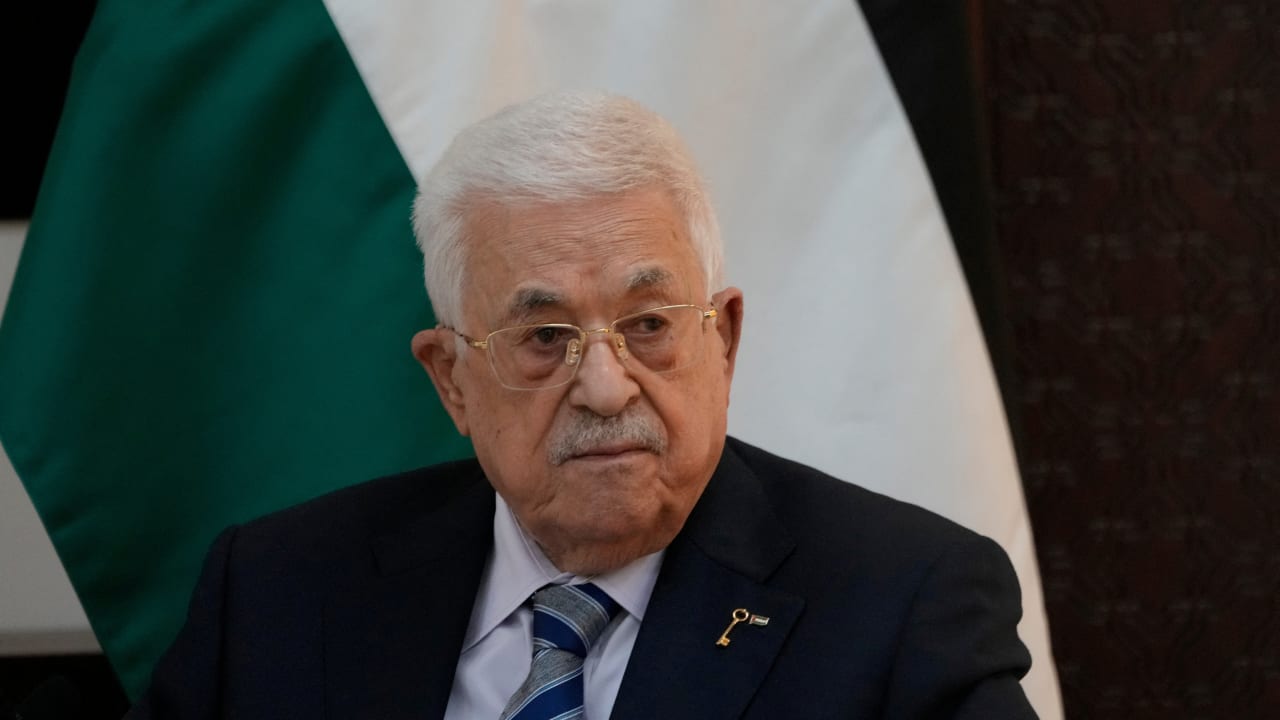
The incident with the Chinese ambassador is not anomalous, but rather a consistent expression of official Palestinian ideology. Mahmoud Abbas, president of the Palestinian Authority and PLO chairman, makes a point of wearing a key pin on his suit lapel at every significant political speech, a symbol of refugees returning to their original homes. Not to the West Bank, not to Gaza, but to Jaffa, Haifa, and Lod.

An examination of Fatah’s official website, in the “About Our Movement” section, reveals a picture no less severe than that of the Hamas Charter – the charter that suddenly “came to light” in the eyes of Israel and the West after October 7, which explicitly calls for the elimination of the Zionist project in the Land of Israel. In Fatah’s official description, it is explicitly written that “final victory will not be achieved until the flag of Palestine flies over the minarets, churches, and walls of Jerusalem... and the return of the refugees.”
The symbols tell the same story. The emblem of Fatah, the ruling party in the Palestinian Authority, displays a map of “complete Palestine,” without any trace of the State of Israel, and two crossed rifles above it. This is not just coincidental design, but an ideological declaration.
1967 as a station, not a destination
When comparing Hamas’s charter, even in its later version, with the details from Fatah’s official website, the conclusion is clear: both share the same strategic goal. Complete liberation of “historic Palestine,” establishment of one state from the river to the sea, Jerusalem as the capital, and an absolute refusal to recognize the legitimacy of any Jewish state.
Hamas, too, in its revised 2017 document, ostensibly more “moderate,” speaks in exactly the same terms. For both movements, the 1967 lines are not a permanent solution but a temporary formula, a stage on the path to the final goal. The difference between them is not ideological, but tactical.
Hamas speaks loudly, Fatah whispers diplomatically
One of the most painful lessons from the October 7 attack is the need to listen to what the enemy says in its own voice, not through interpretation with Western glasses. Hamas’s “End of Days,” plan which included invasion of communities, massacre and abduction, was displayed openly, rehearsed in plain sight, and even published on the organization’s official website – including a detailed military drill in September 2023 that simulated the conquest of Kibbutz Be’eri. The words were spoken explicitly, but in Israel and the West there were those who chose not to listen.
The exact same mistake is being made with regard to the Fatah organization, only because it is wrapped in suits, diplomacy, and “non-violent” symbols.
The term “two states for two peoples” is a Western-Israeli invention. It has never been stated, not even once, by an official Palestinian leader as a final goal. Yasser Arafat said this openly and in Arabic in his Johannesburg speech in 1994, when he compared the Oslo Accords to the Treaty of Hudaybiyyah between the prophet Muhammad, representing Medina, and the Quraysh of Mecca: a temporary move designed to accumulate power until conditions ripened. Even then, there were those who chose not to hear.
<br><strong>Looking truth in the eye</strong>
Thirty years after Oslo, after bloody intifadas, wars, and the utter destruction of October 7, it is no longer possible to continue ignoring these texts, symbols, and actions. The Palestinian national movement, in all its shades, has one clear goal: one Palestine, a fully Palestinian Jerusalem, and the return of millions of refugees – a move that has one meaning: the end of the State of Israel’s existence.
The difference between Fatah and Hamas is not in the goal, but in the path. One seeks to destroy the house all at once; the other prefers to dismantle it brick by brick, through international institutions, diplomacy, and symbols. In both cases, the planned final result is identical.
It is time we look truth in the eye.
The writer is CEO and director of communications at the Jerusalem Center for Security and Foreign Affairs.