“You must maintain accurate and honest weights and measures, so that you may live long in the land that the Lord your God has given you. For everyone who behaves dishonestly in regard to these things is detestable to the Lord your God” (Deuteronomy 25:15).
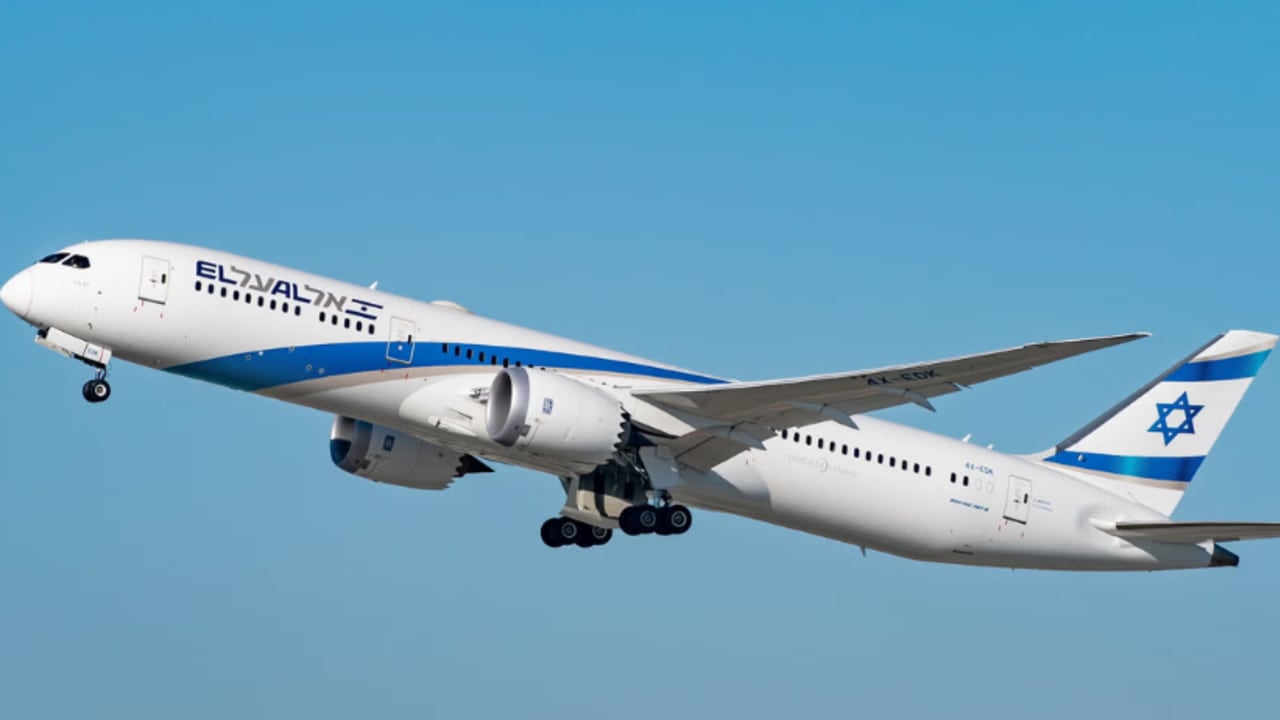
Israel’s Competition Authority announced on February 8 that it intends to impose the maximum allowable fine of NIS 121 million ($39m.) on El Al Israel Airlines for alleged price gouging practices during COVID and the Israel-Hamas War that followed when travel options to and from the Jewish state were sorely limited given the paucity of other air carrier options.
The authority alleges that El Al engaged in “excessive and unfair” pricing, acting as a monopoly to hike fares by an average of 16% (and up to 31% on some routes) during the war, specifically between October 7, 2023, and May 2024. Statistics indicate that following the suspension of flights to Israel by many foreign carriers, El Al’s share of seat sales rose from roughly 20% before the war to over 70% during the peak of the conflict.
Fining El Al
This potential fine follows a period where Israel’s flagship air carrier reported record-breaking profits in both 2024 and 2025.
No doubt El Al will present a defense in a follow-on hearing, so there is no guarantee that this fine will actually be exacted from the company. However, assuming it is sustained by the courts, who will be the beneficiary of the funds?

Most probably, the State of Israel will be paid this amount – which will then become a double travesty against the traveling public. Firstly, that all of us paid these exorbitant fees to travel abroad for family events, both happy and sad, while secondly, when the airline is forced to pay for this transgression, none of it will go to the travelers who paid the fees in the first place – and this is simply wrong.
Effectively, the State of Israel lodged a class action suit against El Al on behalf of the many passengers who were fleeced by the airline as it operated in a monopolistic environment. Except for government travelers who also were affected by these high prices, the Israeli government itself did not suffer financially from the exorbitantly high prices. Logic would dictate that those of us who paid the increased costs should be the beneficiaries of the class action suit if it is upheld on appeal.
Settlement possibilities
According to the 2024 Ben-Gurion Airport Annual Report, some 6,655,479 passengers departed Israel in the eight months covered by the suit, from October 2023 through May 2024. If it is assumed that 70% of that traffic was on El Al (there were some other airlines that flew sporadically to European destinations and Dubai), this means that about 4,660,000 people flew on El Al aircraft. If the settlement were to be paid out evenly to each of those people, it would amount to just $8.37 per person.
However, that’s not the way these class action payouts are generally implemented.
For example, earlier this week, as a result of a class action suit brought against Shagrir Automotive Services Ltd., where they were found guilty of overcharging on the fee for replacing dead car batteries, the company sent the following notice to those of us presumably affected by this situation.
It read, “Shagrir has extended the period in which you are entitled to a one-time discount of NIS 100 (including VAT) from the Shagrir price list for the purchase of a battery and, in the same situation, for the replacement of the battery, at no additional cost. Alternatively, you are entitled to a one-time discount of NIS 100 (including VAT) on vehicle maintenance or repair at Shagrir garages. The benefit is valid until February 15, 2027.”
In other words, each affected purchaser has been given a potential credit of NIS 100 toward the next time service is needed from Shagrir. Statistically, it has been shown in these situations that only a small percentage of those eligible will actually take the company up on its offer. However, the significant public relations value comes at low cost to the company.
El Al could do something similar. Simply offer every passenger who traveled out of Israel in the October 2023-May 2024 period a credit of $100 on their next ticket, good for 18 months from the date of notice. That way, each traveler would see a potential benefit from the settlement and the Israeli Treasury would still have some residual income.
The great bulk of said credits will no doubt never be redeemed, given the large number of tourists involved who don’t travel to Israel regularly, as well as the fact that none of us are traditionally so good at record keeping that we will either remember the credit when we need it or know where it is kept when it needs to be retrieved.
At least this way, those most affected by El Al’s craven pricing practices during the war would be somewhat compensated for the airline’s money grab.
A situation where the State of Israel would get to keep funds that were basically extorted from its own population by the national flag carrier of Israel is a travesty and flies in the face of the biblical admonition to operate fairly in business. The situation is easily remedied and, at a minimum, the affected population deserves this small consideration “so that we may live long in the land that the Lord our God has given us.”
The writer, a 42-year resident of Jerusalem, is a former national president of the Association of Americans and Canadians in Israel, a past chairperson of the board of the Pardes Institute of Jewish Studies, and a board member of the Israel-America Chamber of Commerce (AMCHAM).