When Iranians are in deep pain, we say, “I’m weeping blood every moment.” That is the most accurate description of how all of us feel right now. When you hear the wail of a father searching among thousands of bodies, calling his son’s name – “Sepehr, my dear Sepehr, where are you?” – even writing that sentence makes me cry.
More than a month has now passed, and much of what has happened in Iran – its details, its angles, its many unseen scenes – remains obscured. The Internet was shut down for weeks. This is the regime’s well-worn tactic: The moment domestic protests erupt, communication is severed. That is precisely why the true depth of the catastrophe – the full scale of the repression – still lies in a fog of uncertainty.
Initial reports suggested that 12,000 people had been killed. Many of us hoped those numbers were exaggerated. But as more footage has surfaced, estimates now place the death toll at over 35,000.
Some sources claim that as many as 50,000 people have been detained and are currently held in prisons across the country. Access to independent legal counsel is often denied. In many cases, detainees are forced to accept state-approved “security lawyers,” vetted by the regime itself – lawyers whose loyalty lies not with the accused but with the authorities.
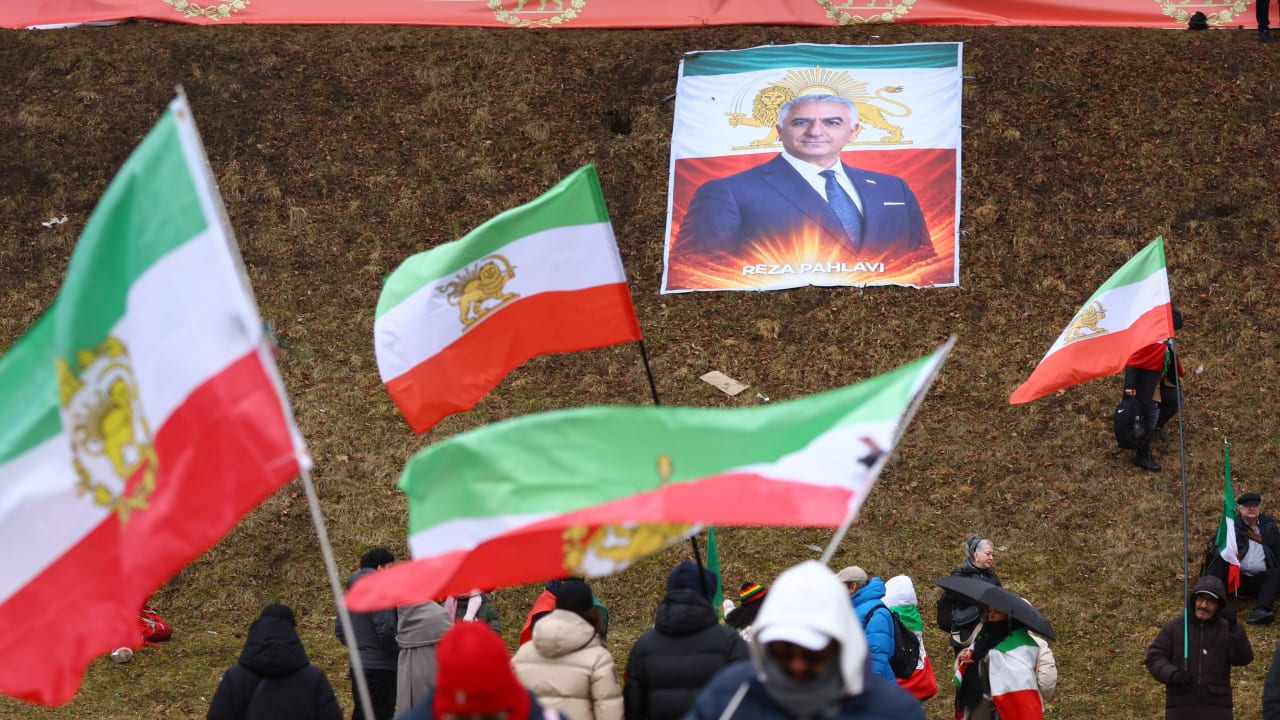
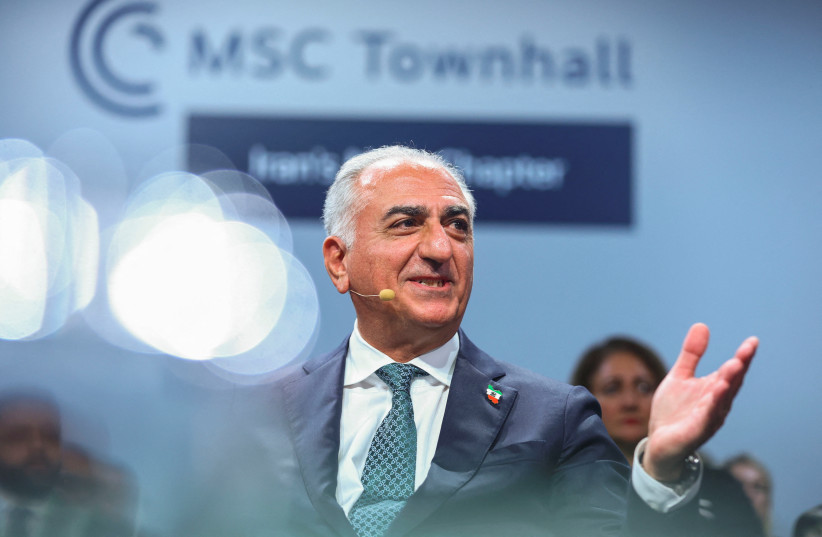
In one interview, Prince Reza Pahlavi used the word “war.” On the other side, his critics argue that using the word in the context of protests and repression does not have its precise meaning and is not a correct legal term.
But I want to say something beyond legal and political debates: Our situation as Iranians is far harder than a war with a foreign country, or a war against foreign occupying forces. This is us – Iranians – standing against one another. This is us, willing to line up and shoot each other’s children.
Throughout history, Iran has endured repeated foreign invasions – Mongols, Russia at different moments, the Arab conquest, and more recently the Iran-Iraq War. And each time, through unity, and by relying on a rich culture and our shared Persian language, Iranians drew on a sense of national identity to survive those crises.
But the formation of a Shi’ite religious government – one that, importantly, emerged from within the popular culture of Iranians themselves – opened a deep fracture among us.
What the revolution brought
In the early days of the 1979 revolution, mullahs threw military officers from the Shah’s era off the top of two-story buildings, and other people applauded and cheered. Revolutionary religious forces, leaning on religious doctrine, presented such acts as deeds “for God and Islam,” as if they carried divine reward.
In that name, they sold “eternal paradise” to Muslim Iranians. They brought quranic verses and told people that anyone opposing Ayatollah Khomeini was acting against God. They introduced him as the leader and guide of the world’s Muslims – especially the Shi’ites of Iran and Shi’ites everywhere.
From that moment, they began importing religious concepts – moharebeh and efsad fel-arz – into Iran’s criminal law. They said these verses in the Quran referred to those who act against the Islamic system, who therefore have “gone to war with God.”
From then on, alongside the killing of military figures tied to the monarchy and commanders close to Mohammad Reza Shah, they began executing other political forces too: communists, Marxists, and anyone who, in general, did not accept Khomeini’s framework. But even harder than the political executions was the silence of everyone else.
The power of religious language – and its penetration into Iranian society – was so deep that, alongside political executions and the silence of the majority, rifts also appeared within families and kinship networks.
The government called the executed “impure” and “infidel” and harassed anyone related to them. It exploited religious emotions: When someone in a family was executed, others would distance themselves from the victim’s family in order to prove their loyalty to religious belief and Islam.
At the same time, the Iran-Iraq War killed countless young people. Using that same religion, the regime deceived the majority of Iranians for decades – until the massive corruption of the past decade exposed what was really happening: What they sold us in the name of religion was, in truth, a mechanism to enforce the silence of the majority and to serve the financial interests of the circle closest to power.
Protesting injustice
Now, with a younger population – Generation Z – who do not believe in religious narratives the way previous generation did, the dead are no longer only political activists. They are teenagers and young people in their early twenties, pushed to the point of explosion by the injustice of their society.
Like many children of government officials, they want a normal life and the chance to progress. They can see they have no path to social justice except to protest in the streets and shout slogans against the regime.
But this unbearable and ugly confrontation – between people who speak the same language, share the same culture, and even share the same religion – has now brought the children of this land to die in blood, while we, the older generation, can do nothing.
This war among Iranians does not begin with the recent protests. Its roots lie in the silence that met injustice from the very first day – some people silent out of religious belief, others out of personal interest, while killings unfolded.
It is like the proverb that says: “If the builder lays the first brick crooked, the wall will be crooked all the way to the sky.” Perhaps the future heirs of this land – the young people who will inherit it – must remember to practice stopping cruelty, stopping injustice, and stopping the refusal to hear one another’s views. Perhaps, only through patience and tolerance toward each other, can we pass through this enormous social wound.
But today’s slaughter must be understood through the silence Iranians showed in the face of the political executions of the 1980s – because if people had acted then, their children would not be living through this suffering today.
But perhaps even now, in this vast and profound grief, something may bring us closer together. Perhaps this shared mourning – across every political spectrum – may unite us in ways that ideology never could.
The writer is a legal scholar and journalist specializing in constitutional and international law, with a focus on Iran and Middle East politics.