Even before US President Donald Trump publicly lashed out at President Isaac Herzog on Thursday for not yet pardoning Prime Minister Benjamin Netanyahu, Herzog was in an impossible position.
Grant the pardon, and he alienates roughly half the country that wants to see Netanyahu’s trial continue, and, if the prime minister is convicted, pay the legal price. Refuse the pardon, and Herzog enrages the other half, which views the decade-long legal saga as unnecessary, excessive, corrosive, and long overdue for closure.
It was already a no-win situation. Trump’s most recent intervention – he first intervened in October when he publicly called for a pardon for Netanyahu from the Knesset podium – made it worse.
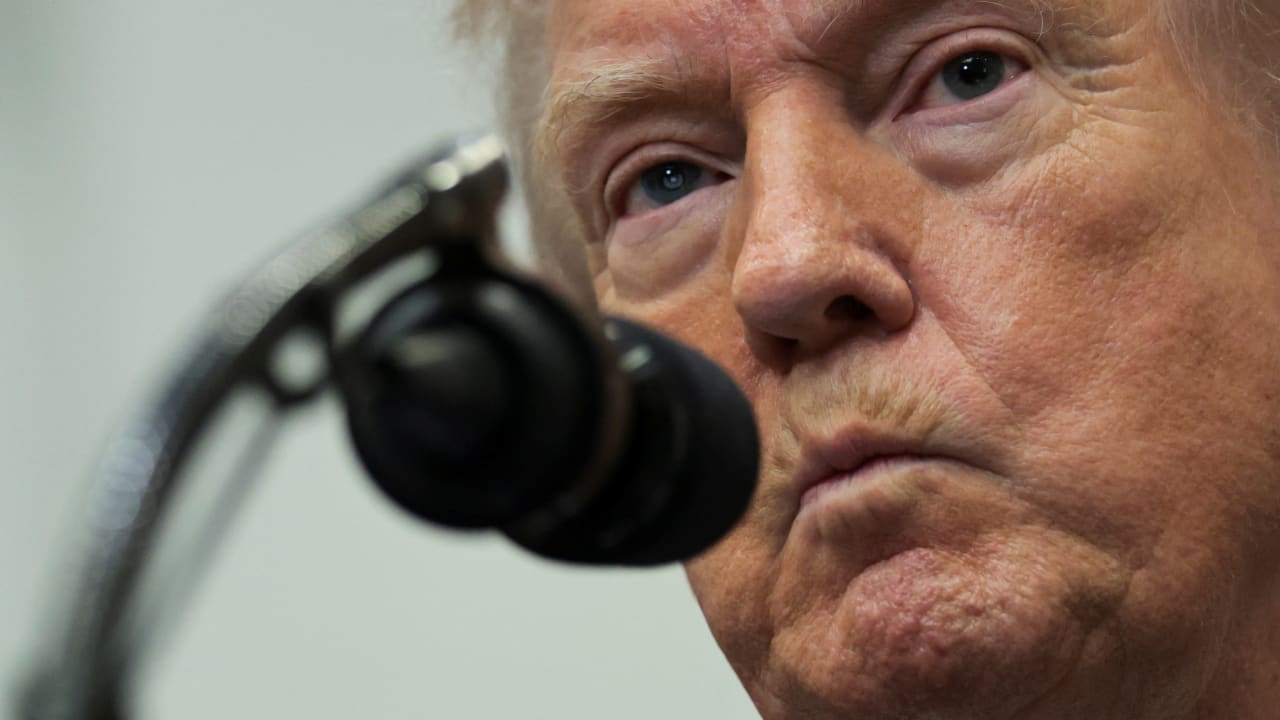
Responding to a question in the White House on Thursday, a day after meeting Netanyahu, Trump said Herzog should be “ashamed of himself” for not having pardoned the prime minister. He went further: “I think the people of Israel should really shame him. He’s disgraceful for not giving it.”
Those words reached Herzog during a 13-hour flight from Australia – where he had just completed a four-day visit marked by loud anti-Israel demonstrations calling for his arrest – to Abu Dhabi, before the final commercial leg home.

After being assailed in the streets and fiercely criticized in parts of the Australian press, the last place Herzog likely expected further invective was from the Oval Office in the White House. Yet there it was.
Trump’s comments did more than create diplomatic discomfort; they complicated Herzog’s overall calculus regarding the pardon.
On the one hand, Herzog could not ignore a public rebuke from the American president – particularly one who has positioned himself as Israel’s staunchest ally. On the other hand, any response had to be measured and respectful, mindful of Trump’s temperament and of the enormous importance of US-Israel ties.
The statement crafted by Herzog and his aides was careful and procedural. Netanyahu’s pardon request is currently with the Justice Ministry for a legal opinion, they said. Once that process is complete, the president will deal with the matter. That was consistent with what Herzog told reporters throughout his Australian trip, even before Trump’s intervention.
“Only after the process is concluded will the president examine the request in accordance with the law, the good of the state, and his conscience – and without any influence from external or internal pressures of any kind,” the statement read.
Herzog 'appreciates' Trump
Herzog stressed that he appreciates Trump for his significant contribution to the State of Israel and its security, while stressing that Israel is “governed by the rule of law” and that – contrary to the impression left by Trump’s comments – no decision has yet been made.
The message was two-fold: appreciation for Trump’s invaluable support, coupled with a polite reminder that Israel is “a sovereign state.”
But Trump’s intervention changes the political equation.
If Herzog ultimately grants the pardon, critics will argue he did so under American pressure. If he refuses, Netanyahu’s supporters will frame the decision as a slight to Trump – a rebuff to Israel’s most important ally and champion.
And that framing is not incidental. After calling Herzog “disgraceful,” Trump praised Netanyahu as a great wartime leader and declared, “I’ve been the best friend to Israel that they’ve ever had.”
The implied subtext is unmistakable: I am Israel’s best friend. I am asking for this. You owe me.
That is precisely what makes Herzog’s already fraught decision even more precarious. What was once a domestic dilemma has now acquired a new dimension – one that may have ramifications for the US-Israel relationship.
After the initial shock and the release of Herzog’s statement on Saturday, sources close to Herzog questioned whether Netanyahu put Trump up to this particular task. The timing, after all, was suspicious, with Trump’s diatribe coming just a day after he met Netanyahu in Washington.
They said that if Netanyahu did indeed have something to do with Trump’s remarks, this “constitutes crossing a red line.”
Sources close to the prime minister denied any involvement and said the remarks were entirely at Trump’s own initiative. They said Netanyahu heard about the remarks in the media and had no prior knowledge of them – just as he had no advance knowledge of the president’s call in the Knesset in October for a pardon.
In politics, perception matters
But in politics, perception often matters more than anything else.
The damage is not necessarily in coordination between Netanyahu and Trump – proven or unproven – but in optics. Trump’s very public intervention soon after meeting Netanyahu, in conjunction with his framing of the issue in personal and transactional terms, has reshaped the context in which the public will now judge any decision by Herzog.
Before Trump’s remarks, the president’s dilemma was domestic and legal. However controversial, a decision to pardon or not could have been debated on legal grounds, moral reasoning, precedent, or the need for national healing and for the country to move on. Now that space has narrowed.
If Herzog grants clemency, critics will not examine the logic in the Justice Ministry’s legal opinion or weigh the broader national interest. They will point to Trump’s demand and conclude that Israel’s president bowed to pressure from Washington. The decision will be interpreted not as a sovereign act of conscience, but as acquiescence.
If he refuses, Netanyahu’s supporters will argue that Herzog chose defiance over alliance – that he rebuffed Israel’s most forceful international backer in the midst of war and diplomatic strain to prove a point and to prevent coming under a barrage of criticism from the anti-Netanyahu camp.
In other words, Herzog is now effectively hemmed in. Trump, with or without prodding from Netanyahu, has shifted the debate from the merits of the pardon to the motivations behind it. And once motivation becomes the story, the actual substance of the matter becomes secondary.
To many Israelis, the whole saga is unseemly. Herzog may indeed want to decide this based on the dictates of his conscience and his reading of what is best for the country.
But Trump’s intervention has made that far more difficult. Any way Herzog turns, the decision will now be judged through a political lens – not because of what he decides, but because of the context in which he has been forced to decide.