In post-conflict environments, rhetoric can get heated, and leaders seek to consolidate victories and shape international perceptions. Yet there are moments when political language crosses the line.
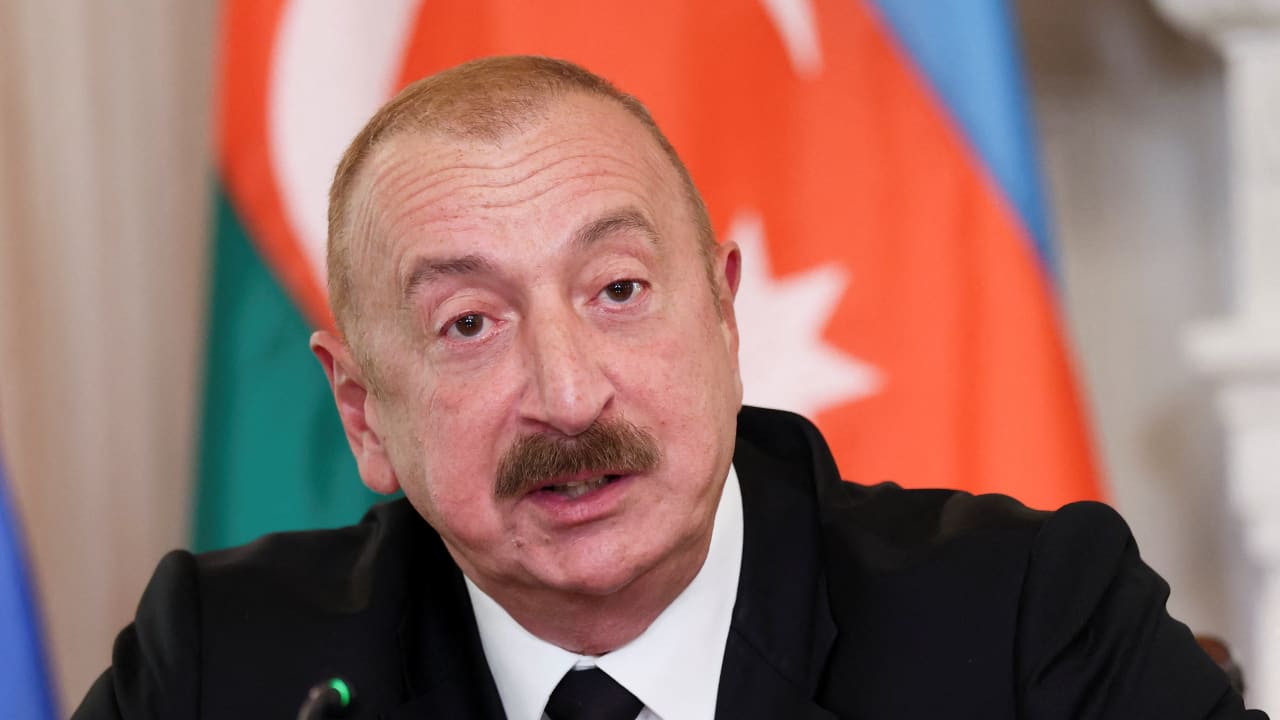
Azerbaijan President Ilham Aliyev’s comparison of imprisoned Armenian former separatist leaders from Nagorno-Karabakh to the Nazis – accompanied by the suggestion that their alleged crimes were worse than those adjudicated at Nuremberg – represents such a moment.
In an interview last week with France24, he refused to grant clemency to imprisoned Nagorno-Karabakh separatist leaders, an issue that was raised during a meeting he had this week with US Vice President JD Vance. “These people committed serious crimes against humanity,” he said. “Their crime was even worse than what the Nazis did during World War II.”
These statements are not only historically indefensible; they are also morally alarming and politically counterproductive. The Nazi crimes were not a flexible metaphor to be invoked for emphasis – but rather a uniquely catastrophic project of state-directed, ideologically driven extermination.
Nazi Germany constructed an apparatus of industrialized murder that sought the annihilation of entire peoples, most centrally Europe’s Jews.
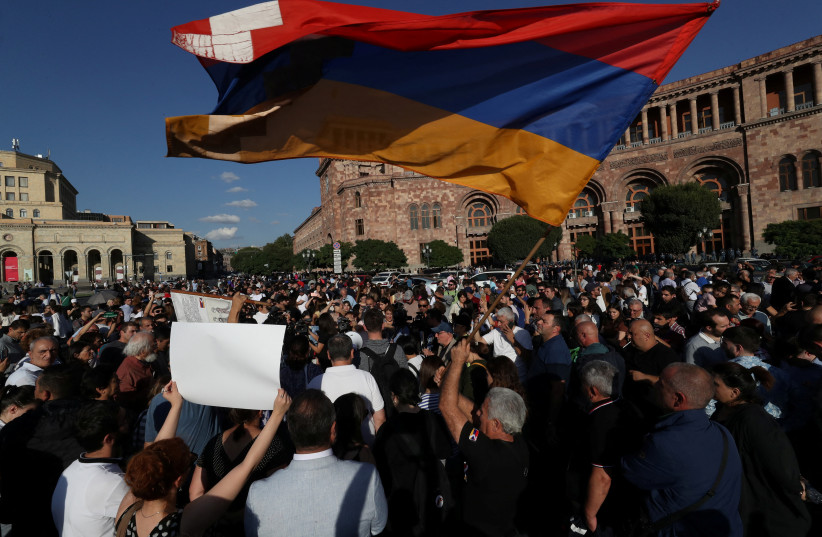
In the case before us, a military court in Baku has tried around 16 Armenian former leaders and officials associated with the now-dissolved Nagorno-Karabakh/Artsakh administration following Azerbaijan’s September 2023 offensive that reasserted control over the region.
Among this group was Ruben Vardanyan, a former state minister and Armenian-born billionaire who was sentenced this week to 20 years in prison. At least seven others have already received long sentences. These trials, held in a police state, have drawn international criticism over fairness and due process.
Any comparison to the Nuremberg tribunals convened after World War II is absurd.
Among those tried at Nuremberg was the senior leadership of a regime responsible for unprecedented destruction.
They were figures such as Hermann Göring, head of the Luftwaffe and a central architect of the Nazi power structure; Joachim von Ribbentrop, the foreign minister who helped engineer aggressive wars across Europe; Wilhelm Keitel, chief of the High Command of the German armed forces, who signed directives enabling mass executions and brutal occupation policies; and Ernst Kaltenbrunner, a top SS official deeply implicated in the machinery of terror and extermination.
These men designed, administered, and executed policies that led to world war, crimes against peace, and the systematic murder of millions.
The trials gave legal expression to concepts such as crimes against humanity and crimes against peace precisely because the conduct in question shattered existing frameworks of understanding. Nuremberg’s legacy rests on the recognition that certain crimes are so radical in nature that they demand both accountability and conceptual clarity.
Against that background, Aliyev’s analogy collapses distinctions that are essential to historical truth. The Nagorno-Karabakh conflict has indeed been violent, painful, and deeply traumatic for populations on all sides – and I do not propose to adjudicate that here. Allegations of abuses and violations should be investigated seriously and adjudicated fairly. Accountability is indispensable to any durable peace.
But invoking Nazi comparisons to the local political leaders – whose actions occurred within a protracted territorial dispute and who certainly did not engage in crimes against humanity (indeed, it was the entire Armenian population that was forced out in 2023) – is a major disservice to the historical truth.
Such rhetoric also risks undermining the legitimacy of Azerbaijan’s own judicial processes.
Courts derive authority from evidence, due process, and proportionality. When political leaders characterize defendants as perpetrators of crimes exceeding Nazi barbarism, observers may reasonably question whether legal proceedings are being framed through political exaggeration rather than judicial precision.
Aliyev has articulated confidence that peace with Armenia is now a settled reality, a goal that deserves recognition.
The region urgently needs stability, normalization, and economic development. Infrastructure initiatives such as the TRIPP corridor are frequently presented as vehicles for regional integration and long-term cooperation. Within this evolving diplomatic landscape, the continued detention of former Nagorno-Karabakh Armenian leaders has inevitably become part of broader discussions.
There are, accordingly, voices arguing that releases or clemency could function as confidence-building measures.
These positions do not necessarily deny the possibility of wrongdoing; rather, they reflect a familiar dynamic of post-conflict diplomacy, where humanitarian gestures sometimes accompany political settlements. Whether one agrees with such proposals or not, their existence highlights the need for measured discourse rather than absolutist historical claims.
The danger of historical inflation
Beyond immediate politics lies a deeper concern: the integrity of historical memory. Nazi analogies carry immense emotional and moral force precisely because they refer to events of unparalleled horror. When invoked loosely or strategically, that force becomes diluted. The specificity of the Holocaust – its causes, mechanisms, and lessons – is obscured when it is treated as a rhetorical yardstick for unrelated conflicts.
Genocide, crimes against humanity, ethnic conflict, occupation, and political violence each possess distinct characteristics; however, they may overlap. Preserving those distinctions is essential not only for accurate understanding of the past but also for coherent moral reasoning in the present.
The Nuremberg trials remain a foundational moment not because they offered a convenient analogy, but because they established a disciplined framework for judging radical crimes. Their legacy calls for precision, restraint, and respect for historical truth. Invoking them to characterize contemporary adversaries demands a fidelity to context that sweeping comparisons cannot satisfy.
Peace, if it is indeed emerging between Azerbaijan and Armenia, will rest on fragile foundations: trust, guarantees, and the careful management of memory. In such circumstances, historical inflation is destabilizing.
Aliyev, who purports to be a friend of the Jewish state, should be more sensitive and careful in his remarks.
The writer is an Israeli of Armenian origin who acts as a spokeswoman for the Jewish-Armenian community.