
In a world where loneliness and social disconnection have become a full-blown epidemic, the solution to our social and economic challenges lies in the simplest and smartest investment we can make: in children, in community, and in human infrastructure. This is not merely a social issue. It is a strategic economic lever because strong human capital and resilient community ties are the foundation of sustainable growth.
Loneliness, community, body, and soul
A recent study found that young people are experiencing high levels of loneliness despite having wide social networks, highlighting that the quality of relationships matters far more than the number of connections. It is important to state this clearly: loneliness is not just a mental state. It is a proven risk factor for heart disease, type 2 diabetes, and dementia.
Yet the greatest threat may lie in its long-term impact on social and economic resilience. A child who grows up socially disconnected and does not participate in group activities or volunteer frameworks is not just a lonelier child.
That child may grow into an adult who faces greater challenges, fulfills less of their potential, and whose contribution society ultimately loses. In other words, loneliness is a heavy economic burden. Investment in community and education is not charity; it is a long-term strategic development policy.
Community as strength: The Sderot model
In Sderot, loneliness is not a theoretical issue: it is a matter of resilience. Following the events of the October 7 massacre and the subsequent war, we witnessed how neighbor-to-neighbor connections became a primary safety net in the most difficult moments. In a city that has grown rapidly, with strong positive migration and a population approaching 40,000 residents, the challenge was twofold: coping with trauma while preserving our community identity amid expansion.
Based on this understanding, we developed an innovative model that connects community and education through three circles: belonging, shared action, and responsibility. In initiatives such as “Feeling at Home,” we shorten the integration process for new families and reduce attrition. This is a focused, intentional investment that creates powerful social cohesion, translating directly into both internal and external resilience and strengthening the local economy.
Education as a lever for economic growth
The connection between community and economic growth is most visible in the education system. Children and youth are not just students; they are the human capital of the future. When a child joins an extracurricular activity, plays on a sports team, or volunteers in a youth movement, they learn far more than a specific skill. They learn cooperation, develop social responsibility, build relationships that become life anchors, and cultivate personal resilience.
Each child is a long-term investment: by strengthening society today, they become tomorrow’s leaders, entrepreneurs, and innovators: the high-quality human fabric that drives our economy forward. Our investment in initiatives such as the “Belts Project,” the strengthening of informal education, and close mentorship for youth ahead of meaningful military service is a strategic investment in the city’s development. We are building a generation that is confident, creative, and engaged.
Community development: A long-term process that pays off
Investing in community is a business plan. The return on investment (ROI) from strengthening social ties is reflected in lower healthcare costs, increased productivity, and reduced attrition. When we invest in community coordinators and social programming, we are effectively building a human “insurance policy” that reduces the need for costly interventions down the road.
Furthermore, setting a high bar in education generates social capital. Contrary to the common assumption that expectations should be lowered during times of crisis, we have found the opposite to be true. Educational programs that encourage excellence and civic contribution shape leaders who are deeply connected to their roots. Graduates of these programs not only improve their own chances of success. They become social and economic multipliers for the entire community.
Community development is not a one-time event. It is an ongoing process of collective construction. Our model in Sderot is not static. It requires listening, collaboration, and continuous dialogue among residents, parents, educators, and municipal authorities.
Ultimately, the case of Sderot proves that in a world marked by growing loneliness and uncertainty, the solution does not lie only in glass towers or new technologies. It lies at home, in the neighborhood, and in the town square. It resides in the extraordinary power of community, a power we have built over the years that proved itself in our most defining moments. Community is an invaluable asset. Now is the time for every city in Israel to recognize and invest in it for a better day.
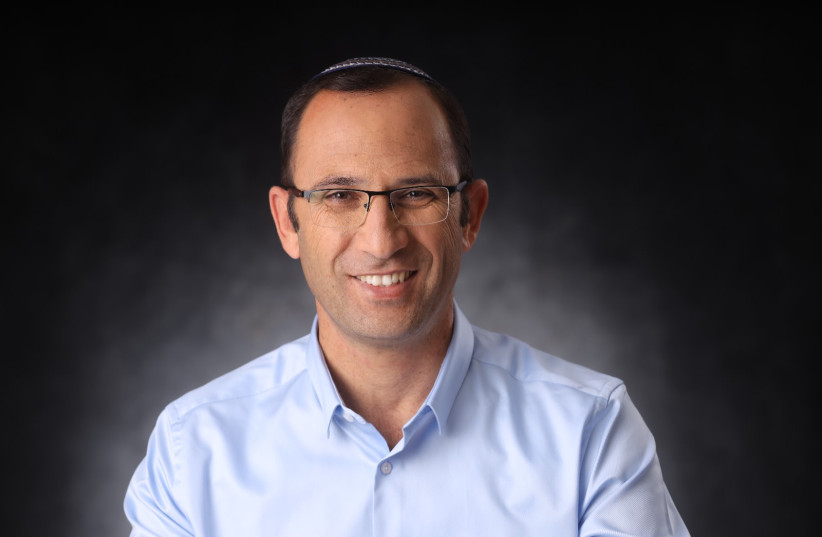
The author is the deputy mayor of Sderot.