The phrase “historic days” feels too small for the moment Israel is experiencing. Veterans of the Iranian threat, myself included, are struggling to believe what is unfolding.
After three decades of worst-case scenarios, of frozen fear over Iranian power, the many-armed octopus of proxies, thousands of ballistic missiles, the Islamic Revolutionary Guard Corps, the Quds Force, underground nuclear facilities, and what was once called Iran’s “zone of immunity,” Israel and the United States now appear to be dismantling that tower of cards with remarkable ease.
The Iranian tiger, it turns out, looks more like a limping, one-eyed, disheveled cat. What once seemed a regional superpower now appears hollow and decaying, unable to respond effectively to determined modern military power.
Iranian authorities are reportedly hesitant even to bury the Supreme Leader, uncertain how to handle the question of succession. The regime appears battered, stunned, and confused as Israeli air power dominates the skies while the United States presses its advantage at sea, in the air, in cyberspace, and across the broader Middle East.
Yet the story is far from finished. If the campaign ends with the ayatollahs still ruling Tehran, nothing meaningful will have changed. If the elderly Ayatollah Ali Khamenei is replaced by a younger Ayatollah Khamenei or a similar figure, the strategic reality will remain largely the same.

There is reason to hope that US President Donald Trump will not waver, and that the extraordinary resolve now coming out of Washington will hold in the face of rising oil prices, domestic criticism, pressure from Gulf states or some unforeseen military setback. Wars often shift suddenly at the most inconvenient moment.
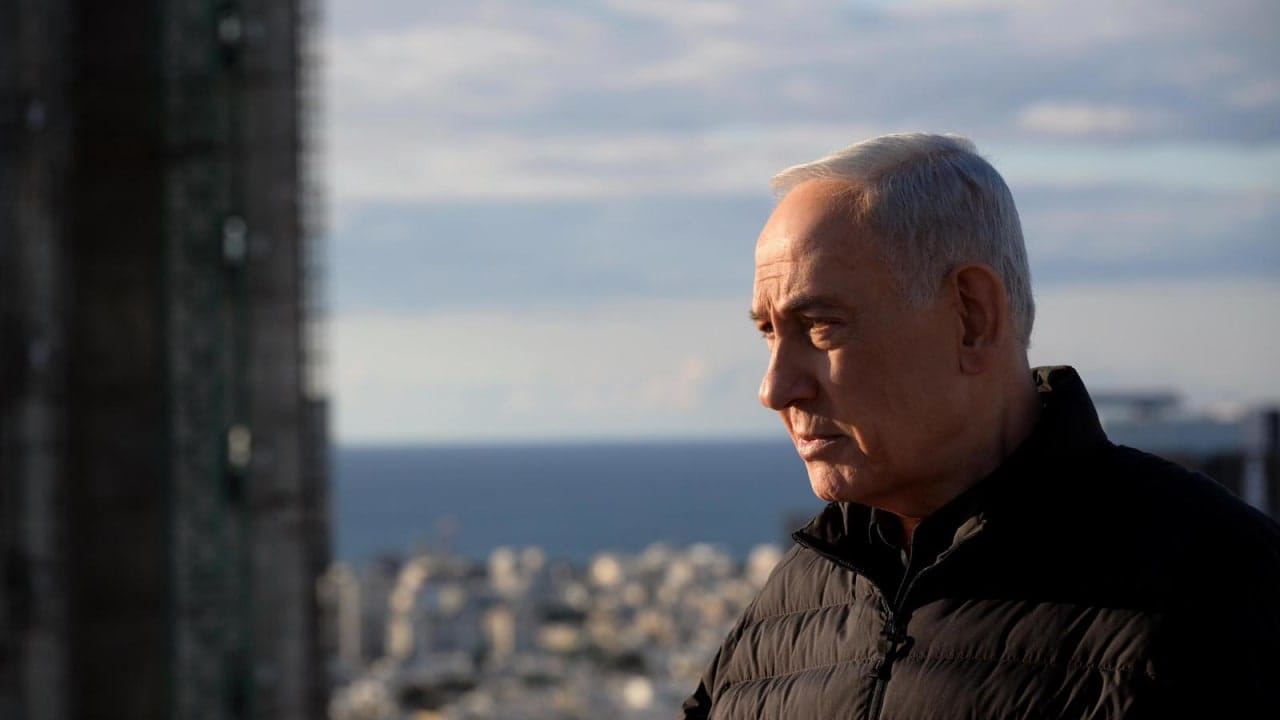
One thing, however, is clear. No force in the world will be able to take the credit for what is happening away from Prime Minister Benjamin Netanyahu.
This is unfolding on his watch. His signature is on the decision. He stands at the top of the chain of command and will be recorded in the pages of history as the central figure responsible for this moment. Attempts to redistribute the credit elsewhere are pointless and irrelevant. History rarely concerns itself with those efforts.
On February 28, when the current round of the war with Iran began, Israel’s prime minister was Benjamin Netanyahu. That fact will remain.
The difficulty in granting Netanyahu this credit lies in a simple question that many Israelis quietly ask themselves. What would have happened if the war had not unfolded as successfully?
Imagine a different scenario. Iranian forces might have shot down multiple aircraft, with captured Israeli pilots paraded in chains through Tehran’s central squares. That possibility was discussed for years in the Israeli military’s strategic planning.
Iran might have launched massive barrages of one hundred or two hundred missiles simultaneously, overwhelming Israeli defenses and causing hundreds or even thousands of casualties on the home front.
Hezbollah could have created chaos from the north, with Radwan forces crossing into Israeli communities and carrying out massacres.
The United States might have chosen not to join Israel at all.
Responsibility for failures often shifted from Netanyahu
In such circumstances, the list of those blamed would likely have been very long. In fact, everyone might have been blamed except Netanyahu himself.
According to that familiar narrative, the Supreme Court would have tied his hands, the attorney-general would have offered bad advice, and the real responsibility would lie with figures such as former Supreme Court president Aharon Barak, former prime minister Ehud Barak, journalist Barak Ravid, former US president Barack Obama, or any number of other convenient targets.
Critics might also have pointed to reserve pilots who protested government policies or to political activists accused of undermining national unity.
These arguments sound familiar because Israelis have already seen them.
When the Hamas attacks of October 7 devastated southern Israel, the prime minister, who had served nearly 15 consecutive years before the disaster, shifted the blame widely. Critics, security officials, protest movements, and others were accused of contributing to the catastrophe.
That history shapes how many Israelis now view the current success.
So what is the conclusion? Does Netanyahu deserve credit for the war against Iran?
Of course he does. The prime minister carries ultimate responsibility for national security. The decisions were made during his tenure, and the campaign now unfolding bears his imprint.
The same standard, however, applies in the opposite direction.
Netanyahu also bears responsibility for the misjudgments and failures that preceded this moment. Leadership means owning both outcomes. The same leader who now oversees military success also held power during the events that led to the October 7 disaster.
Prime ministers do not get to choose only the victories.
Therefore, there is no reason to deny Netanyahu the credit for what may become a historic campaign against Iran. The record will reflect that achievement.
History has its own methods, however. It eventually assigns responsibility for failures as well.
The prime minister of October 7 is also the prime minister of February 28.