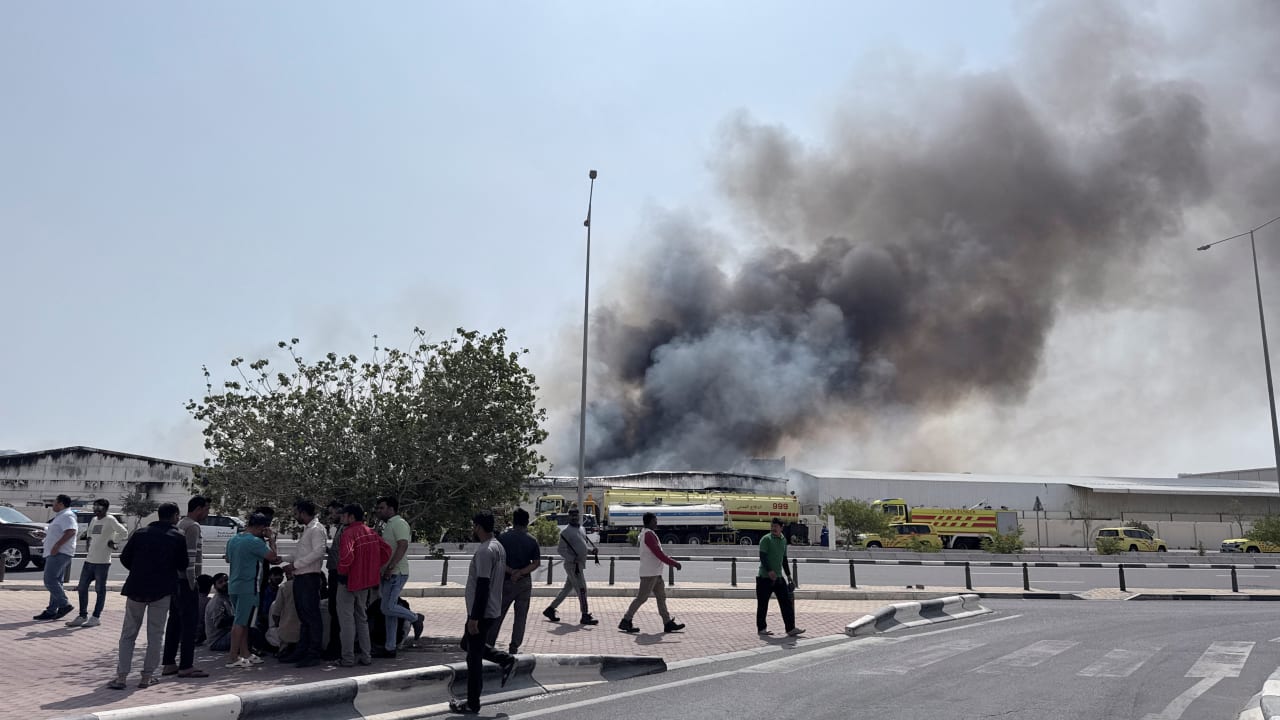
On the morning of February 28, the region became an open battleground within hours when the United States and Israel struck Iranian nuclear and missile facilities that threatened regional security. Iran responded by launching waves of ballistic missiles and drones at several Gulf countries, expanding the war beyond the main parties; cities, ports, and economic assets in the Gulf became targets.
The attack was not merely a military response but a deliberate attempt by Tehran to bring the fighting into the Gulf itself.
Statements from the UAE Defense Ministry illustrate the scale of the confrontation. According to an official statement released March 6, the UAE tracked 205 ballistic missiles launched at the country since the escalation began. Of those, 190 were intercepted, 13 fell into the sea, and two struck the ground without causing serious damage. Air defenses tracked 1,184 Iranian drones and intercepted 1,110, while 74 crashed on Emirati territory. They also destroyed eight cruise missiles.
These figures demonstrate two realities: the magnitude of the attacks the UAE faced and the effectiveness of its air defenses against massed threats.
Iranian aggression against Gulf states
In its statement, the UAE Defense Ministry called the events “blatant Iranian aggression.” It said targeting the Emirates violated national sovereignty and international law, and the country reserves the right to respond and take all necessary measures to protect its territory, people, and residents.

UAE authorities said the armed forces have sufficient air defenses and interceptors to handle further attacks. The country maintained economic stability through robust logistics and strategic food reserves that sustained supply chains. It also drew on its crisis management experience to activate remote work systems backed by reliable digital infrastructure that functioned under duress.
From the first day of the escalation, several Gulf countries sent a clear message to Iranian leaders: These countries are not party to the war between Iran and the United States or Israel, and their territories should not host military scores.
The Iranian response showed a stark contradiction, however. Iranian officials claimed they were not targeting Gulf countries but simultaneously declared that US military bases in those states remained legitimate targets. This logic exposes a strategy of widening the conflict zone and forcing the region’s countries into a war they did not choose.
In the wider regional picture, Iran’s repeated attacks on Israel confirm that Tehran applies the same aggressive logic to all states. Its efforts to expand influence threaten every country that opposes its goals.
Partnerships based on shared interests
The UAE’s 2020 decision to establish formal relations with Israel through the Abraham Accords now appears prescient. Many viewed the move as controversial at the time, but it has proven a correct reading of regional realities.
Today, Israel serves as more than an economic or diplomatic partner; it faces the same Iranian threat and shares security concerns with the Gulf states. Current events confirm that partnerships built on shared interests prove their worth during crises. The UAE’s choice strengthened regional security cooperation.
Focusing solely on the missile attacks gives an incomplete picture of the escalation. The heart of the crisis lies in Iran’s nuclear program and long-range ballistic missiles. President Donald Trump warned that long-range missiles combined with nuclear capability would endanger regional stability and international security. Israeli Prime Minister Benjamin Netanyahu said the network of influence Tehran built across the region has stoked many Middle East crises.
The Iranian attacks produced the opposite of Tehran’s intent. Rather than divide the Gulf states from the United States, they deepened security and military coordination with the US and advanced plans for a more integrated air and missile defense system. Missiles and drones cross national borders easily, so defenses limited to single countries cannot handle massed attacks effectively.
Iranian influence has suffered repeated blows, and the so-called Axis of Resistance network that Tehran developed over decades has weakened. Hezbollah in Lebanon suffered heavy losses in leadership and military capabilities during recent fighting, and the Lebanese government has begun to reassert independent decision-making free from outside control.
Hezbollah also launched missiles and drones from southern Lebanon at Israel to aid Tehran. This triggered a forceful Israeli response with warplanes conducting intensive airstrikes on Hezbollah targets in southern Lebanon and the southern suburbs of Beirut. Lebanon again bears the cost of military decisions made outside state control, as the south and suburbs became battle zones due to Hezbollah’s role in the wider conflict.
These events show the region has reached a critical geopolitical juncture. The Iranian regime is losing its regional grip while facing mounting public anger at home over economic hardship and the diversion of national resources to proxy wars.
Curbing Iran’s expansionist ambitions or changing the regime could ease tensions in the Middle East and produce greater stability after years of conflict driven by Tehran’s military networks. Any effort to restore Iranian dominance would compel regional states to tighten defense ties with reliable partners such as Israel and build deterrent systems that make attacks on their cities and economies too costly for any aggressor.
The writer is a UAE political analyst and former Federal National Council candidate.