Past attempts at regime change operations justified by claims of security threats or humanitarian crises have often produced less security and more humanitarian suffering. The two most prominent examples in recent decades are Afghanistan and Iraq. In both cases, wars were launched in the name of global security and protection of American interests, with the explicit goal of removing regimes considered dangerous.
In 2001, the United States and its allies attacked Afghanistan following September 11. The Taliban government was harboring al-Qaeda and refusing to hand over those responsible for the attacks. US-led forces quickly removed the Taliban from power. However, what was initially expected to be a short campaign turned into a 20-year war. The war cost US taxpayers an estimated $2.3 trillion. When the United States and its allies withdrew in 2021, the Taliban quickly returned to power – hardly the outcome envisioned two decades earlier.
The human cost of the war was immense. During the War in Afghanistan (2001-2021), 3,621 coalition military personnel were killed. The Afghan people paid an even heavier price: About 46,000 civilians were killed, and Afghan government forces lost approximately 66,000 personnel. After 20 years of war and enormous financial investment, it remains unclear whether the world is safer today than it was before 2001.
A second major example occurred in Iraq in 2003, when the United States and a coalition of allies invaded the country and overthrew the regime of Saddam Hussein. While the Iraqi government collapsed within weeks, the invasion triggered years of insurgency, sectarian violence, and political instability that continue to affect the region today. Approximately 200,000 Iraqi civilians were killed, while US military losses between 2003 and 2011 totaled 4,431. Like Afghanistan, the Iraq war demonstrated that removing a regime does not necessarily lead to stability or security. That war cost US taxpayers about $2.9 trillion.
Regime change in Iran
Today, I am asked almost daily for my opinion about the war involving Iran. There is little doubt that the regime of the ayatollahs represents a serious threat – not only to Israel and the United States but also to many of Iran’s own citizens and to neighboring countries across the region.
Since the Islamic Revolution of 1979, Iranian leaders have promoted slogans such as “Death to America” and “Death to Israel,” often accompanied by actions that destabilize the region. The question I repeatedly ask is: Could this war have been avoided? Was there another path that might have prevented a military confrontation?
My answer, though not fully satisfying, is that the trajectory we have been on since at least 2009, shaped largely by strategic decisions made by the US and Israel, has led us to a point where war aimed at regime change appears to many policymakers as the only remaining option. But before accepting that conclusion, it is worth examining whether alternative paths might once have existed.
The 2009 Green Movement in Iran
The Green Movement of 2009 was the most significant political challenge to the Islamic Republic since the revolution of 1979. It was triggered by the disputed presidential election of June 2009, when millions of Iranians believed the official results had been manipulated to guarantee the victory of the incumbent president, Mahmoud Ahmadinejad.
Iran appeared to be on the brink of revolutionary upheaval. On June 15, 2009, millions marched through the streets of Tehran, the largest demonstration since the 1979 revolution. Participants included students, professionals, intellectuals, women’s rights activists, and members of the middle class frustrated with political repression and economic mismanagement.
Some influential figures within Iran’s political establishment expressed doubts about the election results or criticized the government’s reaction to the protests. Some observers believed the Islamic Republic might be entering a period of instability.
The Green Movement was also notable for its use of social media platforms such as Twitter and Facebook, allowing protesters to organize demonstrations and share information rapidly. One powerful symbol of the movement was the death of Neda Agha-Soltan, a young woman shot during a demonstration. Video footage of her final moments spread across the world and became a rallying point for critics of the regime.
Despite these developments, the movement ultimately failed to become a revolution. Supreme Leader Ali Khamenei publicly endorsed Ahmadinejad’s victory and ordered the protests to end. The Islamic Revolutionary Guard Corps and the Basij militia, two pillars of the regime’s power, remained loyal to the leadership and played a decisive role in suppressing the demonstrations. Once these forces acted, the balance of power shifted firmly back to the state.
Why the Obama administration did not actively support the movement
Many observers expected the United States, under president Barack Obama, to strongly support the Iranian protesters. Instead, the Obama administration adopted a cautious approach. It expressed concern about the violence and repression but avoided openly endorsing the opposition movement.
One reason for this restraint was the concern that overt American support might harm the protesters. Another factor was the Obama administration’s broader strategy regarding Iran’s nuclear program. At the time, Washington was attempting to open diplomatic channels with Tehran to negotiate limits on Iran’s nuclear activities. The administration believed diplomacy offered the best chance to prevent Iran from developing nuclear weapons and reduce tensions in the region.
Critics argue that the US missed an opportunity to stand firmly with millions of Iranians demanding democracy and political reform. Supporters of Obama’s approach contend that direct intervention could have backfired by undermining the legitimacy of the protest movement.
The women’s hijab revolt
Iran experienced additional waves of protest in the years that followed – in 2017, 2019, and most dramatically in 2022 during the “Woman, Life, Freedom” demonstrations.
In September 2022, Iran witnessed one of the most significant uprisings in its modern history after the death of Mahsa Amini, a 22-year-old Kurdish Iranian woman arrested by the morality police for violating the country’s mandatory hijab law. According to witnesses, Amini was beaten while in custody. Authorities denied these claims, but her death on September 16 triggered nationwide protests.
Although the demonstrations began as protests against compulsory hijab laws, they quickly evolved into a broader challenge to the Islamic Republic itself. Protesters expressed anger not only over restrictions on women’s freedoms but also over political repression, economic hardship, corruption, and the lack of democratic accountability. Students, young people, ethnic minorities, and urban middle-class citizens participated, making the movement one of the most diverse protest coalitions in recent Iranian history.
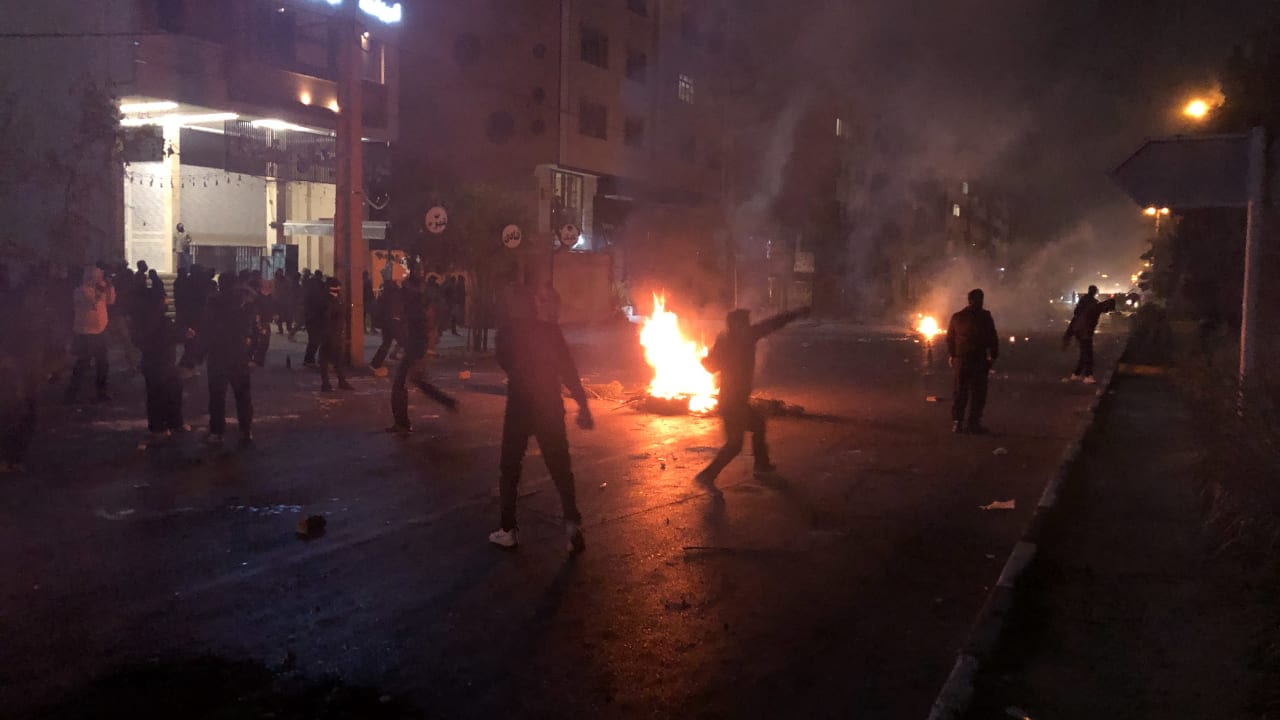
The government responded with a severe crackdown. Security forces used tear gas, rubber bullets, and live ammunition against demonstrators. Human rights organizations reported that more than 500 protesters were killed, including minors, and tens of thousands were arrested. Internet access was restricted in an effort to disrupt communication among protesters.
The uncertain future
What will happen if Iranian citizens are once again encouraged by foreign leaders including President Donald Trump to take to the streets is impossible to predict. It is believed that more than 30,000 protesters were killed by the regime in the protests of late February 2026. If the regime collapses or implodes, there is no guarantee that a stable democratic system will emerge. The alternative could be chaos, fragmentation, or even civil war that could easily destabilize the region beyond Iran’s borders.
At present, there appears to be no clearly defined endgame in the strategic planning of a war aimed at regime change in Iran. History suggests that removing regimes through military force often produces outcomes that are unpredictable and difficult to control. That uncertainty does not bode well for the future of Iran – or for the stability of the region as a whole.
The writer is the Middle East director of the International Communities Organization and the co-head of the Alliance for Two States.