On September 17, 2025, just a few months after Israel conducted Operation Rising Lion against Iran, a highly significant defense agreement in the Islamic world was signed, far from the eyes of the Israeli public. Pakistan, the sole nuclear-armed Muslim state, and Saudi Arabia, which views itself as the leader of the Sunni world, signed an agreement obligating both countries to respond to any aggression against the other as if it were directed against themselves.
While the details of the agreement remain ambiguous, its objectives were clear. From the Saudi perspective, it served as a signal to the entire Middle East – and particularly Iran – that it could potentially leverage a nuclear arsenal if necessary, thereby bolstering its deterrence vis-à-vis Tehran and repositioning itself within the Middle Eastern balance of power. From Pakistan’s standpoint, in days of internal and external instability, particularly following the conflict with India in April-May 2025, it represented a significant addition to its strategic deterrence.
Surprisingly, the Saudi-Pakistani defense pact was put to the test sooner than expected. After the Israeli-American coalition began attacking Iran last month, Tehran launched a wave of strikes against Gulf states, including Saudi Arabia. Following significant attacks on oil fields, the Saudi capital, and other strategic points in the kingdom, all eyes turned not only to Mohammed bin Salman but also to Islamabad to see whether the defense agreement would actually materialize.
Pakistan's neutrality
Pakistan, for its part, has so far displayed a puzzling neutrality and reported phone calls between the country’s leaders and their counterparts in Riyadh and Tehran in an attempt to lower the flames. Prime Minister Shehbaz Sharif condemned the Iranian attacks in the Gulf as well as the Israeli-American strikes. In addition, Pakistan expressed sorrow over the loss of human life, voiced aspirations for peace, and even fulfilled its diplomatic duty by attempting to mediate between the two Muslim powers.
At the same time, Pakistan presented a picture of close cooperation with Saudi Arabia throughout the war. Among other developments, Pakistan’s army chief, Asim Munir, participated in an “emergency” visit to Riyadh in the presence of the Saudi crown prince and foreign minister.

According to the Pakistani army, they discussed “the seriousness of the security situation arising from Iranian drone and missile attacks on Saudi Arabia and deliberated on joint measures to counter them within the framework of their strategic mutual defense agreement.” They also noted that “it was emphasized that unprovoked aggression undermines efforts for regional security and stability and cancels options for peaceful settlement of disputes.”
Despite the coordination of positions between Riyadh and Islamabad, the question arises as to why the nuclear power has not taken more decisive steps against Iran. There are several reasons for this, relating both to Pakistan’s fragile economic, security, and governing situation domestically and its attempt to maintain relatively stable relations with Iran in the external arena.
Problems at home
Domestically, Pakistan is facing a severe economic crisis, driven in part by rapid population growth and stagnant economic policy. As a result, Pakistan has been repeatedly bailed out by the International Monetary Fund (22 times since 1958) and remains heavily dependent on Chinese investment. The current war has already significantly battered the Pakistani economy, particularly due to the energy market crisis, in part caused by the closure of the Strait of Hormuz.
In response to the economic impact, the Pakistani prime minister announced austerity measures, including the closure of educational institutions across the country until the end of the month, encouragement of remote work, and salary cuts for elected officials and government employees.
At the same time, while the world’s attention is focused on the war in the Middle East, we should not forget that Pakistan itself is in an “open war,” as it defines it, with the Taliban ruling Afghanistan. Since the former proxy rose to power in the neighboring state to its west, Pakistan has experienced a dramatic increase in terrorist attacks carried out by organizations operating from Afghanistan with Taliban support and conducting attacks within Pakistani territory.
The most prominent among them is the Pakistani Taliban (TTP), which enjoys support from its counterpart in power in Kabul and was responsible for at least 599 attacks in Pakistan in 2025 alone. In response to the continued harm to Pakistani civilians and security forces, Islamabad has carried out several airstrikes in recent years inside Afghanistan against what it describes as terrorist targets, prompting confrontation from the Taliban, which denied any involvement in the attacks or in the TTP.
After several terrorist attacks, including a suicide bombing in the Pakistani capital (for which ISIS actually claimed responsibility), Pakistan launched another round of strikes in Afghanistan toward the end of February. This further inflamed tensions between the states and led to a major escalation along the mutual border.
Despite mediation attempts by Russia, China, Turkey, Qatar, and even Iran, the conflict continues to drain Pakistan’s military and economic resources, alongside the human cost, and is expected to continue troubling it, particularly as the Taliban does not recognize the border between the two countries and shows no willingness to halt support for militant groups operating from its territory.
Shi'ite minority
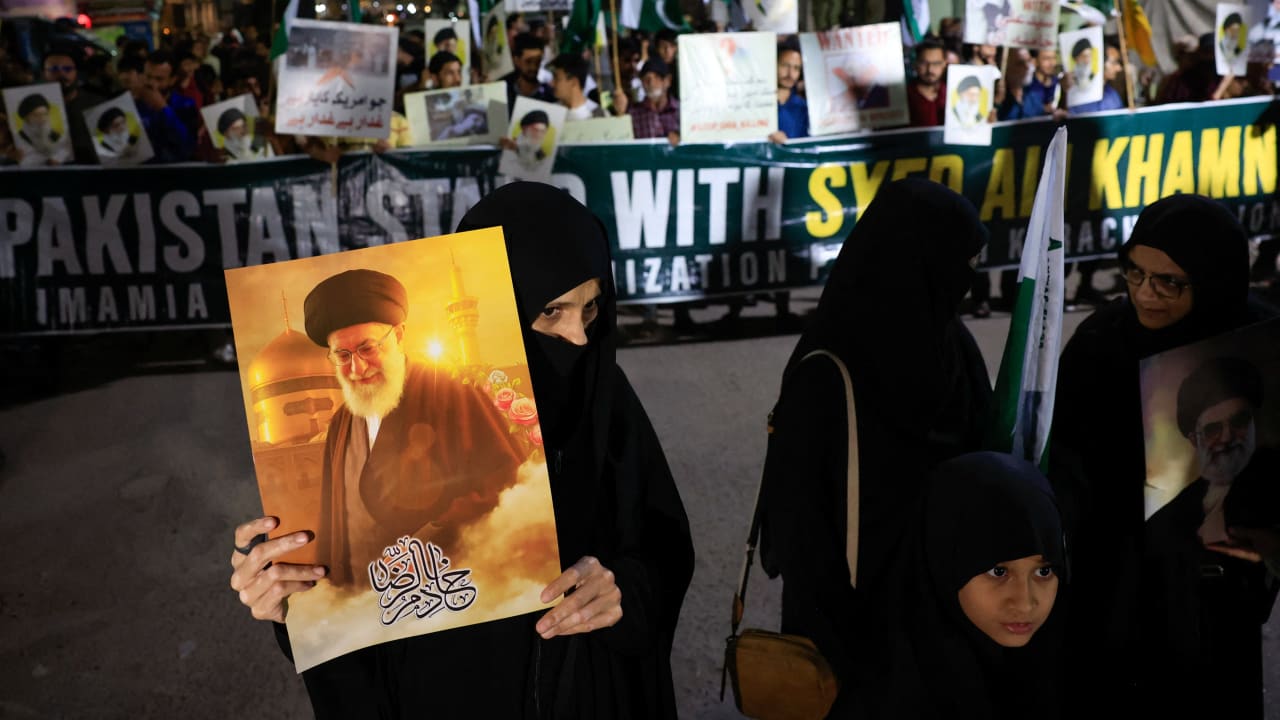
In addition, it should be noted that Pakistan has a significant Shi’ite minority (approximately 40 million people), which at least in part has expressed solidarity with Iran during the war. One example was the violent attempt by Shi’ite protesters to storm the US consulate in Karachi earlier this month.
Finally, Pakistan and Iran maintain extensive trade relations, amounting to at least $1.5 billion annually, facilitated by the 900-kilometer border between them. A deterioration in relations between the states could therefore also severely harm their bilateral trade.
Nevertheless, it should also be remembered that both countries have experienced significant volatility in their relations. In January 2024, Iran struck Baloch militant groups inside Pakistani territory, prompting strong condemnation from Islamabad and, two days later, a retaliatory strike by the Pakistani military inside Iran (also targeting Baloch groups). It should be noted that various Baloch groups carry out attacks in both countries in pursuit of the independence of “Balochistan,” and both states share an interest in suppressing them. Nonetheless, the incident demonstrated the mutual violation of each other’s sovereignty.
Despite the tension stretching across the Middle East and striking the Muslim world, the only Muslim nuclear power has still not taken harsh steps and continues to straddle the fence. Currently, it presents itself alongside its ally Saudi Arabia yet does not fully implement the defense agreement in practice, taking advantage of the ambiguity of its provisions.
Will it choose to participate alongside Saudi Arabia in a retaliatory response against Iran? Possibly. Yet as long as the decision rests with policymakers in Islamabad, they are likely to prefer dealing with their other pressing internal crises.
The writer is an expert on Pakistan-Afghanistan security at the Hebrew University of Jerusalem.