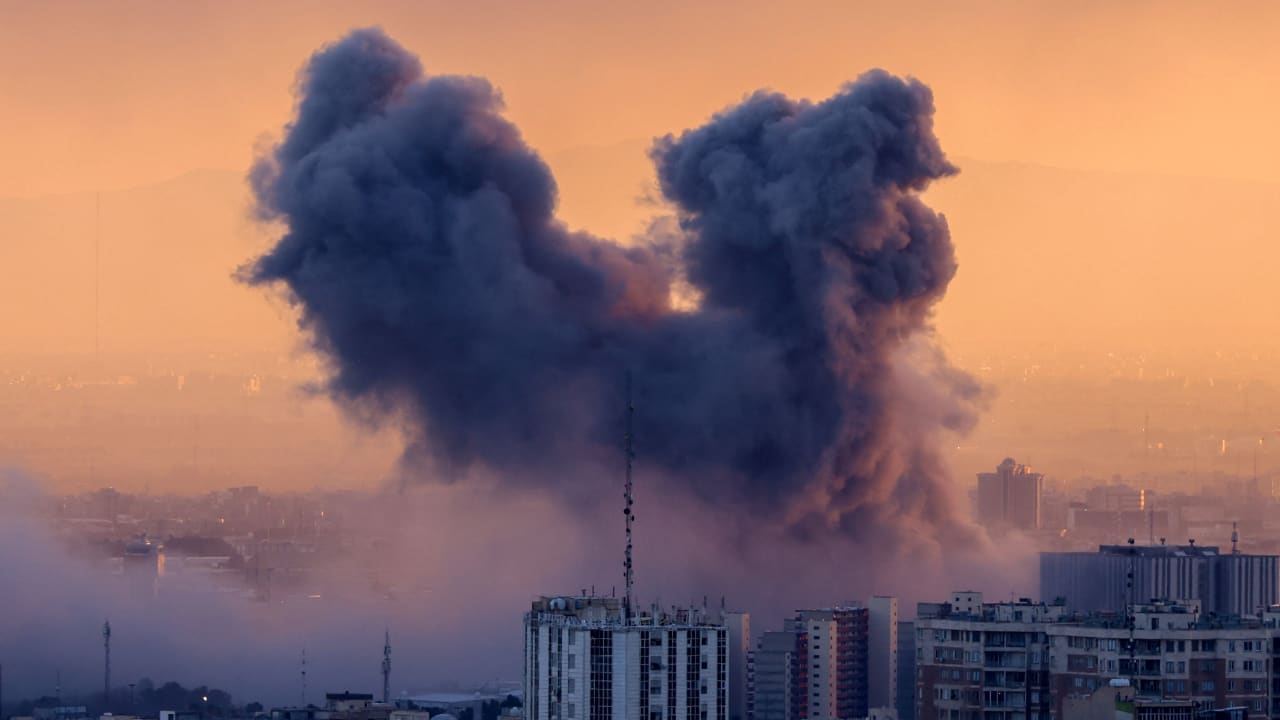
The Middle East has entered a new and dangerous phase. The shadow war between Israel and Iran – years in the making – has now become direct military confrontation.
With the United States actively drawn in, this is no longer a bilateral rivalry: It is a strategic contest with the power to reshape the region’s order. In recent weeks, Iranian military facilities have been bombed, missile production sites destroyed, and senior figures in the security apparatus killed.
Yet the regime stands. This is not an accident but the result of institutional resilience built over decades. The Revolutionary Guards, the intelligence apparatus, and a sprawling security bureaucracy sit at the political and economic center of the state.
The assassination of Supreme Leader Ali Khamenei by Israel, followed swiftly by the installation of his son Mojtaba and the rapid reorganization of the state machinery, made one thing clear: This system was built to survive.
Taking down the regime
US President Donald Trump and some strategic circles may have expected that sustained military pressure could produce a rapid collapse. The battlefield has disproved that assumption. The regime absorbs losses, replaces personnel, and keeps the machinery running.

The reason is not ideology alone. Institutions that control a significant share of the economy have built material ties with broad segments of society. That is not dismantled by airstrikes.
Systematic repression in Iran spans decades. Opposition movements have been crushed, political organizations dismantled, and the conditions for any organized alternative carefully eliminated. From student movements to labor organizing, every sign of civic mobilization has been met with force. Today, there is no organized force inside Iran capable of posing a genuine political threat to the regime.
The West’s role in this deserves scrutiny. Waves of protest inside Iran were met with international sympathy but rarely with concrete political support. The rhetoric of democracy was loud; the action was thin. Those who rose up were largely left alone. The diaspora-centered Pahlavi scenario, meanwhile, lacks the organized domestic base to translate symbolic appeal into political reality. It remains an option on paper, not in the field.
The relevance of ethnic and regional minorities
When examining which actors inside Iran could realistically pressure the regime, ethnic and regional minorities emerge as the most relevant. Kurds, Baloch, and other communities have lived in sustained tension with the central government for generations. In the Kurdish regions of western Iran in particular, meaningful mobilization potential exists. But that potential cannot become military capacity without international support and political recognition.
The Kurdish question extends far beyond Iran. From Syria to Iraq, from the Turkish border to the Zagros Mountains, Kurds are a de facto part of the Middle East’s security architecture. In the fight against ISIS over the past decade, Kurdish forces were the only consistent ground force the West could rely on. Air power weakened ISIS; Kurdish fighters cleared the ground.
And yet, Kurdish political movements have repeatedly faced strategic abandonment. Northern Syria is the sharpest example. The Trump administration’s policy shifts left Kurdish allies with a deep sense of betrayal. The approach taken by US envoy Tom Barrack compounded the damage. The trust between Washington and Kurdish movements is today at its most fragile point in recent history.
Iraqi Kurdistan is also growing more exposed. Iran-aligned militias have targeted Kurdish cities on multiple occasions. Erbil continues to seek neutrality, but that balance depends on the disposition of surrounding forces – and on how credible a security guarantee Washington is prepared to offer. At the moment, that guarantee is insufficient.
Positioning Kurds as a deployable militia while refusing to recognize them as a political subject is neither strategically sound nor morally defensible. If a durable security architecture is to be built in the Middle East, their political status and regional role cannot be left outside it. Political recognition and genuine partnership serve not only Kurdish interests – they serve regional stability.
The Iran-Israel conflict is not only a military contest: It is a political struggle that will determine the shape of the new Middle East. Missile depots can be destroyed. Commanders can be eliminated. But a regime with deep institutional roots is not brought down by strikes alone.
To genuinely weaken the Iranian system requires a comprehensive strategy – one that places the political realities of the region’s peoples at its center. The last 50 years in the Middle East have repeatedly delivered the same lesson: Strategies that ignore those realities do not produce lasting outcomes.
The outcome of this war will not be written in the sky. It will be written in the region’s political balance. Ignore that, and today’s operations may prove to be nothing more than the opening chapter of a longer, bloodier period of instability.
The writer is a Kurdish exiled journalist, political analyst, and Middle East observer focusing on Turkey, Iraq, Iran, Syria, and Kurdish affairs. a.mardin@icloud.com