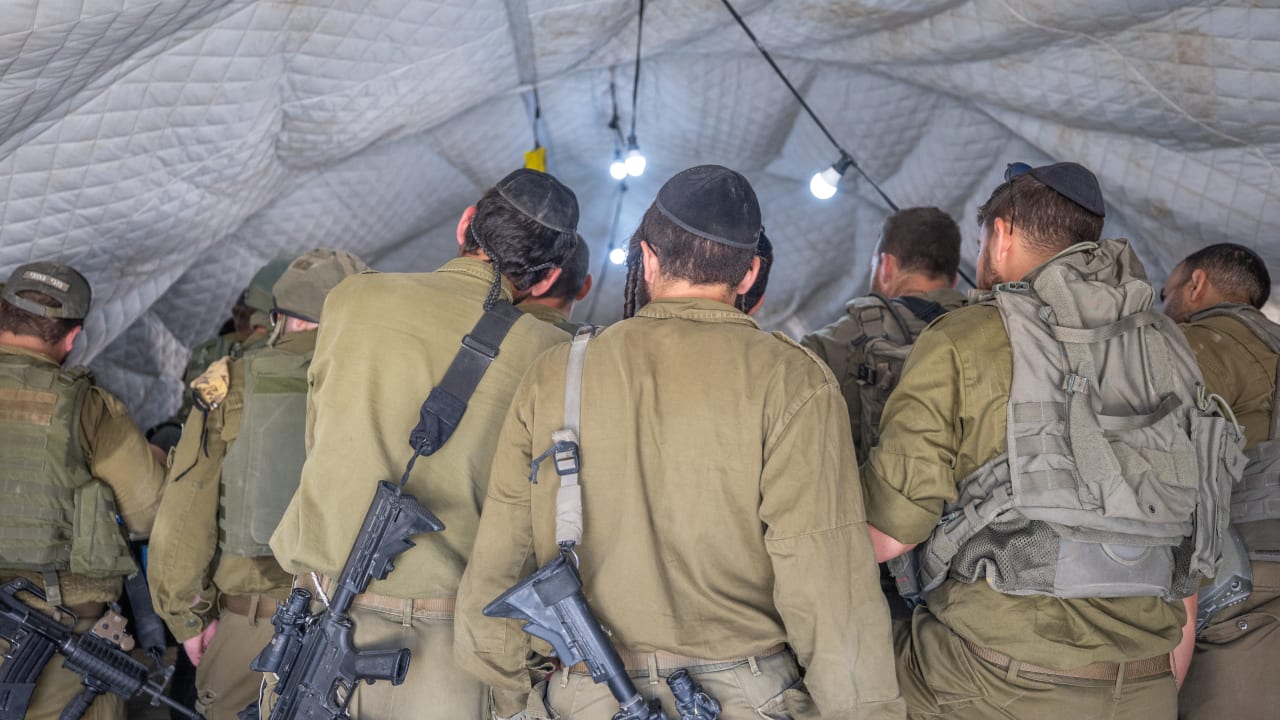
The Jerusalem Post is right to say that Israel faces a real military strain. Reservists are exhausted, the war has dragged on, and the IDF’s manpower shortage cannot be brushed aside.
But that still does not settle the argument.
Too much of the current debate assumes that once the army has issued a warning and the court has ruled, all that remains is tougher enforcement. That is a mistake. The haredi (ultra-Orthodox) draft question is not only about numbers, legal authority, or equal burden-sharing. It is also about Torah, conscience, and the kind of Jewish state that Israel wants to be.
That is why this crisis cannot be solved by manpower logic alone.
An unequal burden and an unsustainable system
Yes, the public case is powerful: The burden is unequal, the old exemption model cannot continue indefinitely, and a nation at war cannot sustain such a gap in service. All true. Israel cannot ignore a question of this scale forever.
But urgency does not automatically justify crackdowns.

A harsher enforcement regime may produce some enlistment at the margins, but that does not make it wise. Coercion can create the appearance of success by forcing through a visible trickle, while discouraging a potentially larger number who might have entered voluntarily under more respectful and culturally serious conditions.
Once service is framed as capitulation rather than contribution, even those open to participation are pushed back into resistance. What is gained in immediate numbers may be lost in broader and more durable enlistment over time.
That is because for much of the haredi public, enforcement is not experienced as neutral state policy. Instead, it is experienced as an assault on a way of life, and once that is how it is felt, pressure does not simply produce compliance. It also fuels alienation, hardens resistance, and empowers the most uncompromising voices. If the goal is long-term national resilience, that is a very high price to pay.
The fairness argument, too, is less simple than it sounds. Fairness does not always mean sameness. A country can ask all its citizens to shoulder responsibility without insisting that every contribution take the same form.
The haredi public must bear responsibility
The real question is not whether the haredi public should bear responsibility. It should. It is whether the state has the imagination to recognize responsibility in ways other than forced conformity.
For the haredi world, this is not merely about convenience or coalition politics. It is rooted in a conviction that Torah learning is itself part of what sustains Jewish national life, and that military service brings with it not only physical danger, but cultural and spiritual pressures they believe threaten the fabric of their community.
One may disagree with that view, but one cannot dismiss it and still expect a stable solution.
That is the blind spot in much of the mainstream discussion. It speaks urgently and understandably about physical survival, but it has far less patience for those speaking about spiritual survival. It assumes the only serious language is that of enlistment quotas, legal rulings, and enforcement tools. A Jewish state should know better.
Courts can strike down arrangements. Generals can warn of shortages. Politicians can pass laws. None of that, by itself, resolves the deeper conflict. A legal ruling may end an exemption regime, but it cannot create trust. A manpower report may expose a military shortfall, but it cannot define the place of Torah in the life of the state.
That is also why talk of draft dodgers may vent frustration, but it solves nothing. It entrenches resentment, deepens estrangement, and confirms the haredi fear that what is being demanded is not only shared sacrifice, but cultural surrender.
The government deserves criticism if it is merely drifting. A problem this serious cannot be managed forever through coalition maneuvering and delay. But seriousness does not mean defaulting to the bluntest instrument available. It means building credible frameworks that increase participation in national responsibility without treating Torah life as expendable.
Israel needs soldiers. But it also needs wisdom. The goal cannot be merely to squeeze out higher enlistment figures at any cost. The goal must be to strengthen national resilience without tearing open one of the country’s deepest internal fractures.
That is the challenge. And crackdowns alone will not meet it.
The writer is the chairman of the Coalition for Jewish Values of the United Kingdom and the International Liaison of Coalition for Jewish Values in the US. He also serves as the chairman of Eretz Hakodesh UK at the World Zionist Congress.