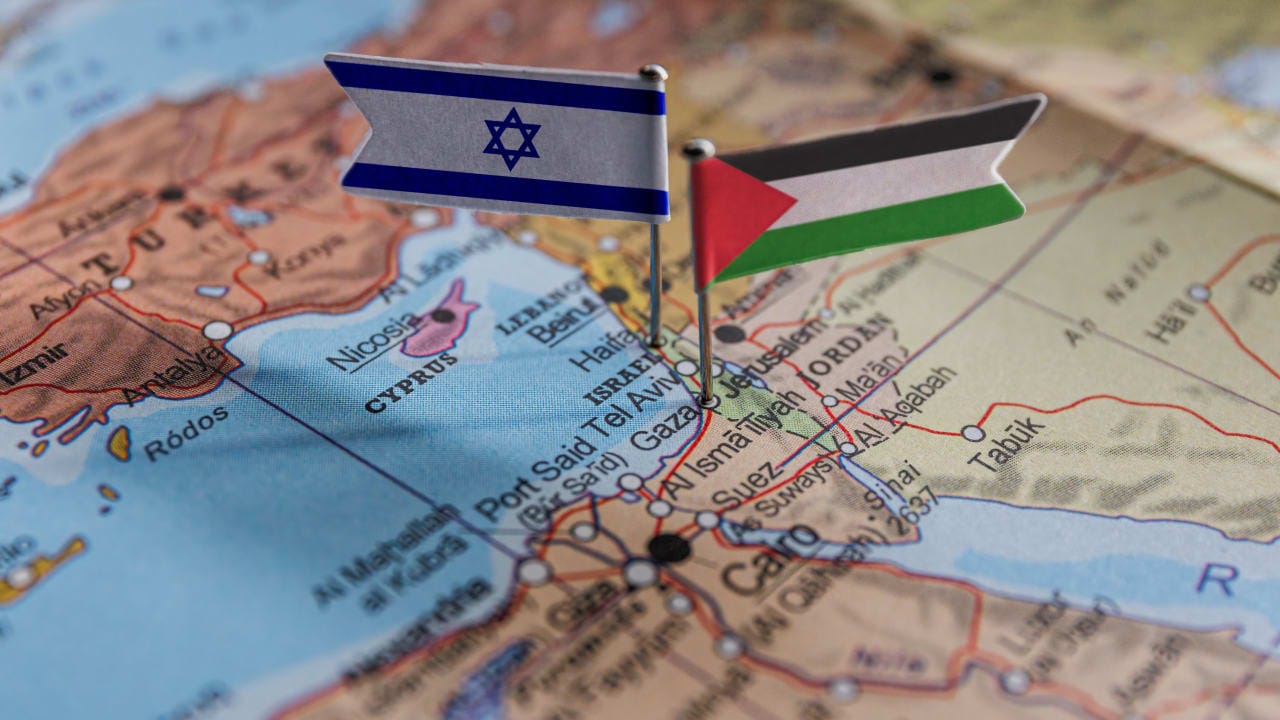
Why have so many peace initiatives in the Middle East failed?
The conventional explanations focus on borders, settlements, refugees, religion, or security arrangements. All are important. Yet they may overlook a deeper factor: Israelis and many of their adversaries often operate on radically different time horizons.
Abraham Maslow’s hierarchy of needs places security immediately above basic physiological survival. Most people seek safety before pursuing higher aspirations such as esteem, recognition, and self-actualization.
Modern Israeli society largely reflects this logic. Israelis want security now. They want to know that their children can ride buses safely, attend school without fear, and build prosperous lives free from the threat of war.
This desire helps explain the impatience that periodically surfaces within Israel. Many Israelis, particularly on the Left, have grown weary of a conflict that has persisted for generations. Their enduring slogan – “Peace Now” – captures the belief that bold political initiatives can break the cycle of violence and finally deliver the security that has remained elusive since 1948.

A different view of the conflict
Yet many of Israel’s adversaries appear to view the conflict through a very different lens.
Among Palestinians and elsewhere in the Arab world, a powerful historical narrative persists: that modern Israel resembles the Crusader kingdoms established in the Holy Land nearly a millennium ago. Those kingdoms endured for roughly two centuries before ultimately disappearing. In this narrative, Israel’s 78 years of existence represent not the culmination of history but merely an early chapter in a much longer story.
Whether this analogy is historically valid is almost beside the point. What matters is that many people appear to believe it.
If one assumes that Israel’s existence is temporary and that time is working in one’s favor, then a willingness to endure hardship becomes easier to understand. Economic deprivation, political instability, sanctions, military losses, and even generations of suffering can be viewed not as failures but as investments in a distant objective. A strategy measured in decades – or centuries – produces very different calculations than one measured in election cycles.
This difference in time horizons may also help explain the recurring frustrations that characterize negotiations between Western dealmakers and revolutionary movements.
Real-estate developers and business negotiators such as US President Donald Trump and Steve Witkoff are trained to close transactions. Success is measured by reaching an agreement, announcing it publicly, and moving on to the next deal. Their instinct is to assume that every party wants a deal and wants it soon. Electoral calendars, media cycles, and public expectations reinforce this mindset, creating constant pressure to produce visible results.
But organizations such as Hamas and Iran’s Islamic Revolutionary Guard Corps often operate according to entirely different incentives. Their leaders are not constrained by competitive elections, quarterly economic results, or the need to demonstrate immediate success to voters. More importantly, they may not define success primarily in terms of security or prosperity.
Asymmetry at the negotiating table
Within revolutionary or ideological movements, the upper levels of Maslow’s hierarchy – collective dignity, historical justice, religious purpose, national identity, honor, and recognition – can become as important as material well-being and sometimes even more important. If these objectives are viewed as existential, decades of economic hardship, diplomatic isolation, or military setbacks may be regarded as acceptable costs in pursuit of a larger historical mission.
The result is a profound asymmetry at the negotiating table. One side arrives seeking an agreement before the next election. The other arrives believing that history itself is on its side. One side asks, “How do we end this conflict?” The other asks, “Why should we settle today for what time may deliver tomorrow?”
This perspective may help explain behavior that often appears irrational to Western observers. Why would groups continue fighting despite overwhelming military disadvantages? Why would populations tolerate economic conditions that seem unbearable? Why do economic incentives, territorial concessions, or diplomatic initiatives so often fail to produce lasting compromises?
The answer may be that many negotiators are addressing the wrong level of Maslow’s pyramid. They assume that security and prosperity are universally dominant priorities. But if the other party is prepared to wait five generations for what it views as ultimate victory, then the negotiating table becomes a meeting place between fundamentally different clocks.
None of this implies that peace is impossible. It does suggest that successful diplomacy requires understanding not only what each side wants but also when each side expects to achieve it.
The Middle East conflict is often described as a clash of nations, religions, and narratives. It may also be a clash of calendars. One side seeks security now. The other may be willing to wait a century. Any realistic strategy for peace must begin by recognizing this difference.
The writer is an emeritus professor at the Technion-Israel Institute of Technology where he has served in various leadership positions. He also serves as a member of the board and as a strategic consultant to some companies and organizations.