For those paying attention, President Recep Tayyip Erdogan’s rise to autocracy in Ankara has never been hidden.
It has been visible for many years, not only in his domestic consolidation of power, but in the ideological direction of Turkish foreign policy. His hostility toward Israel was clear in his tirade against Shimon Peres at Davos, performed in front of the global cameras and cheered by those who understood what it signaled.
Since then, Erdogan has used every available lever to remove threats to his rule, weaken parliamentary governance, build a presidential system around himself, jail journalists and political opponents, cultivate the Muslim Brotherhood, maintain channels with Iran’s mullahs, court Putin, and expand Turkish influence across the region.
Yet even this record of political maneuvering and Machiavellian diplomacy pales beside the policies Erdogan has put into motion. Turkey’s military buildup under the maximalist “Blue Homeland” doctrine is not decorative.
Its investment in aircraft carriers, its explicit threats against Greece and Israel, its movement of F16s to Turkish-occupied Cyprus, and its harboring of Hamas leadership and affiliated networks in Ankara all point in the same direction. Erdogan is not merely speaking like a revisionist power. He is behaving like one.

His latest moves in Syria are therefore acutely alarming. Erdogan is positioning Turkey to turn post-Assad Syria into a strategic corridor of influence, and Israel would be negligent to wait until that corridor becomes a military fact.
By deepening Ankara’s influence over Ahmed al-Sharaa’s Syria, moving military assets into northern Syria, and consolidating leverage over the new jihadi order in Damascus, Erdogan is creating the conditions for a strategic land bridge between Turkey and Israel.
The consequences could be catastrophic. Israel cannot wait for this process to mature. It cannot fall back into its usual posture of waiting until a hostile reality becomes fully formed and then scrambling to contain it.
This time, the threat would not be a militia on Israel’s border. It would be a NATO member, a trillion-dollar economy, and a major military power building leverage on Israel’s northern doorstep. That is a different category of danger, and it requires a different category of response. Israel is not without options, but the window for using them will not stay open forever.
Israel should begin by taking a page from Erdogan’s own diplomatic playbook. Turkey has used recognition, proxies, maritime pressure, and regional footholds to build influence far beyond its borders. Israel should respond in kind.
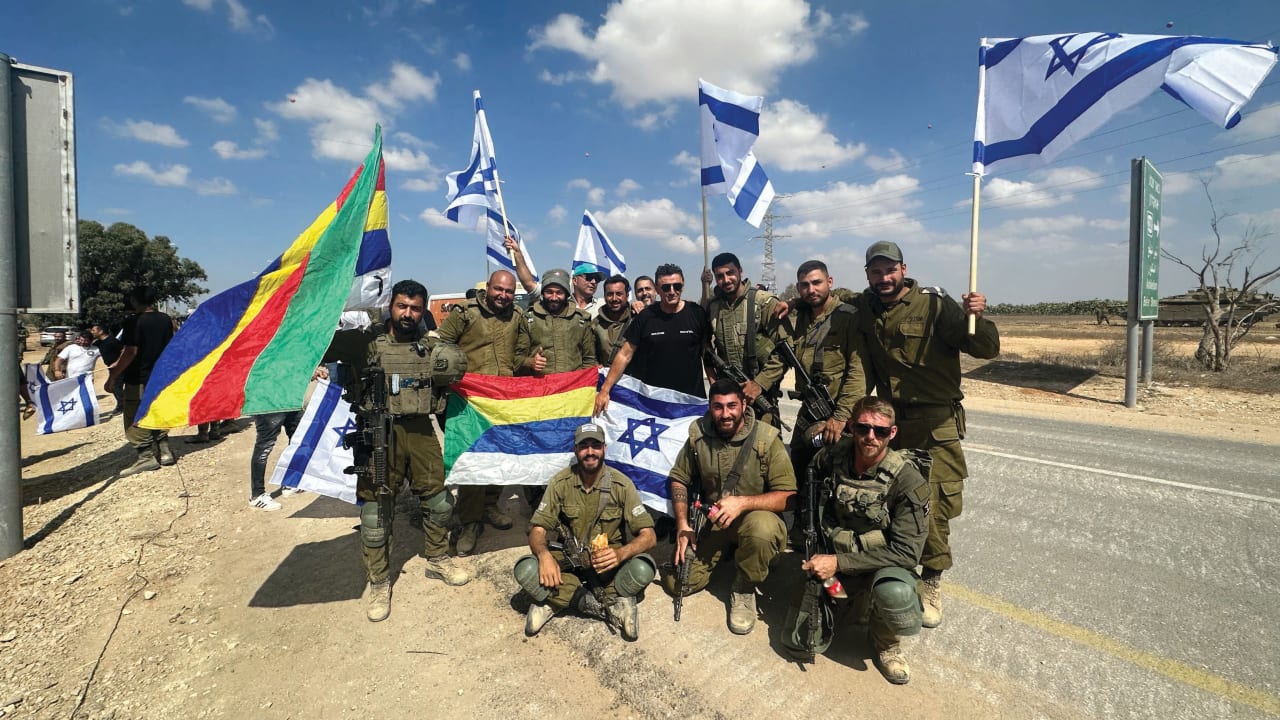
Recognition of Somaliland is one smart move, pushing back against Turkish influence in Somalia and giving Israel greater leverage near a strategic maritime chokepoint at the Horn of Africa. But Israel should not stop there. It should also recognize an independent Druze homeland in southern Syria.
Recognition should not begin as an abstract slogan or an empty declaration. It should mean a clear Israeli policy of supporting Druze self-determination in southern Syria, recognizing local Druze self-governance, helping establish protected autonomy, and making clear that Israel will oppose any attempt by Damascus, Ankara, or their proxies to crush that community by force.
Whether this eventually becomes full sovereignty or a protected autonomous zone should be determined by facts on the ground, but Israel should stop pretending that the old Syrian state still exists in any meaningful form. It does not.
Israel has already come to the aid of this community more than once. The al-Sharaa government backed off because it understood that, in its unstable condition, it did not need to pick a fight with a regional powerhouse.
But that hesitation will not last forever. Not if Syria becomes a jihadi state. Not if Erdogan provides the money, weapons, diplomatic cover, and potentially the soldiers one day. Now is the time for Israel to recognize a new political reality in southern Syria that can serve as a buffer against Turkish encroachment before that encroachment becomes irreversible.
Recognizing the Druze and Turkey as a possible threat
The Druze in southern Syria are autonomous, resistant to the jihadi order taking shape in Damascus, and capable of serving as a serious local counterweight if given the proper backing. With Israeli support, they may be the only population positioned to become a wall against the Turkish wave that many can already see coming.
Recognition would not be charity. It would be a strategy. It would create depth, impose costs on Ankara, complicate al-Sharaa’s consolidation, and signal that Israel will not allow a hostile Islamist corridor to form unchallenged from Turkey through Syria toward its border.
Public recognition of Druze self-determination requires quiet security coordination with local Druze leadership, humanitarian and defensive assistance, and a diplomatic campaign aimed at partners who already understand the Turkish challenge, including Greece, Cyprus, France, the UAE, and sympathetic voices in Washington.
The goal should be simple: turn southern Syria into a zone of resistance against jihadi consolidation and Turkish encroachment before Ankara turns it into strategic depth against Israel.
There are three major objections to such a policy:
The first is that Syria is a recognized sovereign state, and that Israel would once again be accused of violating international law. But Syria has been a lawless state for decades. The Ba’athists made it lawless, and the jihadists did not cure that lawlessness by taking power.
Al-Sharaa’s willingness to put on a suit, trim his beard, and speak in diplomatic tones does not turn a gangland regime into a legitimate state. The murder of Alawites, Christians, and Druze under this new order only reinforces the point. Sovereignty cannot be used as a shield by a regime that has already forfeited the basic obligations that make sovereignty meaningful.
The second objection is that Washington may choose to accommodate the al-Sharaa government, and that an Israeli move of this kind could damage the alliance between the United States and Israel. But Israel has to be honest with itself. US President Donald Trump has an affinity for Erdogan and has repeatedly spoken of his admiration and friendship for the Turkish president.
If Washington chooses to treat al-Sharaa as a stabilizing figure because Ankara sells him that way, Israel should not mistake American convenience for Israeli strategy. If reports are accurate that Erdogan also influenced the decision to halt support for the Kurds, then Israel has even more reason to be cautious about outsourcing its Turkey policy to Washington.
When the issue is Turkey, Israel cannot simply follow. These are Israel’s borders, Israel’s threats, and Israel’s security. After October 7, one lesson should be burned into the Israeli strategic mind: promises do not matter. Capabilities do.
The third objection is that Israel will be portrayed as the aggressor, and that recognizing a Druze state will invite Syrian retaliation and deeper Turkish involvement.
This is the real strategic question: does Turkey under Erdogan represent a clear and present threat to Israel’s national security? If the answer is no, then this policy is unnecessary. But if the answer is yes, then the potential formation of a Turkish land bridge through Syria is a threat of the highest order, and waiting for it to become undeniable is not prudence; it is negligence.
If one believes that al-Sharaa and his jihadi allies will somehow resist becoming more dependent on the Islamist leader who helped place them in power, then recognizing a Druze state will look too provocative. But if one sees the obvious trendline of hostility matched with capability, capability matched with opportunity, and opportunity matched with geography, then prudence demands action.
Israel does not have the luxury of waiting until Erdogan completes the architecture of encirclement and then pretending the danger arrived without warning.
The warning is already here. The question is whether Israel’s leadership will act while it still can.
The writer is the co-founder of Jewish National Initiative.