
In recent years, the term “settler violence” has become one of the main weapons in the campaign against Jewish communities in Judea and Samaria. Acts of violence committed by a handful of extremists are often used to indict an entire population of hundreds of thousands of law-abiding citizens.
Yet amid the flood of condemnations and accusations, one question is being overlooked: If the problem is so serious, why is no one advancing a measure that could significantly help curb it?
To those who have made the fight against settler violence their rallying cry, I have a proposal you probably won’t want to hear: applying Israeli sovereignty to Judea and Samaria. Yes, the very sovereignty you are fighting against.
If combating violence truly matters to you, rather than merely serving as a means of attacking the settlement movement, you should at least consider this option.
A possible solution for curbing violence
The reality in Judea and Samaria has created an absurd situation. The IDF, whose role is to defend the country and fight its enemies, is also required to carry out policing duties and handle civilian affairs. Israel Police operate in the area and enforce the law, but the system still rests on a framework of military administration and a complex division of authority.
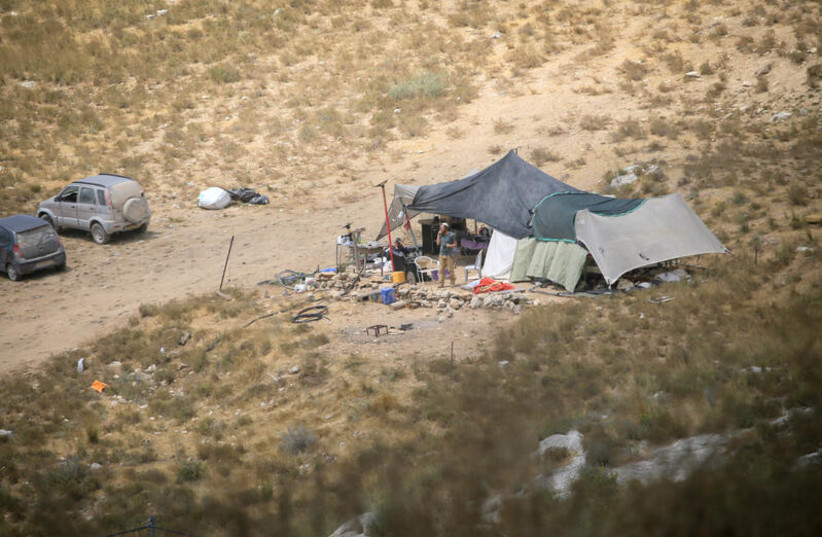
Why should crimes committed by Israeli citizens in Judea and Samaria be handled under a different framework from those in Tel Aviv or Haifa?
Responsibility for tackling crime, including nationalist-motivated violence committed by Israeli citizens, should clearly rest with the Israel Police. Anyone who harms innocent people must be held accountable, without exceptions or excuses.
We are talking about an extremist minority whose actions are reprehensible, harm the settlement movement, damage Israel’s image around the world, and provide ammunition to those seeking to undermine its legitimacy on the international stage.
Enforcing the law
Applying Israeli sovereignty, alongside an appropriate restructuring of law enforcement powers, would help establish a clearer civilian framework in which the police are responsible for enforcing the law wherever Israeli citizens live in Judea and Samaria, with the authority and resources needed to do so.
The IDF, for its part, could focus on its security responsibilities and combating Israel’s enemies. Those demanding firm law enforcement should at least be willing to consider the possibility that sovereignty is part of the solution.
But sovereignty is not merely a matter of law enforcement. First and foremost, it is a national decision about the future of Judea and Samaria.
In recent years, important steps have been taken to strengthen the settlement movement, but the time has come to move to the next stage: applying Israeli sovereignty to provide a stable foundation for continued construction, development, and settlement.
Perhaps it is time to stop treating sovereignty and law enforcement as two separate debates. One concerns the future of the settlement movement; the other concerns responsibility toward those living in the area and upholding the rule of law. Both require a clear policy rather than yet more temporary solutions.
Even if the Right and the Left arrive at this conclusion from opposite directions, ultimately there should be one common demand: the State of Israel must assume full responsibility for what happens in Judea and Samaria.
The writer is the mayor of Efrat.