Patience is the game changer in politics. It is the long game in politics.
Too often, when we think about worldwide politics, we conjure up images of political revolts, revolutions, overthrown governments, political tsunamis, waves of party change. Those images are accurate. They are also the stuff that headlines are made of.
But successful politicking is not only about attention-grabbing headlines. Successful politicking, certainly in political democracies, is about the carefully structured long game.
That long game of political patience is the finely tuned harmony of maturity and nuance.
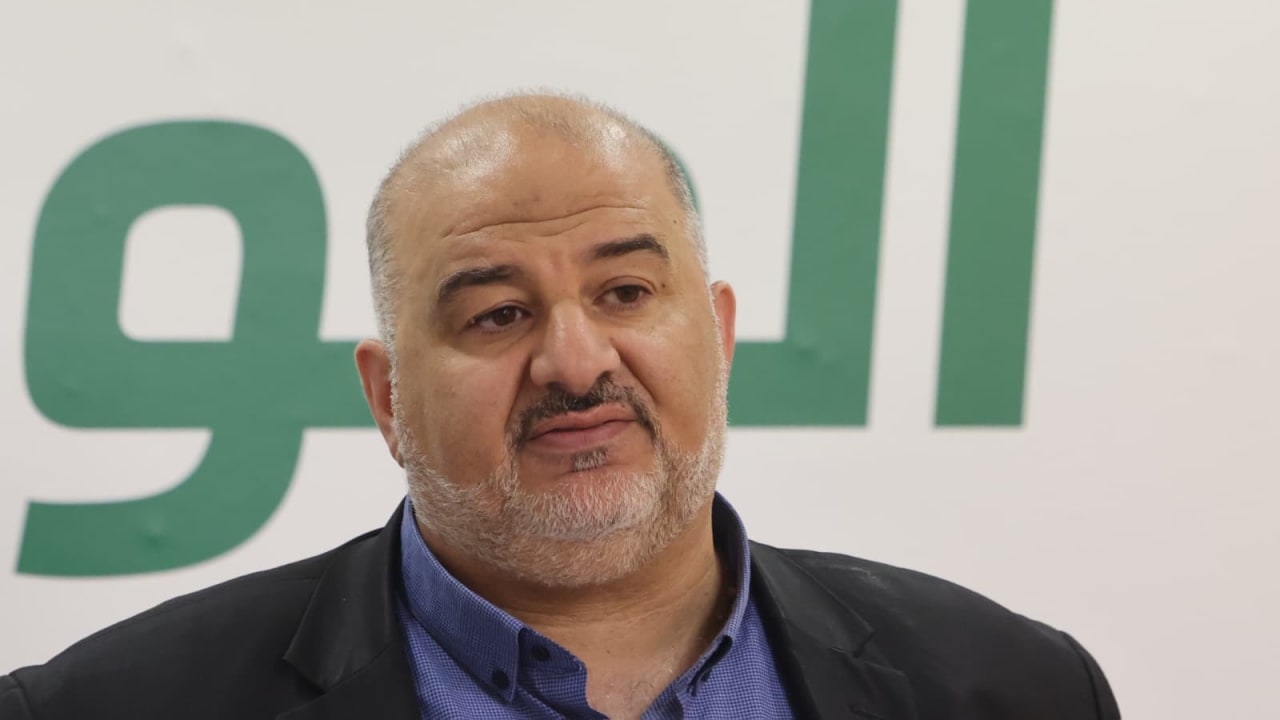
In Israel today, the best example of this game changer is not to be found in the big names vying for power and prestige. It is to be found in the person of Mansour Abbas, the imam, turned dentist, turned politician. The Arab Israeli who heads the Ra’am party.
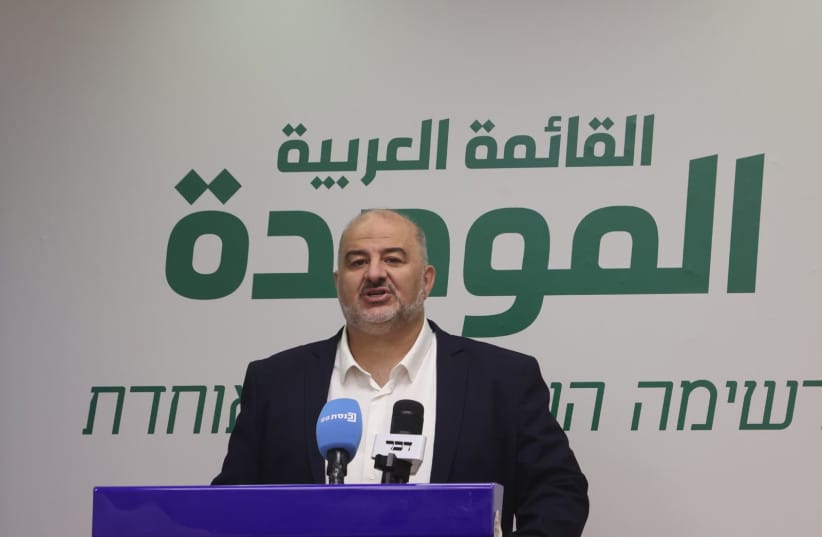
The Arab Israeli Muslim who, in 2021, became the first Arab to assume the position of minister in an Israeli governing coalition, albeit a minister without a portfolio.
Abbas Mansour is the kingmaker.
When asked by President Isaac Herzog, during his rounds of conversations with Israeli party leaders following the October 27 election, to outright label Hamas a criminal terrorist organization that Israel is at war with, Abbas’ response was precise and measured.
There have been numerous reports as to the precise verbiage used during the exchange, but the message remains the same throughout. Given that Abbas is already a member of the Knesset, the question was well put and, indeed, crucial to his continued political career. The response was: “I have an unequivocal answer, but leave me space to be a bridge, to influence the other side.”
'Let’s not destroy that bridge'
It is reported that he continued: “We are a bridge. Let’s not destroy that bridge. Don’t turn us into terror supporters or traitors.” Abbas further explained: “Leave me this space to protect myself and my family.” I would have added, "Let me protect the people who voted for my party and me."
Condemning Hamas is simple. It is black and white. But one has to understand Mansour Abbas. Words have significance. Crossing the line could endanger the lives of many people and destabilize the future government of Israel. Abbas was telling Herzog that he does not expect the president to agree with him, but rather to understand him.
Abbas was, I believe, successful. He has already put himself on the record condemning terror and violence. He supports disarming Hamas and removing them from power. Here, he offered an example of maturity and aptitude for the long game. This is not about passivity. Less dramatic than strident black-and-white declarations, yet the results are more consequential. For Abbas and for Herzog and for the Israeli electorate, it is about building workable coalitions and preserving trust between communities.
This idea of patience and the long game, of stepping away from strident, bombastic statements, can be very productive in politics. Precedents have been set.
Leading up to the Israeli election, all five opposition leaders signed a pact not to attack one another and to work towards bringing out a large voter turnout. That, too, was a glowing example, a meaningful act of restraint and maturity in a battlefield known for “impetuosity” and bombastic attacks and hyperbole. And on Thursday, in calling for the creation of the next government, Herzog used the words “patience,” “goodwill,” “creativity,” “originality,” and “boldness.”
In 1984, when Shimon Peres and Yitzhak Shamir created a pact that was enacted in 1985 to stabilize the economy, it worked. More recently, after October 7, Benny Gantz and Gadi Eisenkot joined Benjamin Netanyahu in an emergency government because of the national crisis.
Patience and maturity are not the absence of conviction; they are the discipline not to destroy a channel because that channel is temporarily inconvenient.
The United States and England learned the lesson years ago. Abraham Lincoln brought rivals William Seward and Salmon Chase into his cabinet, and in 1864 he ran on a National Union ticket with Democrat Andrew Johnson.
Lincoln knew the country was divided and understood that he had to create a coalition broader than his own party. In 1940, Winston Churchill formed a coalition with Labour and Clement Attlee and later became his deputy prime minister.
The two governed together through World War II and then competed against each other in the 1945 election. Examples of maturity and restraint that, in the end, were extremely beneficial for their nations.
Slogans and strategy have their place. Patience and maturity are not to be confused with or mistaken for softness. Asking for words to prove loyalty is immature thinking, especially if it results in shutting down an alternative, workable pathway.
Mansour Abbas should not get a free ride. He should not be immune from scrutiny, especially about moral and political truths. Neither should he be labeled a coward or a mere sentimental statesman. Abbas needs to prove that he can carry ideas, initiatives, actions, and people across that bridge.
Do not mistake Abbas declining to use the label “terrorist” as noble – it is not. It is, however, a connection to a real strategic purpose. And that purpose is to maintain influence and safety and the creation of a pathway towards reconciliation with the Arab citizens of Israel. And that holds weight.
Micah D. Halpern is a columnist and a social and political commentator. Watch his new TV show, Thinking Out Loud on JBS