
In November 2025, against the backdrop of growing voices against Israel, the Dublin City Council decided to re-examine the commemoration of Israel’s sixth president, Chaim Herzog, in Herzog Park, located in one of the Irish capital’s neighborhoods. The park, in the Rathgar neighborhood, has been named after Chaim Herzog since 1995. Herzog, a Belfast native who grew up in Dublin, was the son of the chief rabbi of Ireland, an IDF major-general, and the father of current President Isaac Herzog. Thirty years later, some council members were not content merely with erasing Herzog’s name, but also proposed changing the area's name altogether. Among the proposed names was "The Park for the Liberation of Palestine." Following criticism of the move, the municipality withdrew the proposal, but the issue recently returned to the agenda, and the final word has yet to be spoken.
Global Israelis
The story of Herzog Park illustrates the unique fact that in various cities across the world, streets, squares, avenues, gardens, and parks bearing the names of Israeli leaders can be found.
This is certainly an intriguing phenomenon: In countries with no direct connection to Israel, and in cities where most residents are not Jewish, authorities chose to commemorate figures like David Ben-Gurion, Golda Meir, Menachem Begin, Yitzhak Rabin, and Shimon Peres. Some places were named after them following their diplomatic activity, others due to their contribution to peace, and some were chosen specifically because of a personal connection they had with the city. Here are a few of the most interesting examples, but first, we should mention that today – October 7 – Paris decided to name a path in memory of Shiri, Ariel, and Kfir Bibas, who were abducted and murdered while held captive by Hamas.
Inauguration ceremony for the Monceau Park memorial in Paris, in memory of Shiri, Ariel, and Kfir Bibas
Yitzhak Rabin Street in Berlin
In April 2004, about nine years after the assassination of Yitzhak Rabin, an emotional official ceremony took place in the heart of Berlin to commemorate Israel’s fifth prime minister. On this occasion, "Yitzhak-Rabin-Straße" was inaugurated in the Tiergarten district of the German capital. The street extends not far from the Reichstag building, the German Chancellery, and the Brandenburg Gate, one of Berlin’s most famous landmarks attracting tourists from around the world.
Trivia along the way: In terms of the quantity of municipal commemorations worldwide, Rabin stands out above everyone else. Following his assassination in 1995, an international phenomenon began of commemorating him as a leader identified with the peace process. Places and streets named after him can be found in additional cities across Germany, France, Spain, and elsewhere.

Menachem Begin Monument in Belarus
Menachem Begin, Israel’s sixth prime minister, was born in 1913 in the city of Brest, located in present-day Belarus. One hundred years later, the city decided to dedicate a monument in his memory, and the statue of his likeness was unveiled in an official ceremony that included an honor guard of Belarusian soldiers. The monument, created by sculptor Konstantin Selikhanov, stands near the school where the young Begin studied, and its accompanying inscription notes in several languages: "Menachem Begin. Nobel Prize laureate. Born in Brest. Leader of Israel."
Trivia along the way: At the unveiling ceremony, which was attended by members of the local Jewish community and representatives of the Israeli Embassy in the country, Mayor Alexander Palyshenkov said: "We pay tribute to people who contributed to history and brought glory to our city. Menachem Begin is undoubtedly one of those people."

Golda Meir Square in New York
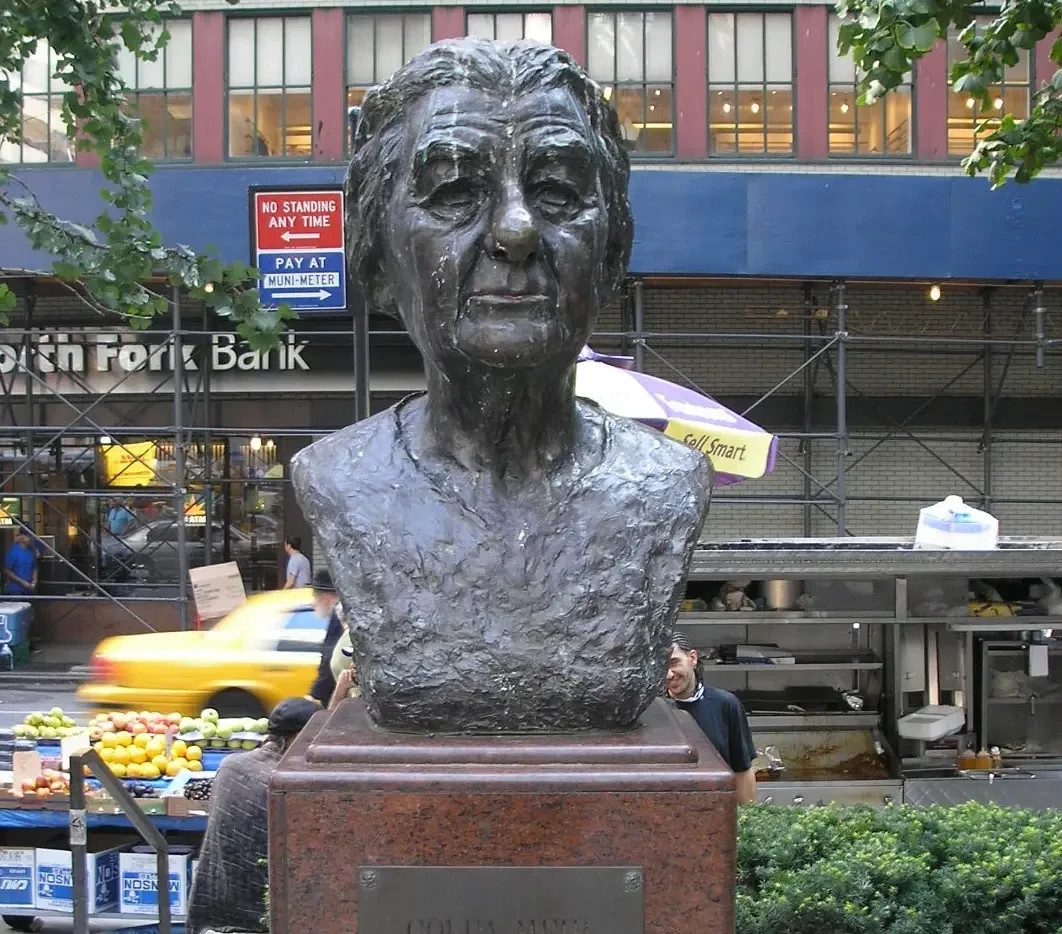
In 1979, a year after the death of Golda Meir, the Golda Meir Memorial Square was dedicated in the heart of Manhattan on 39th Street in the Broadway area to honor the only woman to serve as Israel’s prime minister. In 1984, a bust sculpture of her was also placed at the location, commemorating Israel’s fourth prime minister, who was considered one of the most prominent women in 20th-century global politics. The bronze statue was created by sculptor Beatrice Goldfine.
Trivia along the way: Golda Meir has been commemorated around the world in many ways, from a wax figure at Madame Tussauds in New York to a street named after her in Kyiv, her birthplace.
Ben-Gurion Street in Berlin
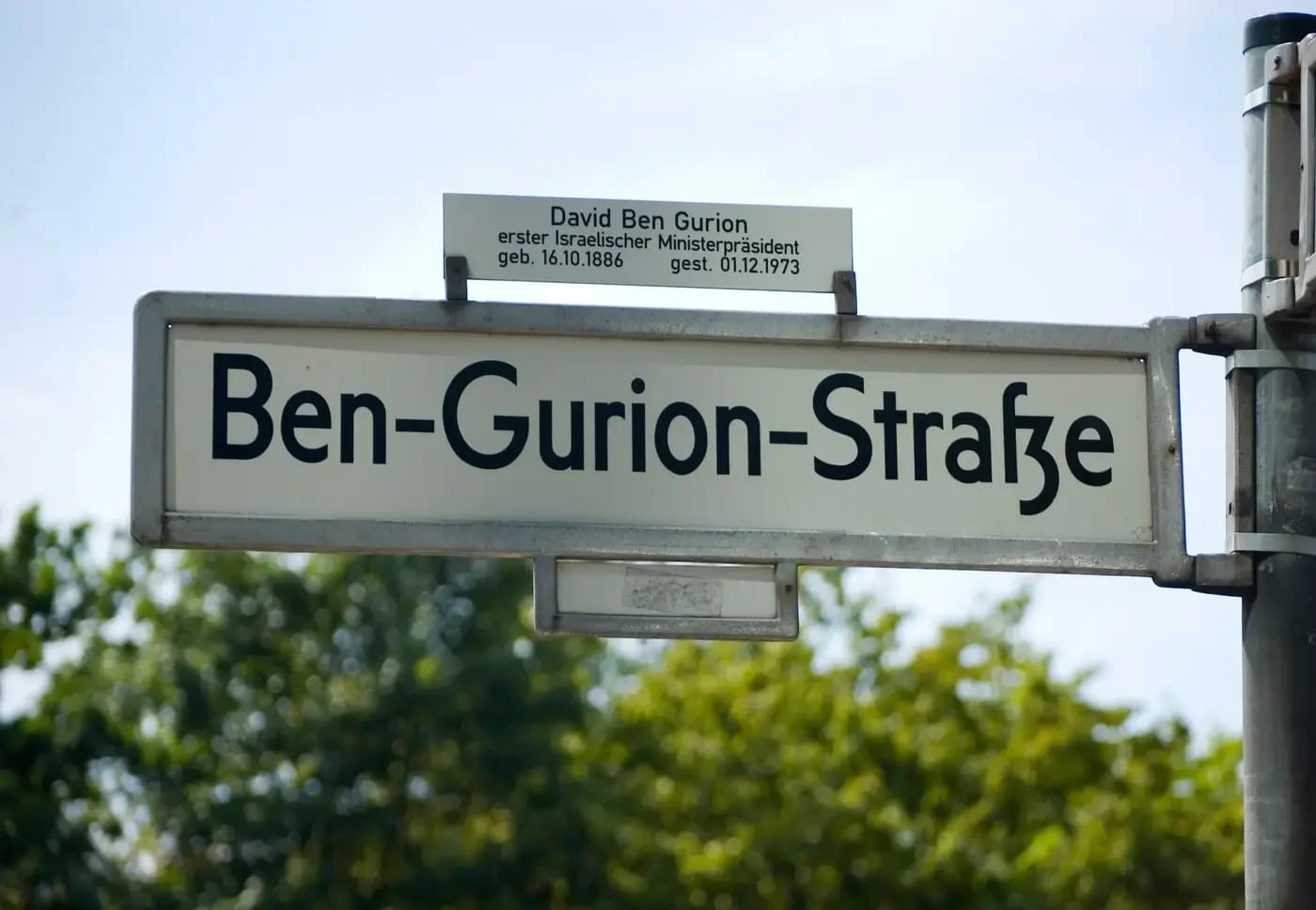
Ben-Gurion-Straße in Berlin’s Tiergarten district commemorates Israel’s first prime minister and one of the most important figures of the entire 20th century. The street was inaugurated in 2005, about 31 years after Ben-Gurion’s death. His commemoration in the German capital is no accident: Beyond the fact that he participated in quite a few Zionist conferences and events in the city, Ben-Gurion was the driving force behind the Reparations Agreement with Germany (1952), which was intended to provide compensation for looted Jewish property and assist in rehabilitating the Israeli economy and absorbing Holocaust survivors. Interestingly, Ben-Gurion Street in Berlin forms a continuation of Yitzhak Rabin Street in the city.
Trivia along the way: The first prime minister is commemorated in several places worldwide. One of the most interesting commemorations is in New York, at David Ben-Gurion Place near the Biltmore Hotel. The location is not random: In May 1942, the Biltmore Conference took place at this hotel, where Ben-Gurion and other Zionist leaders discussed the future of the Land of Israel.
Chaim Weizmann Square in Rio de Janeiro
In Rio de Janeiro, Brazil, you can find squares named after three major Israeli leaders: David Ben-Gurion, Shimon Peres, and Chaim Weizmann. Weizmann, the first president of the State of Israel and one of the leaders of Zionism, was commemorated in 1965 at Praça Chaim Weitzman. A bust of Weizmann stands in the center of the square, and nearby is a municipal school named after Anne Frank. The site is part of the Jewish heritage tour program in Rio de Janeiro, which also includes the Jewish Museum and Yitzhak Rabin Park.
Trivia along the way: On November 11, 1952, two days after Weizmann’s death, it was reported in the Davar newspaper that following his passing, a day of national mourning was declared in Uruguay and Argentina.
Place Shimon Peres in Paris
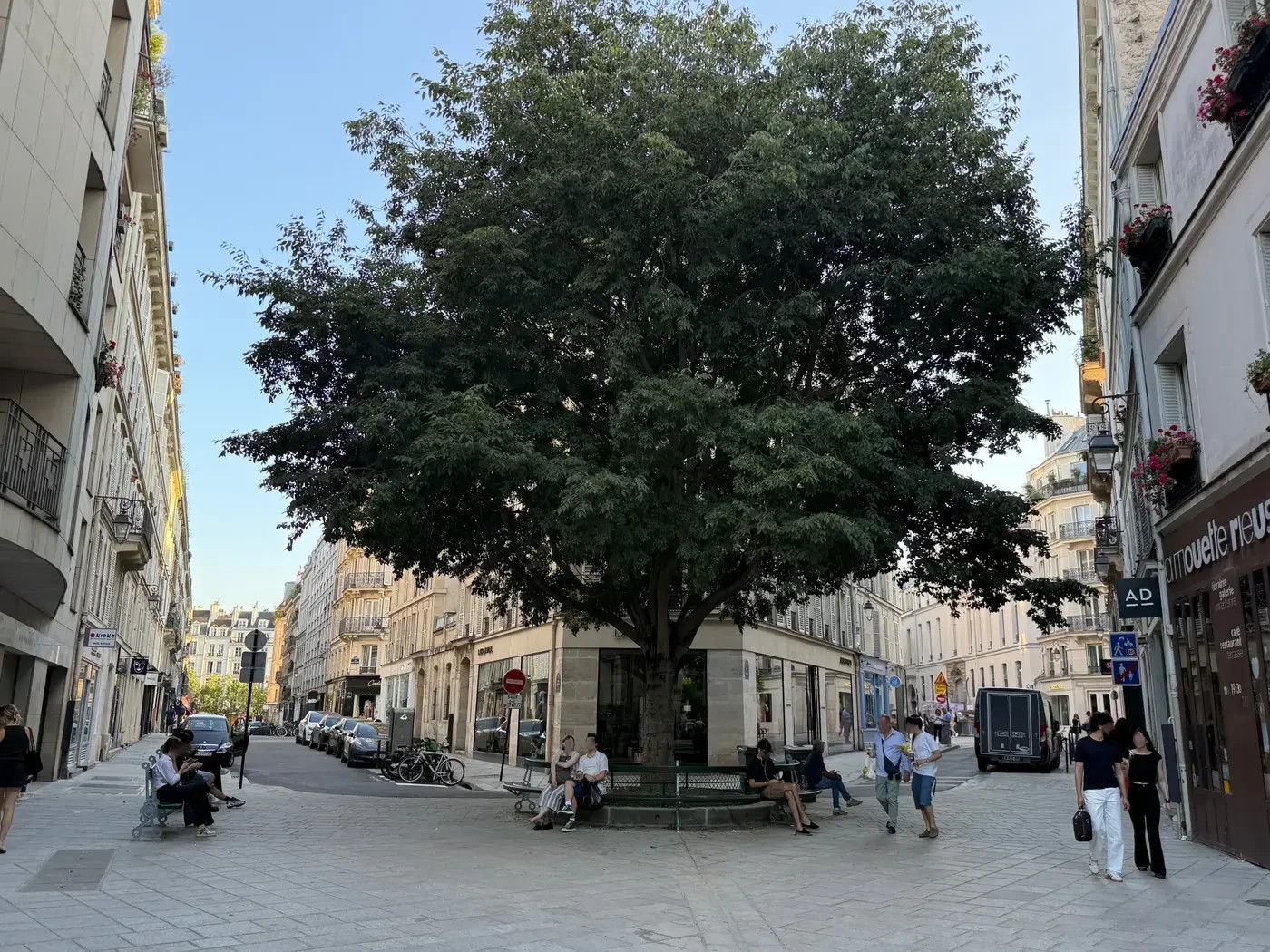
In the heart of the Marais, one of Paris's best-known historic districts, there is now a corner bearing the name of one of the leaders most closely associated with the State of Israel: Place Shimon Peres. The square was inaugurated in February this year in the presence of members of Peres's family, Paris Mayor Anne Hidalgo, and senior French and Israeli officials. The choice to commemorate him in the French capital was no coincidence: The former prime minister and president of Israel, and Nobel Peace Prize laureate, was for decades one of the key figures in shaping relations between Israel and France, as well as relations with countries around the world. The Paris municipality described him as a "man of peace" who devoted his life to dialogue and to trying to change the reality in the Middle East.
Trivia along the way: Somewhat symbolically, the decision was made as early as 2025, the same year that an attempt was made in Dublin to remove a memorial honoring another Israeli president: Chaim Herzog. And so, even against the backdrop of the current tense period, Paris chose to add the name of an Israeli leader to its public space.
A historical perspective
In the current era, when protests against Israel are taking place in many cities around the world, when Israeli and Jewish institutions sometimes face hostility, and when discussion of Israel itself has become complex and charged in many places, it is easy to forget that for much of modern history, an entirely different relationship also existed. Israeli leaders such as David Ben-Gurion, Golda Meir, Menachem Begin, Yitzhak Rabin, and Shimon Peres were not merely names familiar to Israelis. They were international figures who influenced global politics, met with leaders from around the world, and became part of the international political discourse.
All these places tell a story of a period when the State of Israel and its leaders were perceived, at least in large parts of the world, also as symbols of historic achievement, leadership, and hope. Perhaps one day, this history will repeat itself.