RSS | Advertise With Us | Blogs | Judaica Gifts |  5 Kislev 5770, Sunday, November 22, 2009 5:20 IST |
WebJPost.com 
Subscribe! Judaica Gifts
RSS Feeds E-mail Edition
HomeHeadlinesIranian ThreatJewish WorldOpinionBusinessReal EstateLocal IsraelBlogsArts & Culture Français Classifieds
IsraelMiddle EastInternationalHealth & Sci-TechFeaturesTravelCafe OlehMagazineSportsIsrael GuideSubscribe
Specials
Eldan Rent a Car
Israel's leading car rental company offers a 20% discount on online reservations
Israeli Basketball
Watch Live Israeli Premier Basketball Games
Jerusalem Post Lite
Light Edition of the Jerusalem Post for English improvement
Desert lodging & activity
Tents, camping & cabins, various activities and meals in the Negev
The Best Jewish Charity
Learn how Efrat saved 30,000 lives of Jewish children
Tamir Rent a car
Car rental in Israel, special prices
ג'רוזלם פוסט לייט
עיתון חדשות באנגלית קלה התורם לשיפור השפה האנגלית
Tour guides in Israel
Choose you’re your tour guide in Israel
Israel guide
Your guide to Israel
Green Israel
Protecting Israel's environment
ג'רוזלם פוסט לייט
עיתון חדשות באנגלית קלה התורם לשיפור השפה האנגלית


Middle East & Israel Breaking News » High Tech / Health & Sci Tech » Science and Environment » Article

US-Israeli team's speedily evolving supernova seems to be a new class of exploding star


PrintSubscribe
Toolbar
+ Recommend:
facebook twitter del.icio.us reddit fark
What's this?

Decrease text size Decrease text size
Increase text size Increase text size
Article's topics: AstronomyScienceTel Aviv University 

A US-Israel team of astronomers reviewing data of a supernova discovered seven years ago has reached the conclusion that it could be the first example of a new type of exploding star. Their research has just been published in the online journal Science Express.

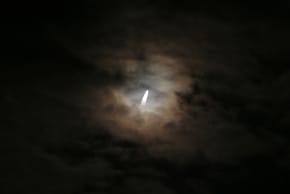
An exploding star ...

An exploding star [Illustrative].
Photo: AP

Supernovas are very luminous stellar explosions that cause a burst of radiation and often briefly outshine an entire galaxy before fading from view over several weeks or months. During this short interval, a supernova can radiate as much energy as the Sun will emit over its lifespan.

Dr. Dovi Poznanski, a graduate of Tel Aviv University who is doing postdoctoral work in astronomy at the University of California at Berkeley and the Lawrence Berkeley National Laboratory's computational cosmology center, worked with co-authors Prof. Joshua Bloom, Prof. Alex Filippenko and other colleagues on the project. They described the outburst they studied as having come from a binary star system composed of two "white dwarf" stars which transfer helium from one to the other, resulting in a thermonuclear explosion. They called the outburst, which they believe is a "new type" of explosion, SN 2002bj.

"This is the fastest evolving supernova we have ever seen," said Poznanski. It was three to four times faster than a standard supernova, basically disappearing within 20 days. Its brightness just dropped like a rock."

This rapid drop, coupled with the supernova's faintness, the strong evidence of helium in the spectrum of the explosion, the absence of hydrogen and the possible presence of vanadium - an element never before identified in supernova spectra - point toward helium detonation on a white dwarf, the astronomers said.

A white dwarf is a small but very dense star composed of electron-degenerate matter, with a mass comparable to that of the Sun and its volume like that of Earth. White dwarfs are the remnants of stars that burned their hydrogen down to carbon and oxygen or, in some cases, to helium, and are thought to be the final evolutionary state of all stars whose mass is not too high.

"We think this may well be a new physical explosion mechanism, not just a minor variation of ones already known," Filippenko. "This supernova is qualitatively different from the complete disruption of a white dwarf."

Bloom added that he regarded SN 2002bj as a "new beast" quite different from the existing classes of supernovae. "We have seen great diversity in those two main supernova mechanisms - but even within that diversity, observationally there is a limited range of variation," Bloomsaid. "This object [SN 2002bj] falls outside that range."

The supernova was originally discovered in 2002 in the galaxy NGC 1821, in the constellation Lepus, by Filippenko's Katzman Automatic Imaging Telescope (KAIT) at Lick Observatory near San Jose, California, as well as by amateur astronomers. Due to an unfortunate combination of circumstances, the supernova was mistakenly classified by the astronomical community as a "common Type II supernova" and forgotten.

Last year, Poznanski happened to see the spectrum while searching for Type II supernovae he hopes to use as distance indicators to confirm the accelerating expansion of the universe. When he carefully examined a high-quality spectrum of SN 2002bj, he realized that the supernova was not a Type II at all, but an unusual kind of supernova more like a Type Ia.

RATE THIS ARTICLE
PrintSubscribe
Toolbar
+ Recommend:
facebook twitter del.icio.us reddit fark
What's this?
Post comment | Terms | Report Abuse
2. and palestinian scientists crossed a donkey with a zebra
jem - israel (11/06/2009 17:40)
1. This too could be a possible warcrime
daniel - (11/06/2009 16:53)
More...
Most Original
eTeacher
Kadish
JWStore
Ten Tribes Challenge
JPost.com
KKL Picture of the week
Got a Question?
Have a question about something in this story? Ask it here and get answers from other users like you.


© 1995 - 2009 The Jerusalem Post. All rights reserved.    About Us | Media Kit | Exclusive Content | Advertise with Us | Subscribe | Contact Us | RSS
The online edition of The Jerusalem Post – JPost.com – provides first class news and analysis about Israel, the Middle East and the Jewish world. Whether news about Iran, Gaza, Syria, Fatah, Hamas or Hezbollah, JPost.com covers the burning issues of the Middle East and the Israeli-Arab conflict.