Archaeology
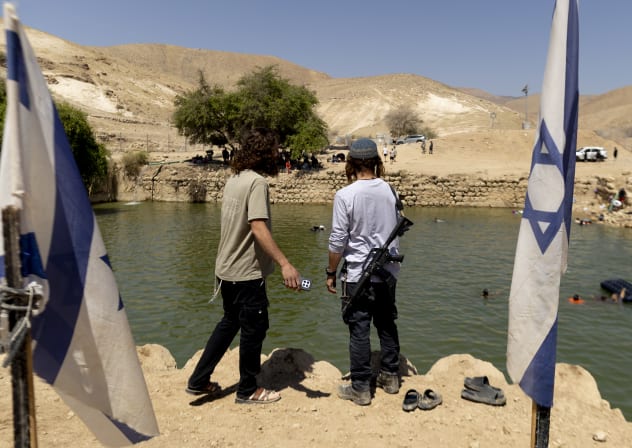
Multi-million Herod’s Pools renovation project begins amid gov’t push to promote West Bank tourism
Sukkot, echoing Smotrich’s words, calling the neglect of Herod’s Pools “an injustice,” noting that he is pleased with Smotrich’s and the Settlement Administration’s “swift response.”

Ancient Greek elegy dedicated to judge found in ancient Egyptian tomb sealed with protection spells

Excavations near ancient Turkish port may have found Alexander the Great’s soldiers tombs - report

Silver coin hoard found in the outskirts of Moscow may have been buried by a medieval plague victim
Noah’s Ark? Researchers claim radar scan reveals 'man-made' structure at Turkey site
Researchers say new radar scans reveal features they believe could indicate a man-made structure beneath the controversial Durupinar Formation, claimed to host the remains of the biblical Ark.

Bones of medieval tsar, 48 religious relics to be exchanged under new Greece-Bulgaria heritage MoU
The official handover ceremony will take place on October 3, at the the Museum of Byzantine Culture in Thessaloniki.

On This Day: Jean-Francois Champollion announces his success at decoding the Rosetta Stone
The Rosetta Stone is inscribed with an official decree carved in three different languages: two forms of Egyptian script, hieroglyphs and Demotic, as well as ancient Greek.

Ancient Egyptian fortress uncovers soldiers’ homes, royal inscriptions, and horse burial
Also found at the site were a number of scarabs, some bearing the names of Kings Ramesses II and Seti I, while others carry the names of several deities, including Amun, Sekhmet, Ptah, and Set.

Turkey uncovers new fragment of oldest known peace treaty between Egypt and Hittites
The fragment, found at the ancient Hittite capital of Hattusha, contains provisions on people fleeing between Egypt and Hatti and the protection of their homes.

Czech Republic's 6,500-year-old sanctuary found to predate Stonehenge by 1,000 years
The circular enclosure measures 230 meters in diameter, featuring a ditch over 2.5 meters deep and 12 irregularly spaced entrances that align with key solar and lunar cycles.

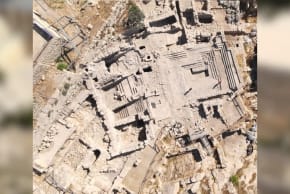
Massive newly-unearthed complex may shed light on how Jewish pilgrims prepared to enter the Temple
The discovery was made during five seasons of excavations, directed by Prof. Uzi Leibner and Prof. Orit Peleg-Barkat of the Hebrew University of Jerusalem’s Institute of Archaeology.
Egyptian-Chinese mission unearths wine press at temple to ancient warrior goddess
Additionally, the mission found the remains of a mudbrick residential complex in the area surrounding the temple, along with a series of stone blocks and statue fragments.

Archaeologists unearth tomb shared by ancient Egyptian judge and his scribe father
While the tomb itself had been previously known, discovered by French archaeologist Auguste Mariette in the nineteenth century, the chapels found within it were not.

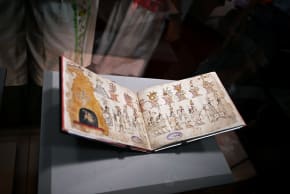
France loans Mexico rare Aztec manuscript as nations celebrate 200 years of diplomatic ties
The codex will be on display until December. As part of the exchange, Mexico will loan France another important historical document, the Codex Boturini.