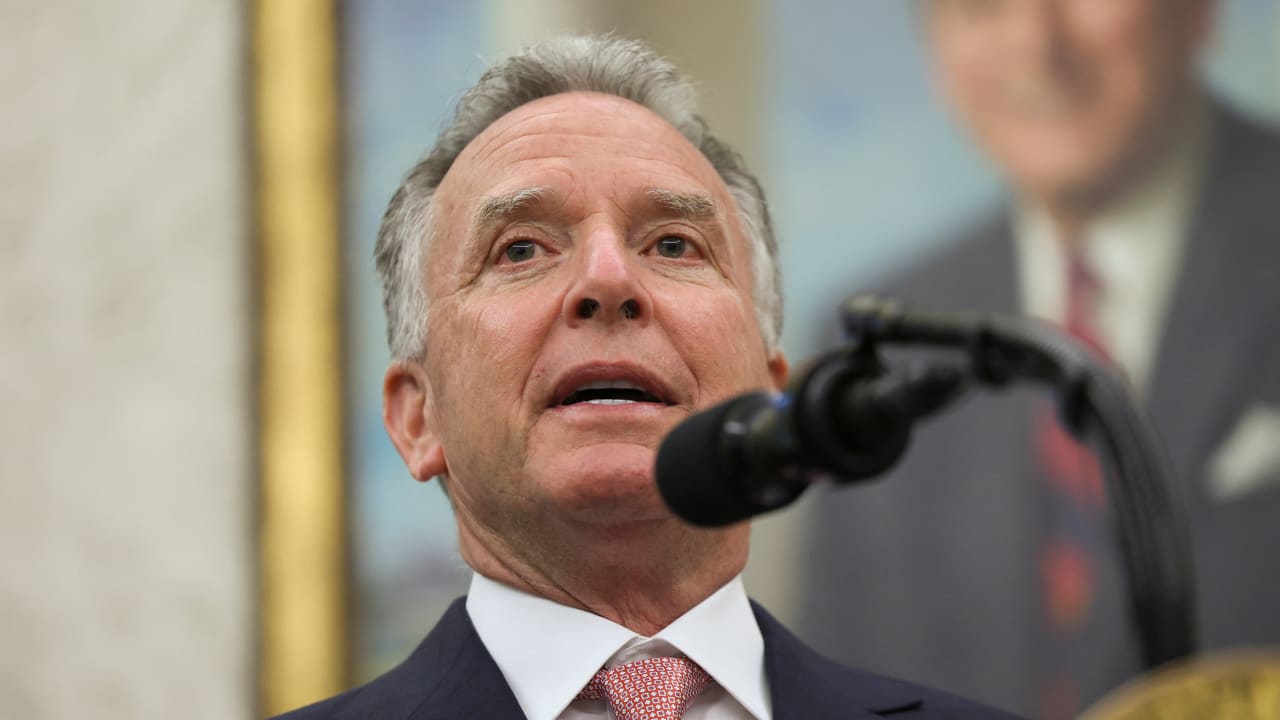
The Witkoff family and Witkoff Group threatened the New York Times with a defamation lawsuit last Thursday over an article that claimed Qatar had curried favor with the family by investing in their projects to gain influence with US President Donald Trump.
The Parlatore Law Group alleged that the NYT had constructed a “baseless narrative of impropriety” by not asking Alex Witkoff about key elements claimed in the story, omitting statements from the businessman, and engaging in coercive methods.
“The mission was not to report objectively on the Witkoff Group’s business activities, but to fit them into a preconceived narrative of corruption related to the Trump administration,” law firm founder Timothy Parlatore charged in the October 2 letter. “These were routine, arms-length financings with no special access or influence, and the article overstates ‘entanglements’ without evidence.”
The September 26 article “Where Mideast Envoy Pitched Peace, His Son Pitched Investors” alleged that Qatar had invested in several Witkoff projects, including saving then-CEO Steve Witkoff from financial difficulties by buying the Park Lane Hotel from him in 2023 before his loans to develop the project had come due.
The New York Times cited former Qatar lobbyist Joey Allaham, who claimed that, in 2017, he had advised his employers in their aim of allying with American Jews to vouch for the Gulf state. Allaham asserted that in 2018, the Qatari emir’s brother, Sheikh Mohammed bin Hamad al-Thani, proposed using Apollo Commercial Real Estate Finance, in which the Qatari Investment Authority (QIA) was the third largest shareholder, as a vehicle to invest in Trump allies’ projects. The ex-lobbyist further claimed that he suggested Qatar invest in Witkoff Group projects. Additionally, he claimed that in 2017, Steve and Alex Witkoff discussed access to Trump and the Park Lane Hotel with Thani.

The NYT reported that QIA had bought the Park Lane in 2023, in part with a loan from Apollo, which allowed Witkoff to “escape financially unscathed” after being unable to repay loans for the project.
Parlatore denies NYT claims
Parlatore rejected the premise that Witkoff was in financial trouble in 2017, having a net worth of $500 million at the time. The loans for the Park Lane were reportedly non-recourse, meaning that Witkoff was not personally liable for repayment beyond the collateral.
QIA had been in the mezzanine investor position for years, according to Parlatore, foreclosing on the loans of the Mubadala Abu Dhabi sovereign wealth fund. The firm also challenged that Witkoff had come out unscathed from the Park Lane dealings – and that all parties lost out. The attorney alleged that the NYT didn’t ask his clients about details of the Park Lane deal and, therefore, they weren’t given a chance to clarify what had occurred.
The NYT asserted that Qatar had made other investments in Witkoff projects with the involvement of Apollo. In 2022, Apollo partnered with the Witkoff Group in developing The Brook luxury rental building, and in May, received a $100 million loan from Apollo for the Palm Beach Belgrove property.
While the article presented the Brook partnership as the first Qatari investment with the Witkoff group, Parlatore argued that the timeline and details were skewed to imply that Qatar was seeking favor with a Trump ally. Parlatore argued that if an inquiry was made about the matter, they would have clarified that Apollo had been the lender for the original developer, RedSky, before Witkoff joined the Brook project.
The Belgrove loan, according to Parlatore, was made by Apollo’s Athene insurance, which supposedly does not have QIA ownership or control. Reportedly, QIA also has no board seat, approval authority, or decision-making rights within Apollo. A spokesperson for Apollo told the NYT that investors have no role in directing investments. QIA also denied to the NYT that it was invested in the Brook or Belgrove.
The article also highlighted that the younger Witkoff had pitched Qatar on a planned investment fund focused on American real estate projects, claiming that he leveraged prospective investors by saying he had already secured pledges from Qatar, the United Arab Emirates, and Kuwait. The outlet noted that the fund was canceled shortly after queries by the Times.
The article explained that this occurred as the senior Witkoff was negotiating with Qatar on ending the Israel-Hamas War, and represented “another startling example of the Witkoff family apparently trying to profit off its patriarch’s proximity to the president.”
Parlatore alleges NYT deliberately misrepresented Witkoff
Parlatore alleged that the NYT ignored Alex Witkoff’s responses to the outlet’s inquiries, and had moved the remit of its initial inquiry by asking about pitching the fund to Saudi Arabia and Qatar, rather than Qatar, UAE, and Kuwait. Witkoff had allegedly denied that he ever claimed to have secured other investors when speaking to prospective partners.
Witkoff also reportedly said that it was laughable that the group had scrapped the fund plans because of a media inquiry, as was implied by the Times, but had instead chosen not to proceed because falling Federal Reserve rates in an overcrowded private credit market made profitability challenging.
Representatives of Witkoff also claimed that one of the writers had engaged in unprofessional conduct by offering to meet with Alex Witkoff for a drink, which Parlatore interpreted as attempting to “ply him with alcohol.”
Parlatore threatened legal action, including a defamation suit, if the NYT did not implement corrections, issue a correction or retraction, and launch an internal review of the writer’s reporting methods.
Since the letter, a correction has been made regarding the loan made for the Belgrove property, as the lender was Apollo Global Management, not the subsidiary in which Qatar had invested.