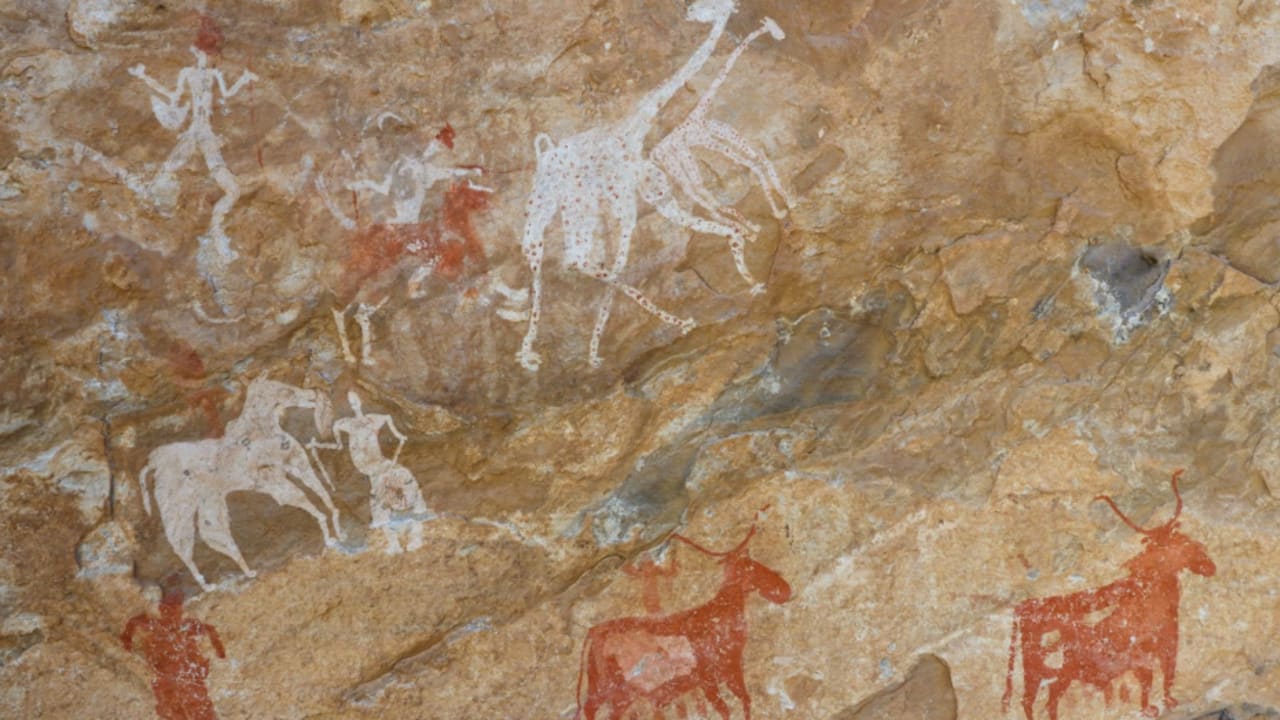
A study published in the scientific journal Nature revealed that Homo sapiens expanded their ecological niche within Africa between 70,000 and 50,000 years ago, developing the flexibility to adapt to a wide range of environments. This adaptability, researchers say, was key to the successful migration of modern humans out of Africa into Eurasia approximately 50,000 years ago.
An international team of researchers, led by Eleanor Scerri from the Max Planck Institute for the Science of Human History in Germany and Andrea Manica from the University of Cambridge in the United Kingdom, reconstructed how the environments inhabited by humans in Africa changed between 120,000 and 14,000 years ago. Using species distribution models, they analyzed over a hundred archaeological sites alongside environmental data such as annual temperature, precipitation, and vegetation density.
Their analysis showed that starting about 70,000 years ago, humans began to occupy a much wider range of habitats, especially in the west, center, and north of the African continent. They actively colonized ecological niches, from tropical forests to arid deserts, demonstrating an increase in ecological flexibility.
"The key seems to have been greater ecological flexibility. The human groups that left the continent were better prepared to face diverse and challenging environments," said Michela Leonardi from the Natural History Museum in London, according to Agencia SINC.
Previously, attempts by Homo sapiens to migrate out of Africa coincided with climatically favorable periods when increased rainfall transformed the Saharo-Arabian desert belt into green corridors that facilitated movement into Eurasia. However, the successful migration that gave rise to current non-African populations occurred during a less favorable time, suggesting that other factors contributed to the success.
"This is a key finding. In previous migrations, increased rainfall in the desert belt created green corridors for people to move, but between 50,000 and 70,000 years ago, the route to leave Africa would have been more difficult than in earlier periods, and yet, this expansion was considerable and ultimately successful," said Manica, according to Agencia SINC.
The study suggests that the expansion of the human niche may have been driven by greater contact between populations and cultural exchange within Africa itself, which favored mobility and adaptation to new territories. According to the authors, there is no clear evidence that new technologies or interbreeding with other hominins alone explained this migratory success.
"Why the dispersal succeeded 50,000 years ago is a big question in human origins research," said Emily Hallett, an archaeologist at Loyola University Chicago and co-director of the study. "Our results suggest that part of the reason is that humans had developed the ecological flexibility necessary to survive in challenging habitats," she added, according to Ámbito Financiero.
Until now, previous attempts to leave Africa were thought to rely on favorable climatic conditions. However, the successful migration that populated Eurasia occurred at a less favorable time, pointing to humans' adaptability as the key factor. "These humans not only left Africa; they left prepared to face the unknown. Their success lay in having learned to thrive in Africa's environmental diversity," Scerri concluded, according to Agencia SINC.
The ecological flexibility became a decisive advantage compared to previous migration waves. The way humans began to manage the diversity of African landscapes and climates likely made the difference, emphasizing the importance of collective experience in mastering new territories. Unlike technological explanations, this theory emphasizes humans' ability to adapt culturally to new environments.
"The way humans began to manage the diversity of African landscapes and climates likely made the difference," the study notes. The findings emphasize that collective experience and adaptability were crucial for humans to overcome environmental challenges and successfully migrate out of Africa.
The preparation of this article relied on a news-analysis system.