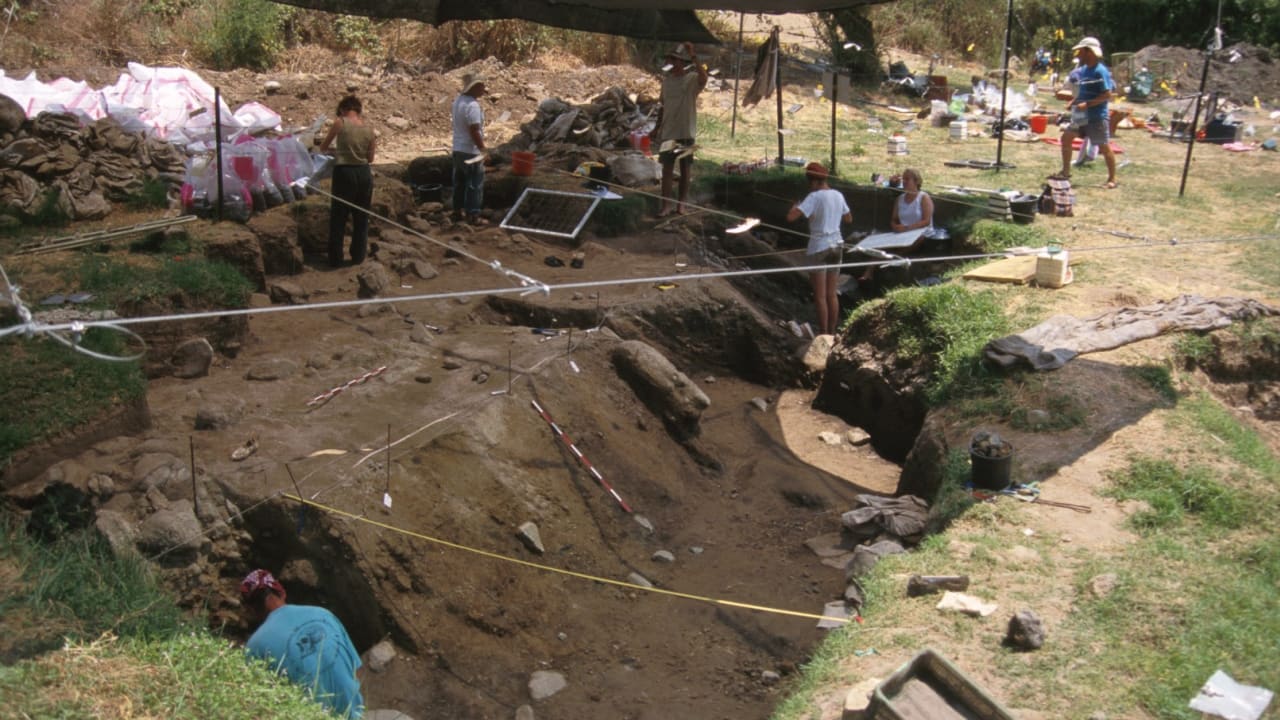
Nearly 780,000-year-old charcoal fragments found at the Gesher Bnot Ya'akov archaeological site in northern Israel show that early humans had a higher level of intelligence than previously thought, according to a new study published in Quaternary Science Reviews.
Charcoal rarely survives at such early prehistoric sites, the study explained. Meaning, that this unusually large collection of fragments gave archaeologists a rare chance to study the repeated use of fire over the course of over tens of thousands of years.
Using microscopic techniques, an international team of researchers from Israel, Spain, and Germany, analyzed 266 preserved fragments of charcoal found on the shores of paleo–Lake Hula.
Within the charcoal, archaeologists found traces of ash, willow, oak, olive, pistachio, grapevine, oleander, and the oldest known evidence of pomegranate wood in the Levant, reflecting a wider variety of plants within the charcoal than other botanical remains found at the site.
According to researchers, the different types of wood present within the charcoal suggested that early humans used the driftwood that collected naturally along the lake’s shore as firewood, rather than only using wood that could be found nearby.

Evidence of stone tools, animal hunting found
Previous excavations led by Professor Naama Goren-Inbar of the Hebrew University of Jerusalem found evidence of continued activity at the site, including stone tools made of flint, limestone, and basalt, as well as the remains of hunted animals, and an array of plant-based foods gathered from around the lake.
Spatial analysis of the site further revealed significant overlap between the clusters of charcoal and remains of fish, mainly the teeth of large carp, indicating that fish were being cooked at the site over controlled fires.
Additionally, the site contained evidence of large-animal hunting. Archaeologists discovered the skull and bones of a straight-tusked elephant at the site, arranged in a way that suggested a possible on-site butchering of the creature.
The ability to create controlled fires and repeatedly return to a location that offered water, various food sources, stone tool materials, and a steady supply of fuel, all indicate that the use of fire during the Middle Pleistocene was more structured and intentional than previously thought, the study explained, and that the availability of resources played an important role in shaping how and where early humans lived.